
SNAP CIRCUITS Beginner SCB-20 STEM Electronics Toy
4.7Editor score
Ideal for ages 5 to 9
21 unique experiments included
Includes lighted color-changing fan
Discover the top circuit boards for kids in 2026. We compare 10 STEM electronics kits for safety, project variety, and ease of use for young learners.
Circuit boards for kids offer a safe and engaging way to introduce children to the fundamentals of electrical engineering. These educational toys allow young minds to build working projects without soldering, fostering creativity and technical skills through hands-on play.
To compile this list, we evaluated numerous STEM electronics kits based on project variety, ease of assembly, safety features, and educational value. We considered feedback from parents, educators, and industry awards to ensure each recommendation provides genuine learning opportunities.
Each pick in this guide highlights specific strengths such as the number of projects, included components, or unique features like voice control. Please note that product availability and prices may change over time, so check current listings before purchasing.
4.7Editor score

4.8Editor score

4.4Editor score
This table provides a side-by-side comparison of the top ten circuit board kits available this year. Each entry highlights key specifications to help you quickly identify the right kit for your child's age and skill level.




The SNAP CIRCUITS Jr. SC-100 is a highly rated electronics kit designed to introduce children aged eight and up to the basics of electrical engineering. With a rating of 4.8 stars, it stands out for its ability to make learning fun and accessible without requiring complex tools.
We may earn a commission when you buy through this link, at no additional cost to you.
This kit includes 29 snap circuit parts that allow kids to build over 100 unique projects. The numbered and color-coded pieces snap easily onto a plastic grid, making setup frustration-free. Projects range from simple alarms to a flying saucer, keeping children engaged for hours.
While the kit is excellent for beginners, it does require AA batteries which are not included. Additionally, the projects focus on fundamental concepts, so older or more experienced children might eventually find the challenges too simple without expanding to larger kits.
Parents and educators recommend this kit as a top choice for sparking interest in science and technology. It is an ideal gift for birthdays or holidays, offering screen-free learning that builds practical skills and confidence in young engineers.
The snap-together design eliminates the need for soldering or extra tools, ensuring a safe experience for children while they build real working circuits.
Recognized with multiple awards including the Specialty Toy of the Year, this kit is trusted by parents and educators for its high quality and learning potential.
We may earn a commission when you buy through this link, at no additional cost to you.
This circuit board kit offers a modern approach to STEM learning by combining physical building with digital guidance through QR codes. It is designed for children aged eight and up who want to explore over 500 guided projects and challenges.
We may earn a commission when you buy through this link, at no additional cost to you.
The kit includes five interactive function modules such as a fan, projector, bulb, RGB light, and music module. These components bring motion, projection, light, color, and sound into hands-on experiments, providing a diverse range of sensory experiences for young learners.
One trade-off is that while the design is reusable, it requires adult guidance for setup and testing to ensure connections are firm. Additionally, the interactive modules rely on batteries which adds to ongoing costs but enhances the fun factor significantly.
For families seeking a blend of traditional electronics and digital interaction, this kit provides a solid educational foundation. The included storage case helps keep all blocks organized, making it a practical choice for long-term use at home.
The five function modules allow kids to experiment with light, sound, and motion, making abstract circuit concepts tangible and engaging.
Starting with simple circuits and moving to advanced challenges via QR codes helps develop logical thinking and problem-solving abilities step by step.
We may earn a commission when you buy through this link, at no additional cost to you.
This comprehensive electronics exploration kit stands out for its massive potential with over 1200 possible projects. It includes 66 DIY circuit parts and is designed to engage children from ages three up to twelve with a colorful project manual.
We may earn a commission when you buy through this link, at no additional cost to you.
The kit allows kids to build exciting gadgets like a flying saucer using numbered and color-coded pieces that snap securely onto a plastic grid. This design ensures a frustration-free experience while teaching core circuitry concepts through play.
While the variety is impressive, the sheer number of components can make organization challenging without careful sorting. Additionally, the kit requires batteries to power the projects, which is standard but worth noting for budget planning.
Ideal for households with multiple children or those seeking long-term value, this kit grows with the child's skills. It fosters creativity and problem-solving, making it a top recommendation for parents who want an all-in-one STEM solution.
With 66 distinct parts, this kit offers extensive possibilities for building complex circuits that exceed typical starter sets.
The adaptable design allows younger children to start simple while older kids can tackle advanced projects, extending the kit's usability significantly.
We may earn a commission when you buy through this link, at no additional cost to you.
This science kit provides a safe introduction to electrical engineering with a 67-page full-color manual guiding over 1200 experiments. It is suitable for children aged five to twelve and features advanced concepts like Bluetooth speakers and levitation.
We may earn a commission when you buy through this link, at no additional cost to you.
The components feature a plug-in design that eliminates soldering, allowing kids to assemble projects quickly. The manual covers everything from basic connections to advanced projects, offering structured guidance to spark curiosity and creative thinking.
Users should note that safety protocols require turning off power before replacing components, which adds a layer of caution to experiments. While this ensures safety, it may slightly slow down the flow of creative play for some children.
Overall, this kit is excellent for fostering logical thinking and scientific interest through hands-on building. It serves as a robust educational tool for parents and educators looking to support early science and circuit learning.
The extensive manual provides step-by-step instructions that help children understand series and parallel circuits systematically.
Modules like Bluetooth speakers and levitation introduce kids to more complex engineering principles beyond basic lighting.
We may earn a commission when you buy through this link, at no additional cost to you.
The SNAP CIRCUITS Beginner SCB-20 is specifically designed to introduce children starting at age five to circuitry with extra childproofing features. It includes 21 unique projects and a lighted color-changing fan to inspire wonder and problem-solving skills.
We may earn a commission when you buy through this link, at no additional cost to you.
Compared to other kits, this one focuses on simpler instructions and safer components suitable for younger engineers. The vibrant colored manual uses age-appropriate diagrams and language to make learning accessible and engaging for kids in the five to nine age range.
While it offers fewer projects than the Jr. model, its focused scope prevents overwhelm for beginners. The main limitation is the smaller project count, but the safety and simplicity features make it a strong choice for first-time users.
Parents looking for an introductory electronics kit will find this an excellent value. It helps children build confidence and understanding of basic circuits without the frustration of complex assemblies, making it ideal for early STEM exploration.
Extra safety features and simpler projects ensure that even young children can explore circuits without risk or difficulty.
The included lighted fan and clear manual create a rewarding experience that encourages further learning and curiosity.
We may earn a commission when you buy through this link, at no additional cost to you.
This Arcade kit focuses on building interactive games with fun sounds and lights, appealing to kids who enjoy gaming and creativity. With a 36-piece kit, children can build over 200 unique projects including 20 different games and electronic messages.
We may earn a commission when you buy through this link, at no additional cost to you.
One standout feature is the ability to write custom spinning LED messages powered by circuits they engineered themselves. This unique capability encourages programming thinking and personalization, making the learning experience more immersive and rewarding.
The kit is slightly more expensive due to its larger piece count and specialized components. However, the added value in project variety and game-like engagement makes it worth the investment for children who love interactive play.
For families seeking an electronics kit that doubles as a toy, this is a top contender. It combines education with entertainment effectively, fostering a love for circuitry through the familiar medium of games and interactive displays.
Kids can program their own LED text, adding a layer of digital creativity to traditional analog circuits.
Building arcade-style games keeps children motivated while teaching them about switches, sensors, and sound circuits.
We may earn a commission when you buy through this link, at no additional cost to you.
The National Geographic Circuit Kit is an award-winning science kit featuring over 120 fun projects and activities. It stands out for its safety features and kid-friendly video instructions accessible via QR code to assist with assembly.
We may earn a commission when you buy through this link, at no additional cost to you.
Components are designed for complete safety with wires that snap securely to electrical components ensuring a solid connection. This allows children to build devices like a copter or sound system amplifying their voice without complex tools or loose connections.
While the project count is lower than some competitors, the focus on safety and ease of use is valuable for younger learners. The requirement for batteries is standard, and the U.S. support team adds an extra layer of trust for buyers.
This kit is ideal for parents who prioritize safety and accessibility in STEM toys. The combination of physical building and video guidance makes it a reliable choice for introducing electricity concepts at home.
QR code video instructions ensure kids can follow along easily even when the manual alone is not enough.
Secure wire connections and low-voltage design make it safe for children to explore electronics independently.
We may earn a commission when you buy through this link, at no additional cost to you.
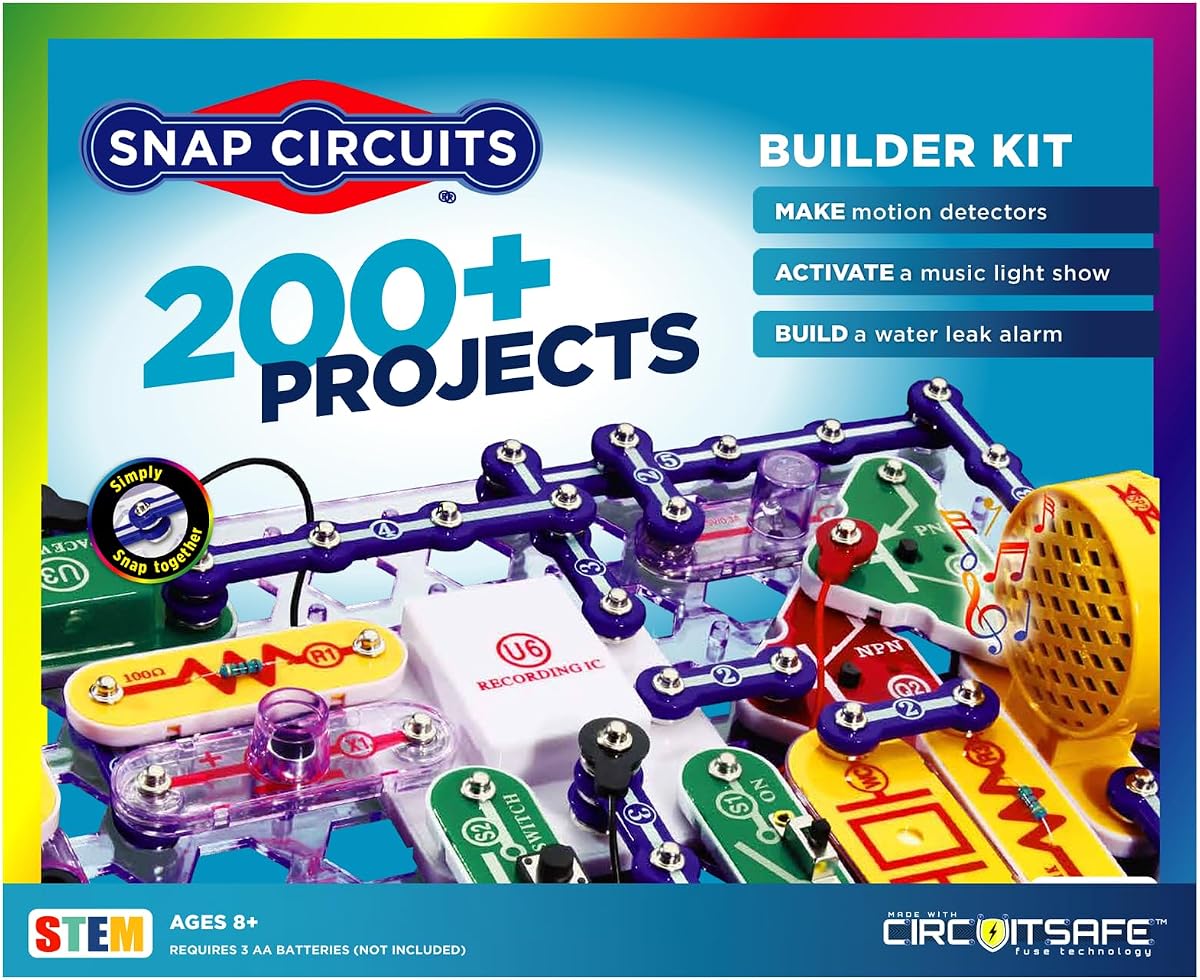
This classic kit offers a proven formula for learning electronics with over 200 exciting projects. It includes 40 plus pieces allowing kids to build practical items like burglar alarms, doorbells, and play electronic games with friends.
We may earn a commission when you buy through this link, at no additional cost to you.
The numbered and color-coded pieces snap easily onto a plastic grid providing a frustration-free experience that mirrors real circuit boards. This approach ensures children understand how circuits work without needing extra tools or soldering experience.
While it is an Amazon exclusive which limits where it can be purchased, the quality and consistency are high. The only downside is the need for batteries which are not included in the box but are standard for these kits.
For families looking for a reliable and well-reviewed option, this kit delivers consistent results. It is an ideal gift that keeps kids busy and learning all year round with a focus on practical electrical engineering skills.
Building everyday items like doorbells helps children see how circuits apply to real-world objects.
Snap Circuits has a long history of quality, making this a safe bet for educational value and durability.
We may earn a commission when you buy through this link, at no additional cost to you.
This STEM toy set covers everything from basic circuits to advanced interactive projects using over 120 hands-on activities. It features a unique smart voice control system allowing kids to command their circuits with voice prompts for lights and sound.
We may earn a commission when you buy through this link, at no additional cost to you.
The included full-color manual guides young engineers to build real working projects fostering critical thinking and problem-solving skills. With 28 snap-together parts and low-voltage components, the design ensures a worry-free and secure building experience.
While the voice control adds a modern interactive element, it can be more complex to set up compared to standard snap circuits. The kit also requires AA batteries which are not included, but this is typical for electronic educational toys.
For tech-savvy families looking for a cutting-edge experience, this kit combines learning with fun effectively. It is an ideal gift for birthdays or holidays that helps children understand the technology powering our world in a playful way.
Voice commands bring circuits to life transforming standard building into an interactive tech adventure.
Detailed guidance helps kids understand how real circuitry works beyond just following assembly steps.
We may earn a commission when you buy through this link, at no additional cost to you.
The Playz starter electronic circuit board toy gives kids the chance to explore how various electronics work including lights, sounds, magnetism and radios. It is designed for ages eight and older with over 25 hands-on experiments to keep them challenged.
We may earn a commission when you buy through this link, at no additional cost to you.
Junior scientists can enjoy a sensory experience like no other with light, magnetic, sound, and touch controls. A 64-page illustrated instruction manual supports assembly of circuits and fascinating multi-experiments allowing kids to grow and learn while having fun.
While younger children may need supervision during setup, the sensory focus provides a unique educational angle compared to standard kits. The project count is lower than competitors but the depth of experience with radios and magnetic controls offers distinct value.
This kit is great for consolidating STEM concepts into real-world applications within a single model lab. It is an excellent choice for students interested in physics and engineering who want to explore how different physical forces interact with electronics.
Touch and magnetic controls introduce kids to different physical principles beyond just electrical flow.
The extensive manual provides clear visual steps to help older children work independently on complex tasks.
We may earn a commission when you buy through this link, at no additional cost to you.
Choosing the right circuit board kit requires considering age appropriateness, project variety, and safety features. This guide outlines the key factors to help you select a kit that matches your child's interests and skill level.
Look for kits that match your child's developmental stage. Younger children benefit from simpler designs with fewer pieces and clearer instructions while older kids may enjoy more complex projects and advanced components.
Always check the recommended age range on the packaging to ensure the difficulty level is not too high or too low for their abilities.
A good kit should offer enough projects to keep your child engaged for a long period. Consider how many unique builds are possible and whether the manual provides clear steps for each one.
Kits with over 100 projects typically offer better long-term value and more opportunities for learning new concepts.
Safety should be a top priority especially for younger children. Choose kits that require no soldering and use low-voltage components to prevent burns or electrical hazards during play.
Secure snap connections and insulated wires are essential features that ensure a safe learning environment at home.
The best kits teach core concepts like series and parallel circuits current flow and basic logic. Look for manuals that explain the 'why' behind the build not just the 'how'.
Educational value is often reflected in awards and recommendations from STEM organizations which can help identify high-quality products.
Durability is important since these kits are used repeatedly by enthusiastic builders. High-quality plastic pieces and sturdy wires resist wear and tear better than cheaper alternatives.
Check reviews regarding component quality to ensure the kit will last through multiple build sessions.
Consider what is included in the box such as storage cases or specialized modules. Some kits come with unique parts like projectors or voice modules that add extra fun and learning value.
Accessories like storage cases help keep parts organized which is crucial for complex kits with many small pieces.
While price varies, focus on the number of projects and quality of components rather than just the cost. A slightly higher-priced kit may offer significantly more learning opportunities.
Compare the cost per project across different options to determine the best value for your investment.
Many kits allow you to combine with others to increase project variety. This flexibility can extend the life of the toy and deepen understanding of electronics.
If your child shows a strong interest, look for kits that are part of a series or ecosystem.
Start by reviewing the manual together with your child to understand the components and safety instructions. Ensure all parts are organized on a clean surface before beginning to prevent loss or confusion.
Follow the step-by-step instructions carefully making sure connections are firm before testing power. If a project does not work, check connections and re-read the instructions before assuming a part is defective.
Store components in their original case or a dedicated container to keep them dry and organized. Avoid exposure to direct sunlight or moisture which can degrade the plastic parts over time.
Yes, most modern kits use low-voltage batteries and snap-together components that eliminate the need for soldering. However, always supervise younger children to ensure small parts are not swallowed and that instructions are followed safely.
No, the kits featured in this guide require no extra tools like screwdrivers or soldering irons. The components are designed to snap or plug in securely, making assembly easy for beginners.
Most kits require standard AA batteries which are typically not included in the package. Check the product details before purchasing to ensure you have the correct power source ready for setup.
Many kits especially those from the same brand can be combined to increase project variety and complexity. This is a great way to extend the learning experience as your child grows more skilled.
The kits range from ages five to twelve depending on complexity. Beginners options like the SCB-20 suit younger children while advanced kits with over 1000 projects are better for older kids.
Use a dry cloth to wipe down components as needed. Avoid submerging any electronic parts in water to prevent damage to the internal circuits.
Contact the manufacturer's customer support with your order details if you find a missing piece. Most reputable brands offer replacement parts to ensure you can complete your projects.
We have reviewed ten top circuit boards for kids offering something for every age and interest level. The SNAP CIRCUITS Jr. SC-100 stands out for its balance of safety and project variety while the Beginner SCB-20 is perfect for younger starters.
Prioritize safety features and age appropriateness when selecting a kit. A good electronics kit should be easy to use without sacrificing educational value to ensure a positive learning experience.
Please check current prices and availability before purchasing as these can change regularly. We hope this guide helps you find the perfect gift to inspire a love for engineering and science.