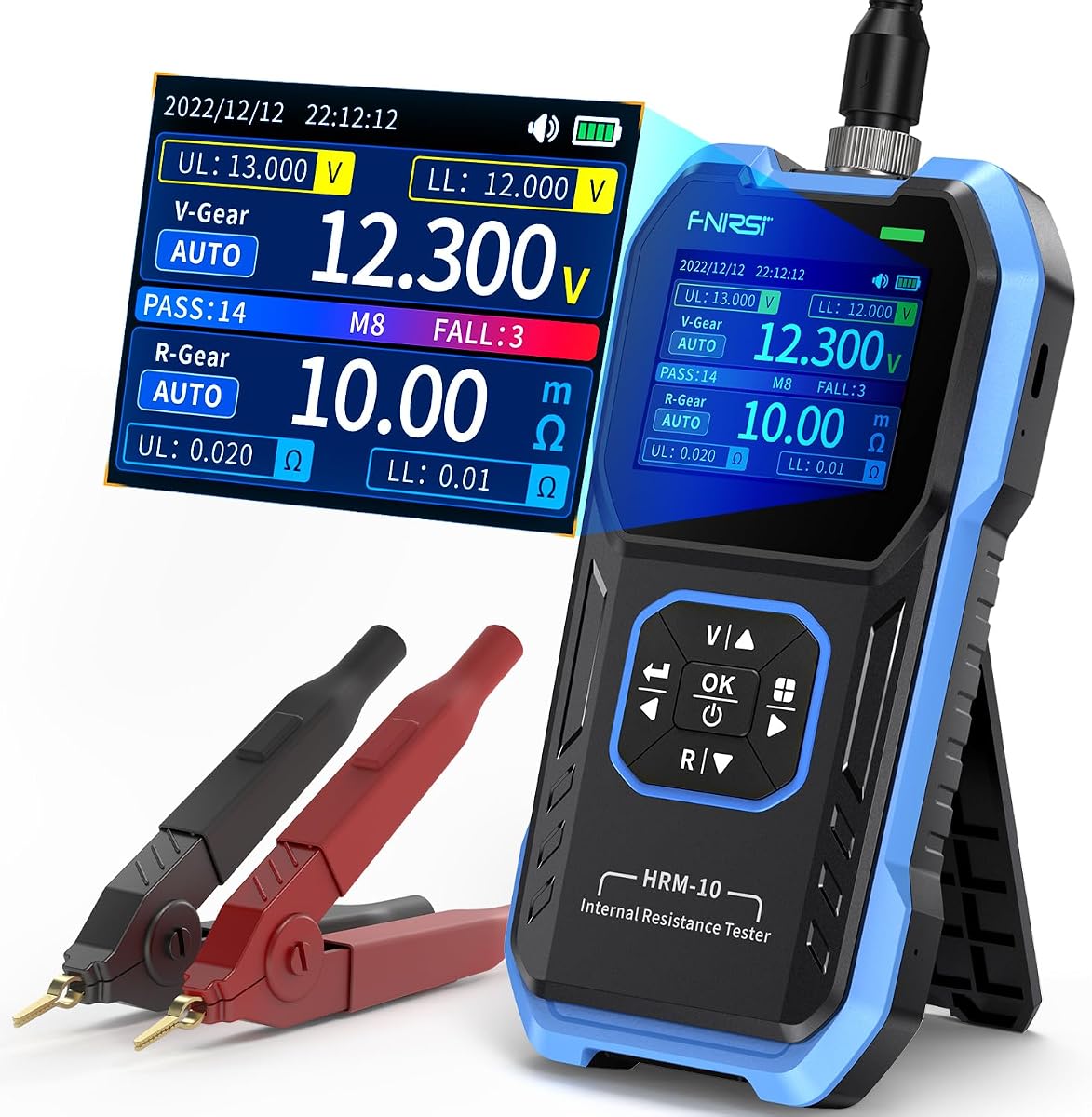
FNIRSI HRM-10
4.4Editor score
Affordable Precision Testing
TFT HD Color Display
Automatic Data Logging
This guide compares the top battery internal resistance testers for accurate diagnostics across automotive, lithium, and household batteries to ensure reliable
Selecting the right battery internal resistance tester is crucial for maintaining optimal performance across various battery types. These devices provide precise measurements that help identify aging cells before they fail unexpectedly in critical applications like vehicles or backup power systems.
Our comparison evaluates ten leading models based on accuracy, ease of use, and versatility. We examined technical specifications, user feedback, and real-world application scenarios to ensure you find a tool that meets your specific diagnostic needs without unnecessary complexity.
Each pick highlights unique strengths suited for different users ranging from hobbyists to professional technicians. Please note that product availability and pricing fluctuate frequently so verify current details before making your final purchase decision to secure the best value available today.
4.4Editor score

4.5Editor score

5.0Editor score
The following table provides a side-by-side overview of all ten products evaluated in this guide. Each entry highlights key specifications to help you quickly identify the model that aligns best with your testing requirements and budget constraints.




The ZOYI ZT-XR1 stands out as a top contender in the battery internal resistance tester category with its impressive 4.5 star rating. This device combines professional battery testing with a full-featured multimeter offering exceptional value for technicians and enthusiasts alike.
We may earn a commission when you buy through this link, at no additional cost to you.
Its high precision 4-wire Kelvin sensing ensures accurate measurements from 0.1 milliohms to 200 ohms. The 25000 count True RMS multimeter functionality adds significant versatility allowing users to measure AC DC voltage capacitance and more without switching tools.
While the price is higher than basic testers the integration of two devices saves space and cost in the long run. The adjustable brightness screen and long-lasting rechargeable battery enhance usability in various lighting conditions and extended work sessions.
Ideal for electricians and battery repair professionals the ZOYI ZT-XR1 offers a robust solution for diverse testing needs. Its safety ratings and reliability make it a trusted choice for demanding environments where precision and durability are paramount.
By merging a multimeter and resistance tester into one unit this device streamlines workflows and reduces equipment clutter.
The Kelvin sensing method eliminates lead resistance ensuring highly accurate readings critical for diagnosing battery health issues.
We may earn a commission when you buy through this link, at no additional cost to you.
The FNIRSI HRM-10 delivers reliable performance at an accessible price making it the Best Budget option in our list. It features a vibrant TFT HD color display that presents test results clearly enhancing the user experience significantly compared to older monochrome models.
We may earn a commission when you buy through this link, at no additional cost to you.
Utilizing Kelvin four-wire connection technology this tester avoids contact resistance issues for improved accuracy. Users can manually adjust ranges or rely on automatic modes while historical data export capabilities help track battery degradation over time effectively.
Its limitation to DC voltage measurement requires users to avoid AC sources but this is standard for battery testing tools. The lack of multimeter functions means it is a dedicated tool but one that excels in its specific role without unnecessary complexity.
For hobbyists or small businesses needing frequent battery checks this model offers the best balance of cost and functionality. Its ease of use and clear feedback make it an excellent entry point for anyone looking to monitor battery health regularly.
Delivering professional-grade Kelvin sensing at a budget-friendly price this tester removes barriers to accurate battery diagnostics.
The advanced HD color technology ensures that readings are visible and understandable even in challenging lighting environments.
We may earn a commission when you buy through this link, at no additional cost to you.
With a flawless five-star rating the YR1035+ represents the pinnacle of battery internal resistance testing technology. Its true four-wire testing system ensures unparalleled accuracy by eliminating external resistance factors that often skew results on less sophisticated devices.
We may earn a commission when you buy through this link, at no additional cost to you.
The large LCD screen provides clear real-time feedback allowing users to interpret data instantly without confusion. Whether used for performance testing or configuration screening it handles multiple battery types with ease making it a versatile asset in any toolkit.
While the premium cost reflects its high performance it may be excessive for casual users who do not require such precision. Its compact design makes it ideal for field work but the delicate nature of precision electronics demands careful handling during transport.
Professionals and researchers who need the most reliable data will find this tester invaluable for maintaining equipment standards. Its reputation for accuracy and user-friendly interface makes it a top recommendation for those prioritizing quality over cost.
Advanced four-wire technology isolates test leads from the measurement path ensuring the purest possible resistance readings.
From industrial batteries to small consumer cells this device adapts to diverse testing scenarios with consistent reliability.
We may earn a commission when you buy through this link, at no additional cost to you.
The WESTOBIG Battery Tester distinguishes itself with a broad compatibility range covering everything from AA to automotive batteries. Its kelvin four-terminal sensing ensures that even small resistance values are captured accurately providing reliable data for various maintenance tasks.
We may earn a commission when you buy through this link, at no additional cost to you.
A unique feature is the data preset function allowing users to set standard values and quickly identify batteries that do not meet criteria. This efficiency is enhanced by the ability to connect to a PC for data transfer and analysis which supports detailed reporting.
However the strict prohibition against AC voltage usage means care must be taken to avoid applying it to the device. The interface although informative may require some time to master for users not accustomed to digital diagnostic tools.
This model is well-suited for technicians who manage diverse battery inventories and need efficient screening processes. The combination of hardware accuracy and software features makes it a robust tool for organized battery management workflows.
Preset data functions allow for rapid identification of out-of-spec batteries saving time during large-scale inspections.
The ability to export historical records to a computer facilitates long-term tracking and detailed performance analysis.
We may earn a commission when you buy through this link, at no additional cost to you.
Designed for everyday users the Dlyfull Battery Tester offers a straightforward solution for checking common household batteries. It supports over ten types including AA AAA and 9V ensuring most consumers can manage their battery inventory without technical expertise.
We may earn a commission when you buy through this link, at no additional cost to you.
The large LCD screen clearly displays voltage and capacity percentage helping users determine if a battery is ready for use. This functionality prevents premature disposal of good batteries and extends the lifecycle of rechargeable cells through better monitoring.
While it lacks the precision of professional meters its reliability for general checks is commendable. The included test leads and durable construction ensure that the unit withstands regular use in homes and small workshops effectively over time.
For families or casual hobbyists this tester provides the right level of detail without overwhelming features. Its ease of use and robust warranty make it a practical addition to any toolbox where battery maintenance is routine.
Simple dial selection and test leads make this device accessible to users without technical training or background.
Monitoring capacity percentage helps users avoid overcharging or discarding batteries prematurely saving money long term.
We may earn a commission when you buy through this link, at no additional cost to you.
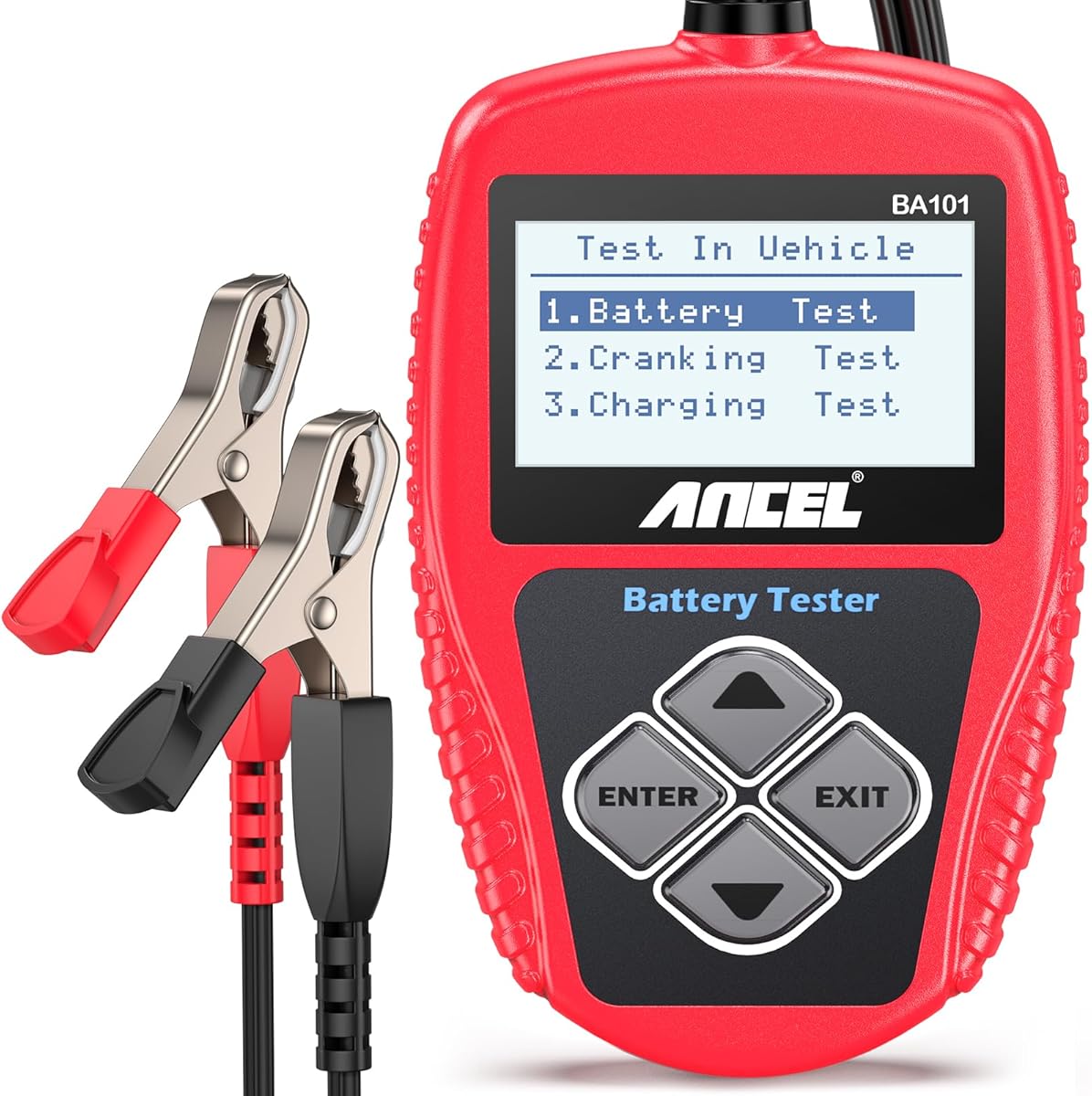
Targeting vehicle owners the ANCEL BA101 is a specialized tool for diagnosing 12V automotive battery health. It provides essential readings like State of Health and State of Charge which are vital for preventing unexpected vehicle breakdowns on the road.
We may earn a commission when you buy through this link, at no additional cost to you.
The tester supports a wide range of battery standards ensuring compatibility with cars trucks and boats. Built-in protection features guard against reverse polarity and overvoltage making it safe to use in the tight and often messy environments of engine bays.
Its display is designed for visibility in bright sunlight which is a common challenge during outdoor diagnostics. However it is not suitable for small consumer batteries so users must ensure their needs align with automotive applications before purchase.
For anyone managing a fleet or maintaining personal vehicles this tester offers peace of mind through reliable diagnostics. Its ease of use and comprehensive safety features make it a preferred choice for car owners seeking dependable battery maintenance.
Specific metrics like CCA and SOH provide actionable insights into whether a vehicle battery is ready for the road.
Robust protection against common testing mistakes ensures both the user and the vehicle remain safe during diagnosis.
We may earn a commission when you buy through this link, at no additional cost to you.
The ZOYI XR1 combines internal resistance testing with a digital multimeter to offer versatility for various diagnostic tasks. Its 25000 count display ensures high resolution readings while the 4-wire Kelvin clips maintain accuracy during resistance measurements.
We may earn a commission when you buy through this link, at no additional cost to you.
Modern design elements like the Type-C charging interface add convenience for users accustomed to current charging standards. The adjustable buzzer volume and TFT color display enhance usability in different environments making it adaptable for varied working conditions.
Despite its feature set the lower user rating suggests some users may find the interface challenging or inconsistent. It is important to review user feedback carefully to ensure it matches your specific workflow requirements before committing to this model.
Ideal for users who need both resistance testing and general electrical checks in one device it offers significant potential. However success with this tool may require patience to navigate its settings effectively for optimal results.
Incorporating Type-C charging and a colorful display brings modern utility features to traditional resistance testing hardware.
The ability to save historical records helps users track battery performance trends over extended periods of time.
We may earn a commission when you buy through this link, at no additional cost to you.
With an impressive 4.9 star rating the RC3563 Tester is highly regarded for its precision in analyzing lithium and NiCd batteries. It employs intelligent control and Kalman filtering to deliver high accuracy results that are vital for scientific and maintenance applications.
We may earn a commission when you buy through this link, at no additional cost to you.
The handheld design makes it easy to carry into the field while the built-in battery ensures you are not dependent on external power. Its simplicity is a strength for users who need focused testing without the distraction of complex software features.
While it lacks computer connectivity it excels in standalone operations where portability and speed are essential. The low weight and energy-saving design make it an excellent choice for researchers who need reliable data on the go.
For scientists and technicians working with rechargeable cells this tester offers the accuracy needed for consistent results. Its reputation for high precision and ease of use ensures it remains a favorite in laboratory and production environments.
Kalman filtering algorithms minimize noise to provide the cleanest possible measurements for critical battery analysis.
A lightweight handheld form factor ensures the device can be used in varied locations without setup overhead.
We may earn a commission when you buy through this link, at no additional cost to you.
The T-685 Analyzer boasts high precision capabilities with a resolution down to 1 micro-ohm making it suitable for industrial and laboratory settings. It measures both AC and DC resistance offering versatility for different types of components and battery systems.
We may earn a commission when you buy through this link, at no additional cost to you.
Supporting a wide voltage range and fast test pace it can process batteries efficiently without compromising accuracy. The bilingual interface helps a broader audience of users operate the device comfortably regardless of their language preferences.
However the low user rating suggests there may be usability issues or reliability concerns that prospective buyers should consider. It is recommended to review recent feedback to ensure the device meets expectations before making an investment in this model.
For professionals needing extreme precision in battery analysis this tester offers powerful features that are hard to find elsewhere. It remains a strong candidate for those willing to navigate its complexities for the sake of detailed performance data.
Resolution down to one micro-ohm allows detection of minute resistance changes that indicate early-stage battery degradation.
Support for both AC and DC testing expands the utility of the device to a wider array of electronic components.
We may earn a commission when you buy through this link, at no additional cost to you.
This version of the YR1035 comes with a comprehensive set of accessories making it a complete solution for diverse testing needs. The inclusion of specific clamps for various battery types ensures that you can start testing immediately without buying extra parts.
We may earn a commission when you buy through this link, at no additional cost to you.
Its ability to measure voltage with high precision up to 99.999V offers detailed insights for complex battery packs. The modern Type-C charging port aligns with current standards ensuring that power is easily accessible for users on the go.
The perfect user rating reflects high satisfaction with both the hardware and the included accessories. However users should be aware that the setup may require time to configure the different probes for optimal testing results.
For those seeking an all-in-one package this kit removes the hassle of sourcing compatible tools separately. It is an excellent choice for professionals who demand completeness and reliability in their diagnostic workflows.
Comprehensive accessory kits ensure that users have everything needed to start testing immediately out of the box.
Voltage measurement up to five decimal places provides unmatched detail for critical battery analysis.
We may earn a commission when you buy through this link, at no additional cost to you.
Selecting the right battery internal resistance tester requires understanding your specific testing needs and the types of batteries you work with frequently. This guide breaks down the essential factors to consider before making your purchase decision.
Accuracy is the most critical factor when selecting a battery internal resistance tester. Look for devices that use Kelvin four-wire sensing which eliminates the resistance of test leads and ensures that the reading reflects the battery itself.
Prioritize models with high resolution displays and low-end measurement capabilities such as milliohms or micro-ohms for the most reliable results.
Ensure the tester supports the voltage range of the batteries you plan to test. Most handheld units cover 0 to 100V but some automotive-specific tools may have different ranges suited for 12V or 24V systems.
Verify that the device meets your needs for both low voltage small cells and higher voltage battery packs before purchasing.
Different testers are designed for specific battery chemistries such as lithium lead-acid or NiCd. Some universal models cover a wide array while others are specialized for automotive or household use.
Choose a device that explicitly supports the battery types you encounter most often to avoid compatibility issues.
A clear and easy-to-read display is essential for accurate data interpretation. TFT color screens offer better visibility than traditional LCDs and adjustable brightness helps in varying lighting conditions.
Look for large digits and clear labeling to ensure that you can read measurements quickly and without error.
Advanced models allow you to save historical data or export it to a computer. This feature is invaluable for tracking battery degradation over time and generating reports for maintenance records.
Consider whether you need this connectivity for long-term analysis or if basic manual logging is sufficient for your workflow.
Some testers are powered by internal rechargeable batteries while others draw power directly from the device under test. Rechargeable units offer more flexibility but require maintenance and charging time.
Decide which power solution fits your usage patterns best whether you need portability or constant availability.
Industrial and automotive environments can be harsh so look for testers with robust housing and safety ratings like CAT II or CAT III. Protection against reverse polarity and overvoltage is also crucial to prevent damage.
Investing in a durable unit ensures that your investment lasts longer and remains safe during routine testing.
Prices vary widely depending on features and precision levels. Determine your budget early and prioritize the features that are strictly necessary for your tasks to avoid overspending on unnecessary tools.
Remember that higher cost does not always mean better value if the extra features are not utilized in your daily work.
To ensure accurate readings always connect the Kelvin clips to the battery terminals firmly and without any corrosion present. Clean the battery contacts with a cloth before testing to avoid false high resistance values caused by dirt or oxidation.
Follow the manufacturer guidelines for voltage ranges to prevent damaging the device. Never apply AC voltage to a DC tester as this can cause internal damage and void your warranty immediately.
Store the device in a dry and temperature-controlled environment when not in use. Regularly calibrate the tester according to the instructions and replace any worn leads to maintain precision over time.
Internal resistance measures how much a battery opposes the flow of current. High internal resistance indicates aging or damage which reduces the ability of the battery to deliver power efficiently. Monitoring this value helps prevent unexpected failures in critical devices.
Yes most modern testers are designed to safely handle lithium batteries provided the voltage and current limits are respected. Always verify the device specifications to ensure they match the specific lithium chemistry you are testing.
For critical systems like vehicles or backup power testing every three to six months is recommended. For consumer electronics testing can be done less frequently unless you suspect performance issues or rapid discharge.
Many models support 12V automotive batteries but you should check the specific CCA and voltage range capabilities. Dedicated car battery testers often include extra features like cranking analysis which general units may lack.
A standard multimeter cannot accurately measure internal resistance because it does not use the necessary four-wire sensing. Specialized testers are required for precise results since multimeters only measure static resistance.
Inconsistent readings often result from loose connections or dirty terminals. Check your clips and battery contacts for stability. If the issue persists try calibrating the device or consulting the manufacturer for support.
Professional models may require periodic calibration to maintain accuracy while consumer units are often factory calibrated. Refer to the user manual for specific recommendations on calibration frequency for your model.
Some advanced testers include load testing capabilities but basic internal resistance testers usually measure open circuit values. Check the product features to see if it supports dynamic load testing for more comprehensive analysis.
Our top picks highlight a range of options from budget-friendly models to premium units offering unmatched precision. The ZOYI ZT-XR1 leads our recommendations due to its versatile design while the FNIRSI HRM-10 offers excellent value for casual users.
When making your decision prioritize accuracy and safety features that align with your specific testing requirements. Whether you need a dedicated tool or a combined device ensuring reliability is key to preventing equipment failures.
Remember that pricing and availability can change so always check the latest product details before finalizing your order. Investing in a quality tester now will save you time and money by extending the life of your valuable batteries.