
JOYO MOMIX CAB
4.2Editor score
Zero latency monitoring
Plug and play design
Pocket sized portability
Discover the top audio interfaces for guitar in October 2026. We compare features, sound quality, and compatibility to help you choose the right recording gear.
Finding the right audio interface for guitar is essential for capturing your sound accurately. Whether you are recording at home or streaming live, a good interface ensures low latency and clear signal path.
We compared ten top-rated models based on input quality, software bundle, and ease of use. Our analysis covers portable options for mobile creators and desktop units for serious producers.
Each pick highlights key strengths and potential limitations to guide your decision. Note that prices and availability change frequently, so check current listings before purchasing your new gear.
4.2Editor score
4.6Editor score

5.0Editor score
This side by side comparison highlights the core specifications and capabilities of each interface to help you find the perfect match for your recording needs.



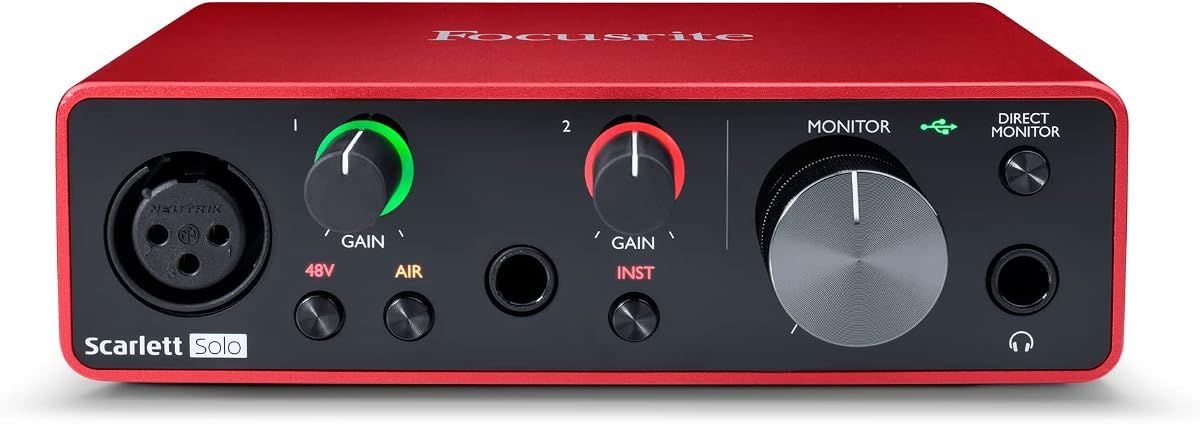
The Focusrite Scarlett Solo 3rd Gen stands out as the top choice for guitarists seeking professional quality without bulk. It delivers pristine audio capture with its high-performance converters and Air mode for enhanced clarity.
We may earn a commission when you buy through this link, at no additional cost to you.
Its high-headroom instrument inputs ensure your guitar signal remains distortion-free even at high gain settings. The Gain Halo ring provides immediate visual feedback to help you set optimal recording levels effortlessly.
While it lacks expansion capabilities like ADAT, this is acceptable for solo artists and small setups. The compact form factor and robust build quality make it reliable for home studio environments.
Whether you are recording your first demo or producing full tracks, this interface offers the balance of features and value you need. It remains the standard recommendation for most guitar recording scenarios.
Air mode adds extra clarity to your acoustic instruments making vocals and guitars shine with more presence in the mix.
Includes Pro Tools Intro and Ableton Live Lite giving you powerful production tools right out of the box.
We may earn a commission when you buy through this link, at no additional cost to you.
The JOYO MOMIX CAB redefines budget recording by offering zero latency direct monitoring in a pocket-sized package. It passes your clean guitar signal straight to headphones so you hear yourself instantly.
We may earn a commission when you buy through this link, at no additional cost to you.
You simply connect it to your phone via USB-C or Lightning and start recording without installing drivers or charging batteries. The signal indicator light helps avoid distortion by showing input levels clearly.
It does not support real-time amp sims so you must use apps that accept dry input. However for simple practice tracking or video content this limitation is often acceptable.
Ideal for mobile creators and guitarists on a tight budget this interface removes barriers to recording. It allows you to capture song ideas anywhere without expensive gear.
Hear your unprocessed guitar signal instantly in headphones alongside any app audio for seamless live monitoring.
Connect and record immediately without driver installations or software setup thanks to class compliant USB design.
We may earn a commission when you buy through this link, at no additional cost to you.
The Fender Quantum HD 2 represents the pinnacle of home recording quality with its 32-bit converters and MAX-HD preamps. It ensures every nuance of your performance is captured with pristine clarity.
We may earn a commission when you buy through this link, at no additional cost to you.
Registering the interface unlocks the complete Fender Amp and FX pack giving you authentic tones instantly. Auto Gain simplifies setup by instantly setting perfect levels for fast sessions.
The dual re-amp outputs let you explore new tones with external pedals and amps. This flexibility is ideal for producers who want to tweak their sound after recording.
If you seek studio-grade performance and reliable software integration this interface is unmatched. It justifies its cost with features that grow with your professional needs.
Access a full collection of authentic Fender amp models and effects through the free Fender Studio app.
Send recorded tracks back through external amps to experiment with new tones without changing your mic setup.
We may earn a commission when you buy through this link, at no additional cost to you.
The M-AUDIO M-Track Duo offers reliable performance for beginners needing two inputs. Its Crystal Preamps deliver clear signal quality that works well with both guitars and microphones.
We may earn a commission when you buy through this link, at no additional cost to you.
The USB/Direct switch allows zero latency monitoring which is critical for tracking vocals alongside guitar. You can listen to your dry signal without delays from your computer.
It does not support 96kHz recording but 48kHz is standard for most streaming and web projects. The included MPC Beats software adds production value without extra cost.
This interface balances cost and features effectively for entry-level home studios. It provides the core tools needed to start recording without unnecessary complexity.
Transparent Crystal Preamps guarantee optimal sound from all your microphones including condenser mics.
Record guitar vocals or line input signals with two combo XLR Line Instrument Inputs with phantom power.
We may earn a commission when you buy through this link, at no additional cost to you.
The IK Multimedia iRig USB interface bridges mobile and desktop recording seamlessly. It ensures pristine audio quality with studio-grade 24-bit 48kHz resolution for your projects.
We may earn a commission when you buy through this link, at no additional cost to you.
Its dedicated Amp out connects to your pedal rig allowing you to record processed tones directly. You can choose between processed FX or THRU settings depending on your workflow.
USB-C connectivity makes it compatible with modern laptops and iPads without dongles. The bundled software jumps your creative journey with essential tools for production.
Musicians needing a compact yet powerful solution will appreciate its durability. It fits easily in a gig bag while delivering consistent performance across devices.
Connectivity is a breeze with the included USB-C cable compatible with Mac PC iPad and new iPhone 15.
Complete suite of recording software and plug-ins empowers you to craft your music easily.
We may earn a commission when you buy through this link, at no additional cost to you.
The MAONO PS22 Lite is engineered for streamers needing high-resolution audio capture. It supports up to 24-bit 192kHz ensuring realistic sound for your broadcasts.
We may earn a commission when you buy through this link, at no additional cost to you.
The ProStudio Routing Software adds virtual channels and loopbacks to simplify multi-source audio mixing. It handles condenser microphones with 48V phantom power for voiceovers.
Switching between instrument and recording modes is intuitive saving time during live sessions. However proper driver setup within your software is necessary for low latency.
For content creators prioritizing clarity and streaming tools this unit offers excellent value. It provides the flexibility needed for professional broadcast environments.
Take control of live streams with virtual channels loopbacks and ASIO support for low latency output.
Capture every detail of your sound with 24-bit 192kHz resolution ensuring clear and realistic audio.
We may earn a commission when you buy through this link, at no additional cost to you.
The PIYONE USB C interface offers professional resolution at an affordable price point. It handles high-speed data transfer and bus power eliminating external power supplies.
We may earn a commission when you buy through this link, at no additional cost to you.
Illuminated control rings ensure easy visibility in dimly lit studios adding a modern aesthetic to your desk. Direct Monitor allows silent zero-latency tracking for clean takes.
It works with Mac and PC without drivers making setup straightforward. However it lacks bundled production tools so you may need to source software separately.
This is a solid choice for users prioritizing hardware quality over software bundles. Its high-fidelity converters deliver clean results suitable for professional music production.
Signature fixed LED light rings on each gain knob enhance visibility and style in your studio.
Connect any source via two combo jacks with integrated 48V phantom power supply capabilities.
We may earn a commission when you buy through this link, at no additional cost to you.
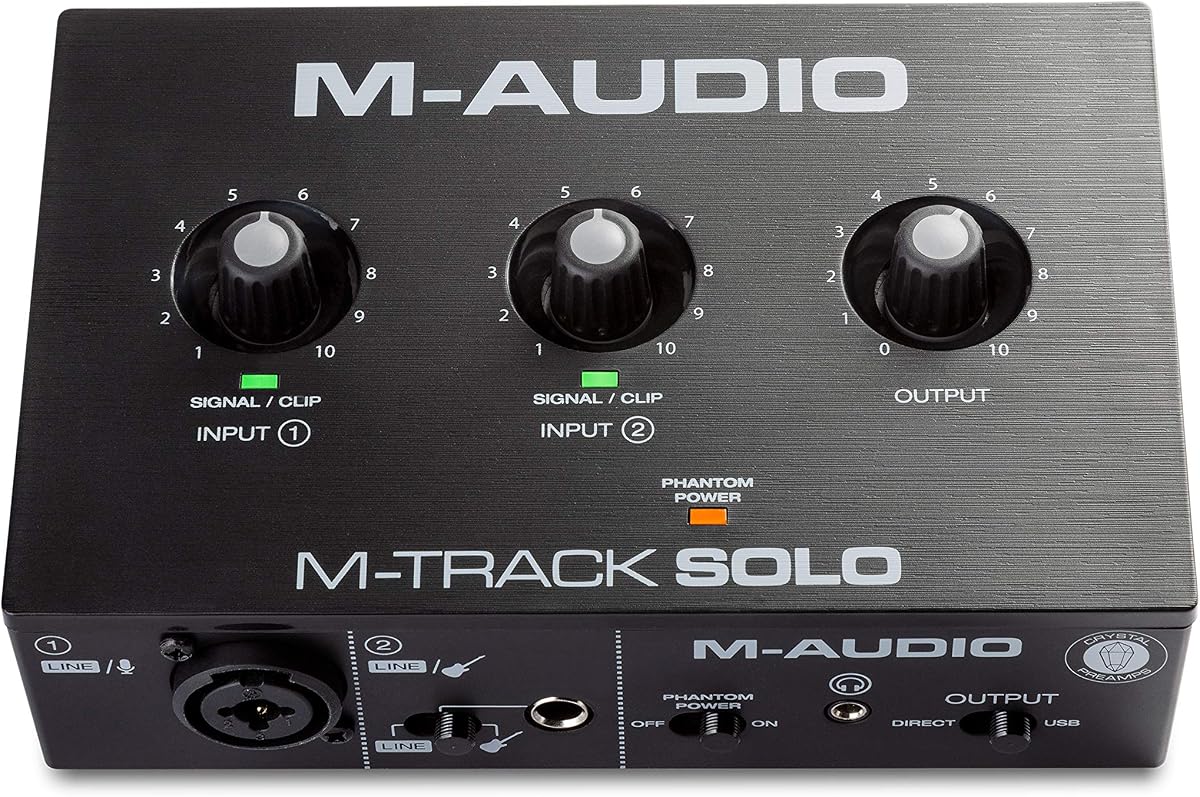
The M-AUDIO M-Track Solo is designed for individuals needing a straightforward recording solution. It delivers pristine 48kHz audio resolution every time you hit record.
We may earn a commission when you buy through this link, at no additional cost to you.
The transparent Crystal Preamp guarantees optimal sound from all your microphones and instruments. It includes one combo input for flexibility and RCA outputs for monitoring.
It lacks phantom power limiting condenser mic use but works well with dynamic mics. The USB/Direct switch ensures you hear your signal without latency issues.
This interface is perfect for podcasters or guitarists working alone on a budget. It provides the essentials without overwhelming complexity or cost.
Transparent Crystal Preamp guarantees optimal sound from all your microphones including condenser mics.
Includes MPC Beats Software complete with the essential production tools from Akai Professional.
We may earn a commission when you buy through this link, at no additional cost to you.
The Arturia MiniFuse 1 delivers high-quality sound with an impressive five-year warranty. It is engineered to last providing better value and environmental responsibility for users.
We may earn a commission when you buy through this link, at no additional cost to you.
Its Loopback feature allows capturing voiceovers alongside in-app audio which is ideal for streaming. Includes Analog Lab Intro and Ableton Live Lite for immediate creativity.
The USB hub connects your MIDI gear while keeping your desk tidy. Although it has one input it covers all connections needed for voice synths and keyboards.
This interface offers a premium experience with exceptional durability. It is perfect for beginners who want reliable tools to produce professional tracks.
Get creative safe in the knowledge that your MiniFuse can go the distance with a 5-year warranty.
MiniFuse 1 offers easy tutorials exclusive readymade song projects to explore and all creative software you need.
We may earn a commission when you buy through this link, at no additional cost to you.
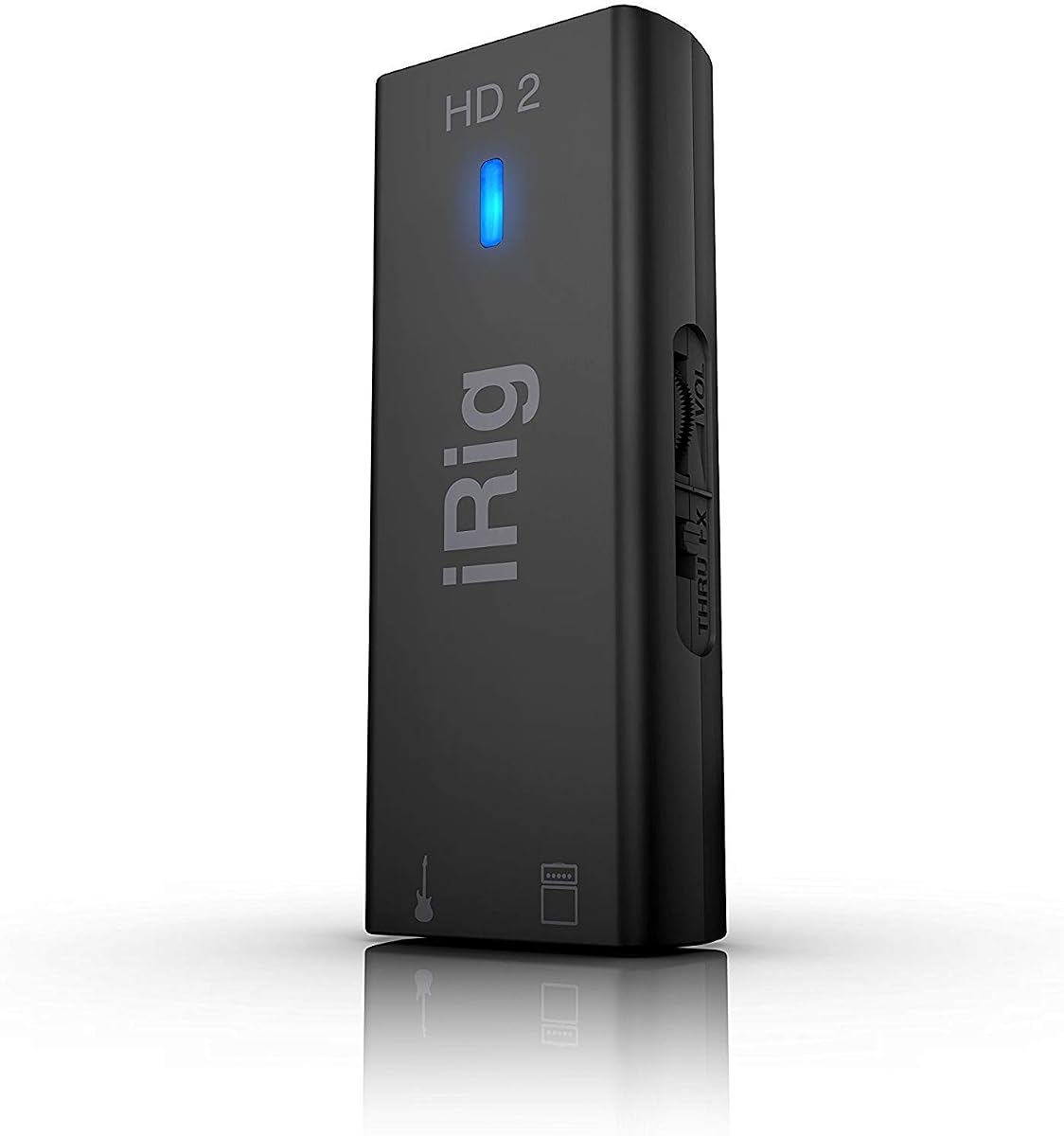
The IK Multimedia iRig HD 2 is renowned for its 96kHz sampling rate the highest in its class. It delivers distortion free amplifier quality allowing silent practice without performance sacrifice.
We may earn a commission when you buy through this link, at no additional cost to you.
Its adjustable input gain ensures high-definition results even with hot guitar pickups. You can use effects via the FX/Thru switch without changing levels constantly.
The lightweight construction allows for portability fitting easily in any gig bag. It unlocks exclusive content inside amplitude iOS and amplitude 4 for desktop production.
Musicians prioritizing mobile recording will find its precision unmatched. It offers a reliable platform to create music like artists you admire in minutes.
Renowned for its 96kHz sampling rate the highest in its class to deliver high-definition results.
High-definition digital guitar interface for you with a high-quality instrument-level 1/4 Hi-Z input jack.
We may earn a commission when you buy through this link, at no additional cost to you.
Choosing the right interface requires understanding your recording needs budget and device compatibility. These factors help narrow down the vast market to find your ideal match.
Ensure the interface has instrument inputs (Hi-Z) to handle guitar signals correctly without clipping. Consider whether you need one input for solo recording or two for guitar and vocals simultaneously.
Look for at least one instrument input and verify phantom power is available if you plan to use condenser microphones.
Higher resolution such as 24-bit/192kHz captures more detail than standard 48kHz. While 48kHz is sufficient for most streaming and YouTube content 192kHz benefits serious production.
Match the interface specs to your target medium. Higher rates are unnecessary for basic demos but essential for mastering professional releases.
Zero latency monitoring allows you to hear your dry signal instantly without audio lag caused by processing. This is crucial for playing along with backing tracks or recording with effects.
Prioritize interfaces with a hardware Direct Monitor switch or DSP-based monitoring to avoid CPU load and delay during recording.
Many interfaces include DAWs and plugins which save money on additional purchases. Check if the included software supports your workflow and operating system effectively.
Review the licenses to ensure they are not time-limited demos. Full perpetual licenses offer better long-term value than expired trials.
Confirm the interface works with your laptop tablet or phone. USB-C models work with newer iPads and Android devices while Lightning adapters are needed for older iOS gear.
Check driver requirements carefully. Class compliant interfaces require no drivers and work plug-and-play with most systems.
A durable chassis protects your equipment during travel and daily use. Check warranty terms to ensure long-term support and coverage against manufacturing faults.
Read reviews regarding longevity and customer support responsiveness. A longer warranty often indicates confidence in the product construction.
Consider how you will transport your gear. Pocket-sized interfaces are ideal for travel while desktop models are better for stationary home studios.
Evaluate size and weight relative to your needs. If you gig often a compact unit saves space in your case.
Some interfaces offer ADAT or S/PDIF inputs to expand inputs later. This feature allows growth without replacing your entire setup as your needs evolve.
If you plan to add more mics or instruments soon choose a model with expansion ports to save money later.
Connect your guitar to the instrument input and headphones to the monitor output. Adjust gain using the knob until the light indicates a strong signal without red clipping.
Install any required drivers or software before recording. Open your DAW and select the interface as the input and output device in audio settings.
Keep connections tight and avoid bending cables near the jack to prevent wear. Store the unit in a dry place to maintain optimal performance over years.
Yes, if you want to record high-quality audio. An interface provides the necessary inputs and preamps that computers lack, ensuring clean signal capture without distortion or noise.
USB-C is smaller and supports higher power transfer and faster data speeds. Newer interfaces use USB-C for compatibility with modern laptops while USB-A requires older ports.
You can connect pedals before the interface input or use a re-amp output to process recorded tracks. Most interfaces work well with standard effect pedals in line.
Phantom power provides electricity to condenser microphones via the XLR cable. It is essential if you use vocal mics with your guitar interface.
Not always. Class-compliant interfaces work without drivers on most systems. However, low latency features often require specific ASIO drivers for Windows users.
The Focusrite Scarlett Solo is widely recommended for beginners due to its ease of use and included software. It balances performance and price effectively for starting out.
Yes, with the right input settings. Ensure your DAW recognizes the interface and you have latency monitoring enabled to hear your signal in real time.
Check for firmware updates annually or when issues arise. Updates often improve compatibility and stability ensuring your interface runs smoothly with new software versions.
We highlighted ten reliable options ranging from portable gadgets to studio powerhouses. Each offers distinct benefits depending on your recording environment and budget.
Prioritize sound quality and compatibility with your existing setup. Features like zero latency monitoring and software bundles significantly impact your daily workflow.
Remember to check current listings for the latest pricing and availability. Your perfect interface may be just a click away for your next recording session.