Zoom F8n Pro Field Recorder for Filmmakers with 8 Inputs & 10 Tracks
4.6Editor score
Eight channel recording
Dual SD slots
High gain preamps
This guide compares the top audio field recorders for film production, covering features like timecode sync, inputs, and recording quality to help you choose.
Finding the right audio field recorder for film is crucial for capturing clean dialogue and ambient sound on set. Professional filmmakers need reliable tools that handle dynamic ranges and sync perfectly with video.
We evaluated ten top models based on input flexibility, recording formats, and build quality. Each unit was assessed for its ability to perform in demanding location shoots and studio environments alike.
Each pick shows key strengths and ideal use cases for different production scales. Prices fluctuate frequently so check current availability before making your final decision for your next shoot.
4.6Editor score

4.7Editor score

4.5Editor score
This side-by-side comparison highlights the core specifications and capabilities of each featured field recorder to help you identify the best fit for your film production needs.



The Zoom F6 stands out as a top tier choice for professional film audio recording on set. It offers a robust suite of features including 32-bit float recording that eliminates clipping risks during unpredictable sound events.
We may earn a commission when you buy through this link, at no additional cost to you.
Its six XLR inputs allow sound recordists to connect multiple microphones simultaneously without needing external mixers. This flexibility supports complex rigs often found on film sets where dialogue and ambient mics are captured together.
While the unit is compact it packs high fidelity converters and timecode I/O for frame accurate synchronization. Some users might find the menu system slightly dense but the clarity of recording results justifies the initial learning investment.
This recorder is ideal for independent filmmakers and production companies requiring broadcast quality audio without the bulk of larger consoles. It balances portability with professional grade performance making it a versatile tool for location work.
The 32-bit float capability ensures quiet whispers and loud explosions are captured cleanly without manual gain adjustments.
Built-in timecode I/O keeps audio tracks perfectly aligned with video frames for efficient post-production workflows.
We may earn a commission when you buy through this link, at no additional cost to you.
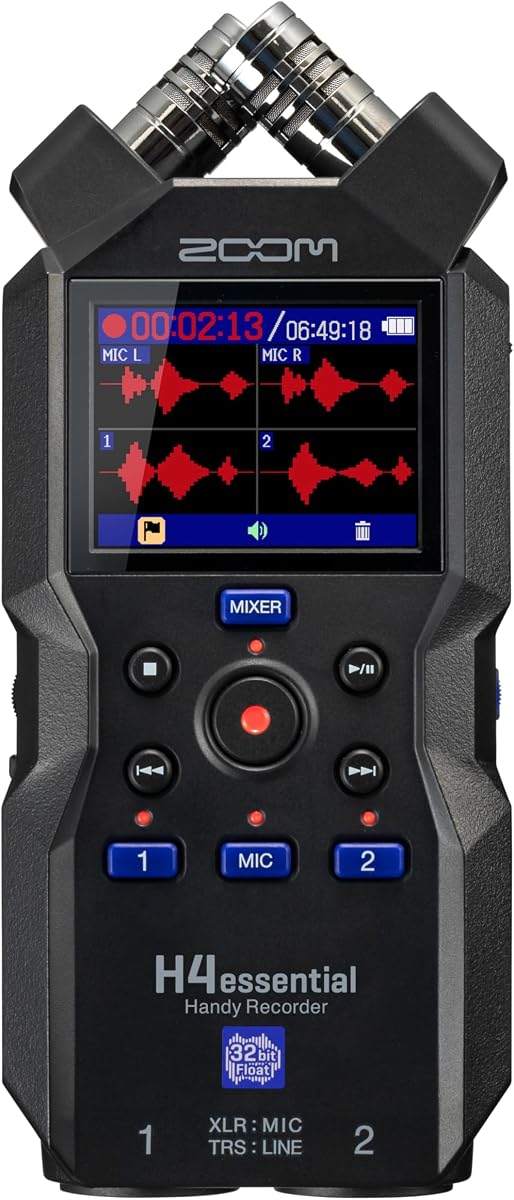
The Zoom H4 Essential offers an accessible entry point for filmmakers needing reliable audio capture without overspending. It combines a user-friendly interface with essential features needed for capturing interviews and ambient sound on location.
We may earn a commission when you buy through this link, at no additional cost to you.
Its two XLR/TRS inputs allow connection of external microphones while the built-in mics provide a quick backup option. The spoken menu guidance makes it easier for new users to navigate settings confidently during shoots.
Though it lacks advanced timecode sync features found in higher models it still delivers clear audio for independent productions. The ability to record to SD card and stream via USB-C adds practical flexibility for various workflows.
This unit is perfect for student films or low-budget projects where cost efficiency matters most. It delivers solid performance for its size and price making it a strong candidate for starters in field audio.
Spoken menu guidance helps visually impaired users and newcomers navigate settings without extensive training.
Connect to phones or computers via USB-C for streaming while saving backups directly to SD card.
We may earn a commission when you buy through this link, at no additional cost to you.
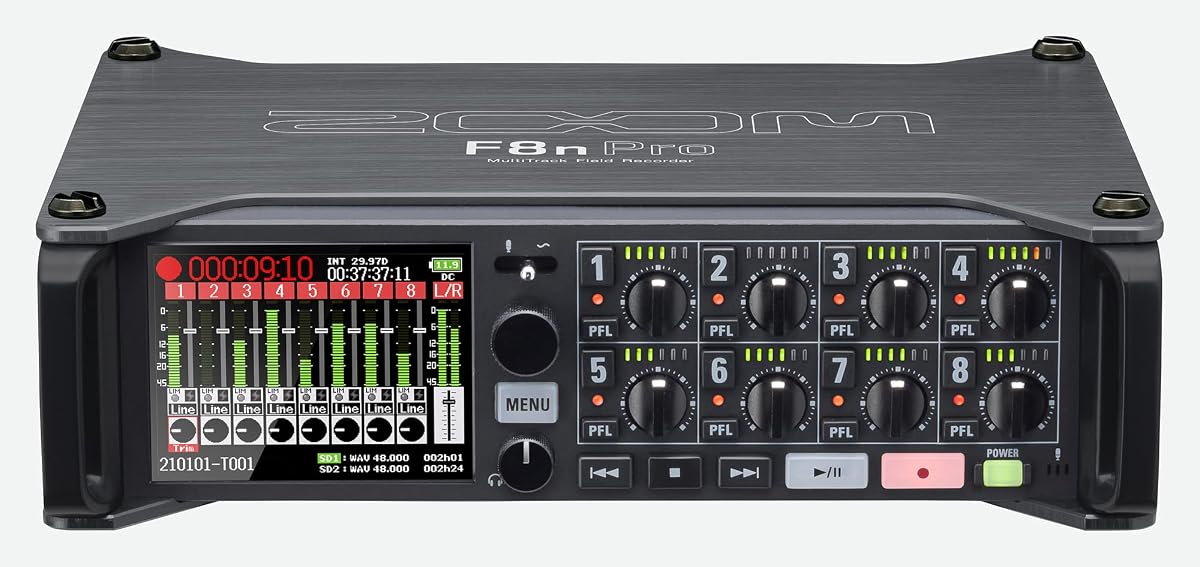
The Zoom F8n Pro represents the pinnacle of field recording technology for high-end film productions. Its eight input channels and ten track recording capability allow for intricate multi-mic setups without sacrificing audio quality.
We may earn a commission when you buy through this link, at no additional cost to you.
Precision timecode accuracy ensures every audio file aligns perfectly with camera footage reducing sync issues in post. Dual SD card slots provide redundant recording for critical scenes where losing audio data is not an option.
While powerful this unit is heavier and more complex than portable alternatives. The detailed interface requires experience to navigate efficiently but the reliability and sound quality justify the effort for professional workflows.
This recorder is best suited for broadcast teams or feature film crews needing maximum flexibility. It delivers broadcast grade audio performance with robust features that support demanding location recording requirements.
TCXO technology keeps timecode drift to a minimum ensuring perfect sync across long shooting days.
Dual SD card slots allow simultaneous recording to two cards so you never lose critical takes.
We may earn a commission when you buy through this link, at no additional cost to you.
The Zoom F3 is designed for run-and-gun filmmakers who need reliable audio capture in a small package. Its 32-bit float recording ensures that sudden peaks or quiet dialogue are captured without distortion or manual level adjustment.
We may earn a commission when you buy through this link, at no additional cost to you.
Dual locking XLR inputs keep microphones secure even when the unit is mounted away from the operator. Ultra-low-noise preamps deliver clean audio even in uncontrolled environments where background noise might otherwise interfere.
While limited to two channels it excels in solo recording scenarios or as a secondary device. The flexible power options support long days on set without needing external battery packs constantly.
This unit is ideal for documentary crews or indie filmmakers prioritizing mobility over multi-track flexibility. It provides professional-grade tools in a size that fits easily into any camera bag or rig.
Dual locking XLR inputs prevent accidental disconnections during active movement or complex rig setups.
32-bit float technology captures wide dynamic ranges so you never miss a moment due to clipping.
We may earn a commission when you buy through this link, at no additional cost to you.
The Zoom H1 XLR brings pro-quality results to a simple setup suitable for quick interviews and video shoots. It records in 32-bit at 96kHz offering detailed sound capture that rivals larger units at a fraction of the size.
We may earn a commission when you buy through this link, at no additional cost to you.
Two XLR/TRS combo inputs allow connection of a variety of microphones and instruments easily. The OLED waveform display makes monitoring levels intuitive so you can verify clean recordings at a glance.
While not a full multi-track solution it offers substantial flexibility with 3.5mm inputs and outputs. The SDXC support provides ample storage for extended sessions without frequent card swaps during shoots.
This recorder is perfect for content creators and journalists needing reliable audio in a handheld format. It combines essential professional features with a pocketable design for spontaneous recording opportunities.
The OLED waveform display lets you verify audio levels quickly without needing to dig through menus.
3.5mm inputs and outputs add extra flexibility for connecting headphones or external devices.
We may earn a commission when you buy through this link, at no additional cost to you.
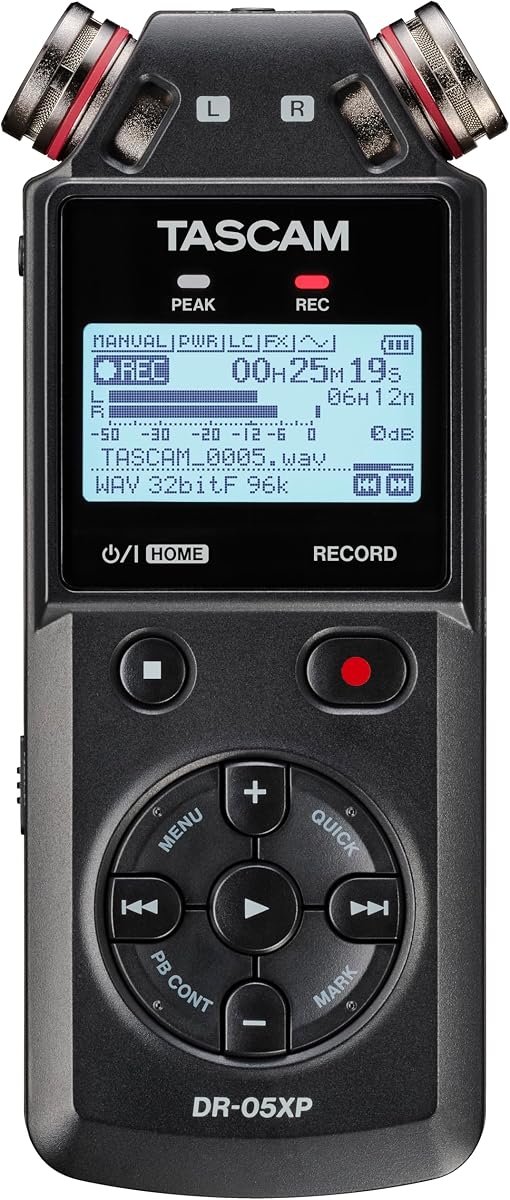
The TASCAM DR-05XP is an excellent option for capturing audio on video without breaking the bank. Its portable design and flexible recording modes make it suitable for music, voice, and video audio across various contexts.
We may earn a commission when you buy through this link, at no additional cost to you.
Omnidirectional condenser microphones handle loud environments well ensuring clarity even in busy settings. The USB-C interface allows direct recording to computers making it useful for both field work and interface needs.
Battery life is impressive lasting up to 17.5 hours on standard cells. While it lacks XLR inputs it still provides robust quality for on-camera audio and simple location recordings.
This unit works well for hobbyists or as a backup for main recording rigs. It offers solid performance and reliability for entry-level filmmakers needing a dependable handheld solution.
Up to 17.5 hours of battery life ensures you can record through long days without worrying about power.
2-in/2-out USB-C interface turns the unit into a convenient audio interface for direct PC recording.
We may earn a commission when you buy through this link, at no additional cost to you.
The Zoom H5 remains a versatile choice for filmmakers who need customizable microphone configurations. Its interchangeable input capsules allow you to adapt the unit for different environments and recording scenarios easily.
We may earn a commission when you buy through this link, at no additional cost to you.
The included XYH-5 capsule offers reduced handling noise and extended signal capacity for clear stereo audio. Two XLR/TRS combo inputs provide phantom power and pads for connecting professional microphones directly.
Four-track simultaneous recording ensures you can capture multiple sources at once. While it lacks newer float recording tech it still delivers high quality results for a wide range of uses.
This unit is ideal for those wanting flexibility without investing in a full multitrack system. Its modular design has made it a classic choice for content creators and indie filmmakers for years.
Interchangeable capsules let you swap microphones as easily as camera lenses to suit different scenes.
Four-track simultaneous recording allows separate sources to be managed independently for better post-production control.
We may earn a commission when you buy through this link, at no additional cost to you.
The TASCAM DR-10L Pro is designed for capturing clear personal audio with a lavalier microphone included in the package. It uses 32-bit float recording to ensure no audio details are lost from whisper to scream levels.
We may earn a commission when you buy through this link, at no additional cost to you.
Firmware updates now support LTC Jam Sync for seamless timecode synchronization essential for multi-device setups. The included clip-on mic is tailored for this unit delivering lifelike sound even in busy wedding or event settings.
Storage support up to 512GB gives practically limitless space for long shoots. Master multi-unit control via the app allows command over multiple simultaneous recordings for complex productions.
This recorder is perfect for interviews or solo shoots where discreet audio capture is paramount. It balances portability with advanced features like timecode syncing for professional post-production workflows.
LTC Jam Sync allows seamless alignment with cameras and other devices for streamlined editing.
Included lavalier mic ensures quick setup without needing extra gear for personal audio recording.
We may earn a commission when you buy through this link, at no additional cost to you.
The Zoom H1 Essential delivers clear stereo audio for video and content creation without complexity. It is ready when inspiration strikes allowing quick capture of ambience and conversations without setup hassles.
We may earn a commission when you buy through this link, at no additional cost to you.
Natural stereo sound helps voices come through clearly for interviews and podcasts. The USB-C connection enables use as a microphone for livestreams and video calls directly from the recorder.
It lacks advanced inputs found in higher models but covers essentials for everyday recording needs. The design is intuitive making it accessible for users new to professional audio tools.
This unit is ideal for vloggers and social media creators needing better sound than a phone provides. It offers a solid foundation for improving production value through clearer and more natural audio capture.
Ready when inspiration hits allowing you to record quickly without complex menu navigation.
USB-C connection enables direct streaming and call use making it a dual-purpose recording and broadcast device.
We may earn a commission when you buy through this link, at no additional cost to you.
The Zoom F2 is the smallest wearable 32-bit float recorder available today making it ideal for discreet recording. Its design allows it to be worn comfortably while capturing clip-free audio at any volume level.
We may earn a commission when you buy through this link, at no additional cost to you.
It includes a lavalier microphone with secure screw-lock connectors and a windscreen for reliable interviews. The precision clock ensures perfect audio and video sync for professional production standards.
Support for microSD cards up to 512GB provides ample storage for long-form recordings without interruptions. The REC Hold switch prevents accidental stops during critical moments ensuring continuity throughout the shoot.
This unit suits journalists and filmmakers needing reliable audio in a minimal footprint. It balances high performance with a form factor that integrates seamlessly into on-camera setups.
Precision clock with +/-0.5ppm accuracy guarantees audio and video remain perfectly aligned.
32-bit float recording ensures no distortion even when sound levels spike unexpectedly during interviews.
We may earn a commission when you buy through this link, at no additional cost to you.
Selecting the right field recorder involves weighing technical specs against your specific production needs and budget constraints.
The number of inputs determines how many microphones you can connect simultaneously. More inputs allow for complex setups like boom and lav mics together but also increase unit size and price.
Choose at least two inputs for most film projects to separate dialogue and ambient sources effectively.
Formats like 32-bit float prevent audio clipping by capturing extreme dynamic ranges without manual gain adjustments. This technology is becoming standard in modern recorders for safety during unpredictable shoots.
Prioritize recorders offering 32-bit float if you frequently record in environments with sudden loud noises.
Professional video production relies on accurate timecode synchronization between camera and audio units. Look for recorders with dedicated timecode inputs or Jam Sync capabilities to streamline post workflows.
Always verify that your recorder supports the timecode rates your camera uses to avoid sync drift.
Field recorders vary from pocket-sized to bench-top models. Consider how much gear you can carry and whether the unit must fit on a camera rig or be mounted remotely.
Smaller units like the F3 or H1 XLR are ideal for run-and-gun shoots while larger units suit stationary setups.
Battery life and charging options affect how long you can record without interruption. Some recorders support USB-C charging or external battery packs for extended use on location.
Check battery run times and whether the unit can operate while charging if you shoot long scenes.
High quality audio files consume significant storage space. Ensure the recorder supports large capacity SD cards like SDXC to avoid swapping cards during critical recordings.
Look for support up to 512GB or more for uninterrupted recording over several hours.
Field recorders face exposure to dust, moisture, and physical handling. Ruggedized units with metal housings offer better durability for outdoor use than plastic alternatives.
Invest in durable construction if you work in harsh environments where equipment drops or impacts are common.
Modern recorders often include USB-C or other digital interfaces to act as audio interfaces for computers. This adds versatility allowing direct transfer or live monitoring capabilities.
Check for USB-C support to enable easy data transfer and streaming integration into your workflow.
Start by calibrating your timecode settings and ensuring your battery levels are full before heading to the location. Proper setup prevents sync errors that can slow down post-production significantly.
When setting up microphones, always check gain levels using the waveform display to ensure signals are strong but not clipped. Use external mics instead of built-in ones for critical dialogue recording.
Store your recorder in a protective case when not in use to prevent dust and damage. Regularly update firmware to access the latest features and ensure compatibility with new accessories.
Handheld recorders are compact and portable suited for quick audio capture. Full field recorders have more inputs and professional features like timecode for complex productions.
Timecode is essential for professional sync between audio and video. It ensures your audio files match camera frames perfectly which is vital for multi-camera shoots.
32-bit float allows capturing wide dynamic ranges without clipping. This means you can recover audio even if levels were set too high during recording.
Yes, all models listed can be used for podcasting. Handheld units are great for interviews while multi-channel models support studio setups.
Film audio requires significant storage especially with high resolution formats. Aim for SDXC cards up to 512GB to support multiple hours of recording.
The Zoom H4 Essential and H1 XLR offer excellent value for beginners. They provide professional features at accessible price points without sacrificing essential functionality.
Yes, most recorders support connection via 3.5mm or XLR cables. Specialized cables ensure reliable signal transfer between camera audio jacks and recorders.
Look for recorders with long battery life or external power options. Models supporting USB-C charging or AA batteries offer flexibility for long shooting days.
We reviewed ten top field recorders offering solutions for every level of filmmaker and production requirement. From the portable H1 XLR to the professional F8n Pro there is a model for every scenario.
Prioritize features like timecode support and input flexibility if you plan to grow your production capabilities. Reliable audio is just as important as video quality for successful filmmaking.
Prices and availability change frequently so verify current stock before purchasing. Choosing the right recorder today ensures your audio quality meets professional standards tomorrow.