
Donner Amp Attenuator Pedal
4.3Editor score
True bypass signal path
Minimum volume footswitch
Compact pedalboard design
Discover the best attenuator for tube amp options to control volume and retain tone, comparing top models from Bugera, Two Notes, and more for 2026.
Tube amplifiers deliver unmatched warmth and dynamic response, but their volume can be impractical in many settings. An attenuator for tube amp solves this by reducing output power while preserving the critical interaction between tubes and speakers that defines the sound.
We compared ten top-rated models based on power handling, impedance matching, reactive versus resistive design, and additional features like line outputs. Our analysis focuses on how each unit handles the complex load of a tube amp at various volume levels without coloring the tone excessively.
Each pick highlights specific strengths for different budgets and use cases, from affordable passive boxes to premium reactive load systems. Prices and availability change frequently, so verify current details before purchasing to ensure you get the right fit for your rig.
4.3Editor score

4.5Editor score

4.4Editor score
This side-by-side comparison reviews ten distinct attenuators designed for tube amplifiers, ranging from simple passive resistors to advanced digital modeling systems.




The Two Notes Torpedo Captor stands out as a top choice for players seeking a reliable attenuator that maintains tonal integrity. It achieves a solid rating due to its reactive load design that mimics a speaker cabinet impedance rather than a simple resistor.
We may earn a commission when you buy through this link, at no additional cost to you.
Its key strength lies in the reactive technology, which allows the amplifier to behave naturally even at reduced volumes. The unit includes a direct box output, enabling silent recording without needing a microphone setup in the room.
While it lacks built-in cabinet simulation compared to more expensive models, this keeps the signal path pure for users who prefer external impulse responses. The attenuation is effective but limited, which may be a trade-off for extreme volume reduction.
Musicians needing a dependable tool for studio recording or low-volume practice will find this unit highly effective. It balances cost and performance better than most alternatives in its class.
Unlike resistive attenuators, this unit matches the complex impedance of real speakers to prevent tone suck.
The DI output allows for direct connection to audio interfaces or mixing consoles for silent recording sessions.
We may earn a commission when you buy through this link, at no additional cost to you.
This pedal offers an accessible entry point into attenuators for tube amp systems without breaking the bank. Its rating reflects consistent performance at a price point significantly lower than comparable products in the market.
We may earn a commission when you buy through this link, at no additional cost to you.
The design focuses on simplicity, routing through the effects loop to control signal sent to the power section. The true bypass circuit ensures the tone remains unaffected when the pedal is off, preserving the amp's natural character.
Power requirements can be a minor inconvenience since it needs a 9V adapter not included in the box. However, the mute footswitch provides immediate silence, which is highly convenient during quick transitions.
Beginners or players on a tight budget will appreciate the cost effectiveness and compact footprint. It effectively solves volume issues while maintaining the essential dynamics of the amplifier.
The compact footprint allows this unit to fit easily alongside other pedals in a standard setup.
Tap the footswitch to instantly silence the output, ideal for between-song silence during performances.
We may earn a commission when you buy through this link, at no additional cost to you.
The Universal Audio Ox Amp Top Box represents the pinnacle of attenuators for tube amp technology available today. It combines a premium reactive load with sophisticated modeling to deliver album-ready tones without a microphone setup.
We may earn a commission when you buy through this link, at no additional cost to you.
Its standout quality is the ability to emulate speaker drive and breakup through dynamic modeling. This allows players to crank the amp for distortion while keeping the room volume manageable, achieving a rare balance.
The price tag is substantial, placing it out of reach for many casual players, but professional studios often justify the investment. The controls are front-panel and intuitive, though the sheer number of features might overwhelm a simple workflow.
Professionals and serious enthusiasts seeking the absolute best sound quality should consider this box. It transforms any tube amplifier into a silent recording workstation with impressive fidelity.
This feature replicates the complex interactions of speakers, including cone cry and driver breakup.
Adjust virtual mic positions to tailor the recorded tone without moving physical microphones in a room.
We may earn a commission when you buy through this link, at no additional cost to you.
This unit is a robust solution for high-wattage amplifiers needing significant volume reduction. It handles 100 watts passively, making it suitable for powerful tube amps that often struggle with smaller attenuators.
We may earn a commission when you buy through this link, at no additional cost to you.
Multi-impedance connectors allow it to match various amp outputs, providing flexibility for different setups. The emulated mic output offers a convenient line-level signal that simulates a mic in front of a cabinet.
Because it is purely resistive, it does not preserve the reactive load nuances that reactive units do. This may result in some tone coloration at very low volumes, but it remains effective for general use.
Players with high-wattage gear who need a durable, no-power option will find this box practical. It delivers solid performance for the price without requiring external power sources.
Designed to withstand up to 100 watts, ensuring safety with powerful guitar and bass amplifiers.
Provides a speaker-simulated line output for direct recording or PA connection without a microphone.
We may earn a commission when you buy through this link, at no additional cost to you.
The JHS Little Black Amp Box is a straightforward device for taming loud tube amps without complex electronics. Its passive design ensures no power supply is needed, which is a major convenience for pedalboard setups.
We may earn a commission when you buy through this link, at no additional cost to you.
Users can push the front end of their amp for natural feel while controlling the volume sent to the power section. The components are high grade, ensuring the tone remains clear and pure even when attenuated.
Adjustment is manual via the knob, lacking digital presets or extreme attenuation ranges found in premium units. It is best suited for moderate volume reduction rather than silent recording.
Guitarists wanting a simple, reliable volume tamer in their pedalboard will love this unit. Its reliability and ease of use have earned it a strong following among professionals.
Designed to mount underneath a pedalboard for a clean and organized signal chain layout.
The high-grade components minimize tone loss, ensuring your amp sounds like it should at any volume.
We may earn a commission when you buy through this link, at no additional cost to you.
This mini unit delivers reactive attenuation in a smaller form factor, suitable for lower wattage amps. The reactive load ensures the power section behaves naturally, preserving the amp's dynamic feel even when quiet.
We may earn a commission when you buy through this link, at no additional cost to you.
A unique feature is the footswitchable boost, allowing instant volume jumps without changing knobs. This is particularly useful for lead parts where a sudden volume increase is needed during a performance.
The 30-watt limit restricts it from handling high-wattage heads, which is a critical specification to check. It does not include built-in cabinet simulation, so external processing might be needed for recording.
Players with 30-watt amps or lower looking for reactive tone preservation will find this an ideal match. It bridges the gap between full-sized attenuators and pedal-friendly footprints.
The reactive design matches speaker impedance, maintaining the natural response and breakup of the amp.
Engage a volume boost instantly via footswitch for solos without touching the attenuation controls.
We may earn a commission when you buy through this link, at no additional cost to you.
As a higher-wattage version of the mini, this unit supports 100-watt amplifiers effectively. It uses a precision-compensated reactive design to maintain dynamic feel and tone integrity across the volume range.
We may earn a commission when you buy through this link, at no additional cost to you.
The inclusion of a DI output allows for direct connection to recording equipment or a PA system. A presence switch lets you fine-tune the high frequencies to taste when using the attenuator at low volumes.
While the tone quality is excellent, the unit does not simulate cabinet response, so external modeling is needed for silent recording. The price reflects the quality build and advanced features, though it is an investment.
Players with 100-watt heads needing reactive load benefits will find this box highly capable. It is a solid choice for live use where tone preservation is paramount.
Compensated reactive load ensures accurate impedance matching for high-wattage amplifiers.
Direct inject output for recording or live sound reinforcement without a microphone setup.
We may earn a commission when you buy through this link, at no additional cost to you.
This unit acts as a command center for tube amps, offering advanced control over impedance and power. It supports up to 150 watts, making it versatile for various high-powered amplifier configurations.
We may earn a commission when you buy through this link, at no additional cost to you.
Features like MIDI I/O and recallable rig settings allow for deep integration with live performance setups. The impedance tuning ensures the load matches the amp correctly, retaining its natural distortion characteristics.
The internal Class AB power amplifier allows for seamless volume control without needing a separate speaker cabinet. While powerful, the interface is complex, requiring time to learn and master fully.
Pros working with complex rigs needing MIDI integration will find this device a game-changer. It provides exceptional flexibility and control over tube amplifier behavior.
MIDI I/O allows you to control the expander remotely via footswitches or other MIDI devices.
User-adjustable impedance tuning ensures the reactive load matches your amp's specific requirements.
We may earn a commission when you buy through this link, at no additional cost to you.
This routing hub is designed for studio environments needing independent re-amp signal paths and attenuation. It offers a silent 50W power soak, which is sufficient for smaller tube amps or line-level sources.
We may earn a commission when you buy through this link, at no additional cost to you.
Variable impedance control allows you to tweak the load characteristics, changing the feel and tone of the amplifier. This makes it a versatile tool for shaping sound beyond just volume reduction.
Its primary focus is reamping, meaning it is best suited for recording studios than live gigging. The analog routing ensures signal integrity, but the 50W limit restricts it from high-wattage use.
Studio engineers needing a precise routing solution for reamping will appreciate this unit. It combines attenuation with advanced impedance control for tonal shaping.
Adjust impedance to change the interaction between the preamp and power sections creatively.
Independent paths allow you to reamp signals while attenuating the original output simultaneously.
We may earn a commission when you buy through this link, at no additional cost to you.
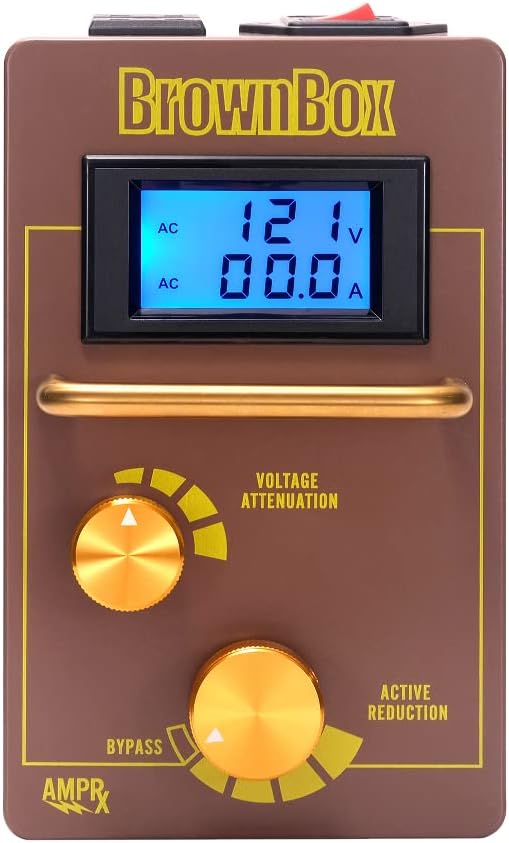
This unique device attenuates input AC voltage instead of signal power, which is a distinct approach for tube amps. By lowering the voltage, it reduces heat and stress on tubes while affecting overall power output.
We may earn a commission when you buy through this link, at no additional cost to you.
The unit features selectable input and output voltages along with an LCD voltmeter for precision monitoring. This allows you to fine-tune the voltage supplied to the amplifier's power supply.
Since it affects tube dynamics and headroom differently than signal attenuators, the tone shift is more fundamental. It is highly rated for safety and heat reduction but changes the core behavior of the amp.
Players interested in voltage modification for tone shaping or tube longevity will find this useful. It requires careful setup but offers unique benefits for tube maintenance.
By lowering AC voltage, this unit reduces power output and heat dissipation within the tubes.
An integrated LCD monitor displays current voltage levels for precise monitoring and adjustment.
We may earn a commission when you buy through this link, at no additional cost to you.
Selecting the right attenuator for tube amp requires understanding power handling, load type, and additional features that match your workflow.
Ensure the attenuator can handle the wattage of your amplifier to prevent damage. Units like the 30W Tone King Ironman II Mini are great for low-wattage amps, while higher wattage models like the 100W Bugera PS1 are needed for powerful heads.
Always check the maximum wattage rating before buying to ensure safety and longevity of your gear.
Reactive attenuators mimic the impedance of a speaker cabinet, preserving tone better than simple resistive boxes. This is critical for players who want to retain dynamic feel and breakup characteristics.
Look for reactive load technology if tone integrity is your top priority.
Different units offer different degrees of volume reduction, from minor tweaks to silent recording levels. Some models allow you to go down to whisper quiet, while others only offer modest volume drops.
Decide if you need silent recording capabilities or just lower stage volume.
Advanced attenuators include cabinet simulation or impulse response loading for direct recording. This removes the need for microphones but often comes at a higher price point.
Choose a unit with built-in simulation if you plan to record directly to your interface.
Some attenuators provide line outputs or DI outs for connecting to mixers and audio interfaces. Check if you need a specific connector type for your recording or live setup.
A dedicated line output is essential for direct integration into recording chains.
Your attenuator must support the impedance of your amp, such as 4, 8, or 16 Ohms. Multi-impedance inputs offer the most flexibility for changing setups.
Verify compatibility with your amp's output impedance to avoid poor performance.
Prices range significantly from affordable pedal-sized options to high-end studio solutions. Determine your spending limit before browsing to narrow down the most practical choices.
Balance cost with the features you truly need for your specific application.
Connect the attenuator between your amplifier's speaker output and the cabinet. Always verify that the impedance settings match your amp and cabinet to ensure a safe connection.
Set the attenuation level to reduce volume to your desired level. If recording, use the line output to connect to your audio interface or mixer.
Allow the unit to cool down after extended high-wattage use. Keep it in a dry, dust-free environment to prevent damage to internal components.
Yes, most attenuators require a speaker cabinet to complete the circuit. However, models with line outputs allow you to bypass the cabinet for direct recording into an audio interface.
Generally no, as solid-state amps behave differently regarding load impedance. Attenuators are designed specifically for the reactive load requirements of tube amplifiers.
Some change is inevitable, but reactive attenuators minimize tone loss compared to resistive ones. High-end models aim to preserve the original character as closely as possible.
Yes, most units are safe for permanent installation. Ensure the wattage and impedance ratings match your gear to prevent any risk of overheating or damage.
Some models like the Bugera PS1 support both guitar and bass, but always check specifications. Bass amplifiers often require higher power handling and lower frequency response.
Turning an amp down often sacrifices power tube saturation and tone. An attenuator lets you crank the amp for distortion while controlling the overall output volume.
We reviewed ten top-rated attenuators for tube amps ranging from budget-friendly pedals to professional studio solutions. Each unit offers distinct benefits depending on your needs for volume control and tone preservation.
Prioritize reactive load technology if maintaining dynamic feel is critical for your playing style. Consider built-in modeling features if you plan on recording directly without a microphone.
Check current prices and availability for each model before making your final purchase decision. Ensure compatibility with your amp's wattage and impedance for safe operation.