
Soonkoda 3 in 1 Handheld Anemometer
4.3Editor score
Measures speed temperature and level
Compact design for easy carrying
Auto power off saves battery life
This guide compares the top ten anemometer for measuring wind speed to help you choose the best digital wind meter for HVAC, sailing, and outdoor activities.
Finding the right tool to gauge air movement is essential for safety and precision in many fields. An anemometer for measuring wind speed provides critical data for professionals and enthusiasts alike.
We evaluated ten top-rated models based on accuracy, ease of use, and versatility. Each device was compared against key criteria to ensure you get reliable performance in varied conditions.
Every pick highlights unique strengths and real-world applications. Remember that product availability and offers change frequently, so verify details before making your final purchase decision.
4.3Editor score

4.5Editor score

4.6Editor score
The following table provides a side by side overview of key specifications for each model featured in this guide to help you quickly identify the right fit for your needs.




The BTMETER BT-100 stands out as a versatile and accurate tool for both professionals and hobbyists. With a strong rating and robust build quality, it handles various wind measurement tasks effortlessly.
We may earn a commission when you buy through this link, at no additional cost to you.
Its ability to measure wind speed, temperature, and chill makes it ideal for HVAC work, drone flying, and outdoor sports. The tripod hole is a standout feature for stationary monitoring.
While it is reliable, the battery life could be better for extended field use. The weight is manageable but might feel heavy for some during long sessions.
This model is perfect for anyone needing precise data without breaking the bank. It offers a great balance of features and reliability for diverse applications.
The device captures wind velocity within a wide range ensuring you get reliable data whether you are checking a vent or monitoring a storm.
From sailing to HVAC ducts, this meter adapts easily to different environments providing immediate feedback for better decision making.
We may earn a commission when you buy through this link, at no additional cost to you.
The Mcbazel 3 in 1 offers an excellent entry point for those needing reliable wind data without high costs. It simplifies complex measurements into easy to read formats.
We may earn a commission when you buy through this link, at no additional cost to you.
Its support for the Beaufort scale is particularly useful for sailors and outdoor enthusiasts who need quick wind level assessments. The backlight ensures readability at night.
However, the plastic casing may not withstand rough handling as well as premium models. Users must also purchase batteries separately which adds to initial cost.
Ideal for casual users or students, this device delivers solid performance for everyday tasks. It proves that you do not need to spend a lot to get accurate readings.
The interface is straightforward allowing users to switch units and modes quickly without needing a manual.
Showing speed and temperature simultaneously saves time and helps you understand the full environmental context instantly.
We may earn a commission when you buy through this link, at no additional cost to you.
The TopTes TS-301 excels with its large display making it easy to read data even from a distance. It includes humidity tracking which adds value for weather monitoring.
We may earn a commission when you buy through this link, at no additional cost to you.
Users appreciate the inclusion of batteries and a carry pouch right out of the box. The large screen reduces eye strain during prolonged use in various lighting conditions.
The humidity sensor requires a warm up period which might be inconvenient for immediate readings. It also lacks some advanced flow calculation features found in HVAC specific tools.
This device is great for outdoor sports and general weather checks. Its user friendly design and extra features make it a strong contender in this price range.
The oversized screen ensures numbers are clear and legible even in bright sunlight or low light without squinting.
Beyond wind speed, the ability to check humidity gives a fuller picture of conditions for comfort and safety.
We may earn a commission when you buy through this link, at no additional cost to you.
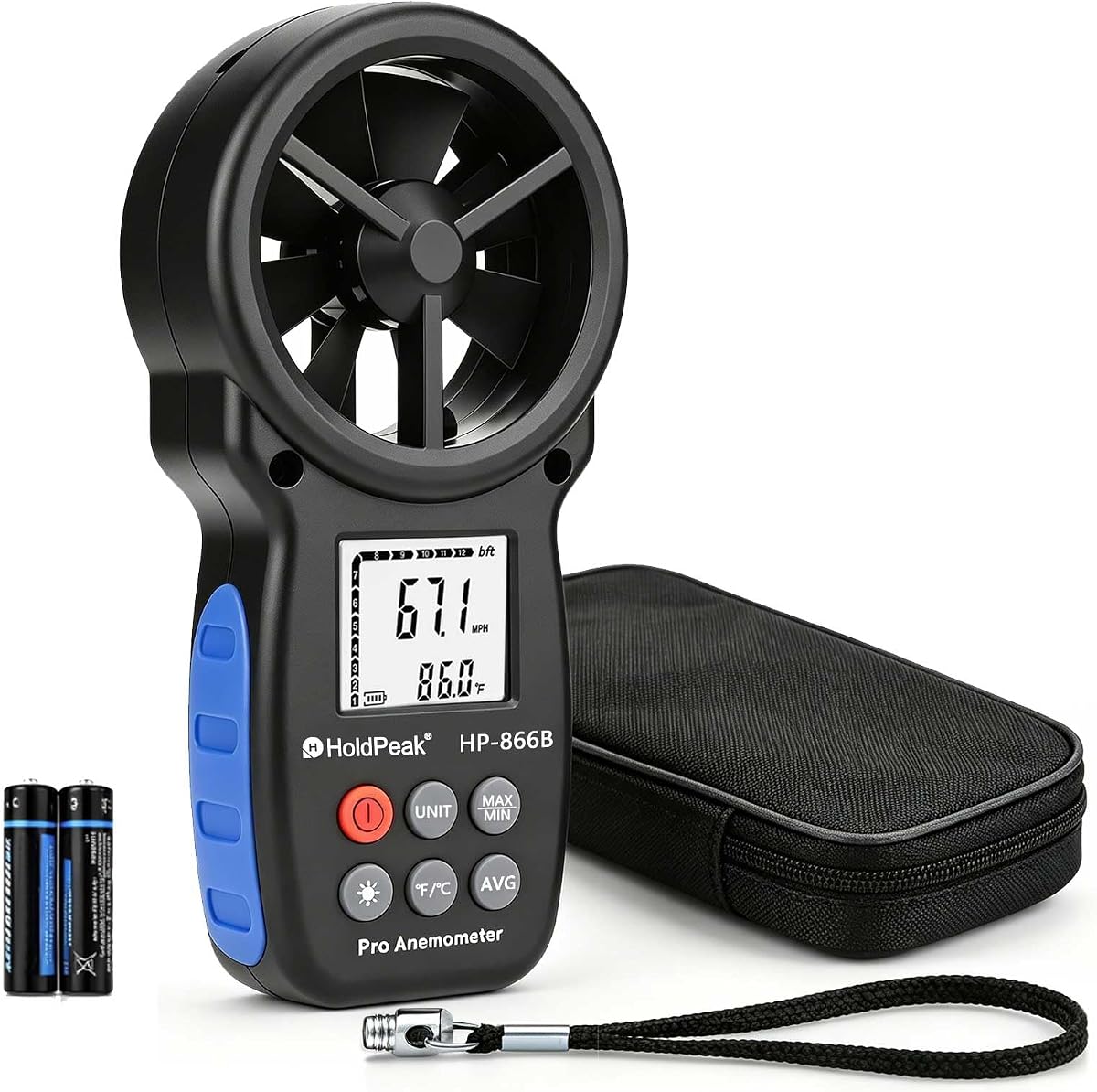
The HoldPeak 866B is engineered for professionals who need reliable data for air flow analysis. Its focus on CFM calculation makes it a top choice for technicians.
We may earn a commission when you buy through this link, at no additional cost to you.
The included hand strap and waterproof pouch add practical value for field work. The dual sensors provide stable readings even in fluctuating temperatures.
It is heavier than general purpose models which might be an issue for casual users. The price reflects its professional grade build and specialized functions.
HVAC installers and technicians will find this device indispensable. It simplifies complex air flow tasks and ensures consistent performance in demanding environments.
Engineered for technical use, this meter provides the precision needed for balancing ventilation systems effectively.
The included accessories ensure you are prepared for any job site without needing to buy extra parts separately.
We may earn a commission when you buy through this link, at no additional cost to you.
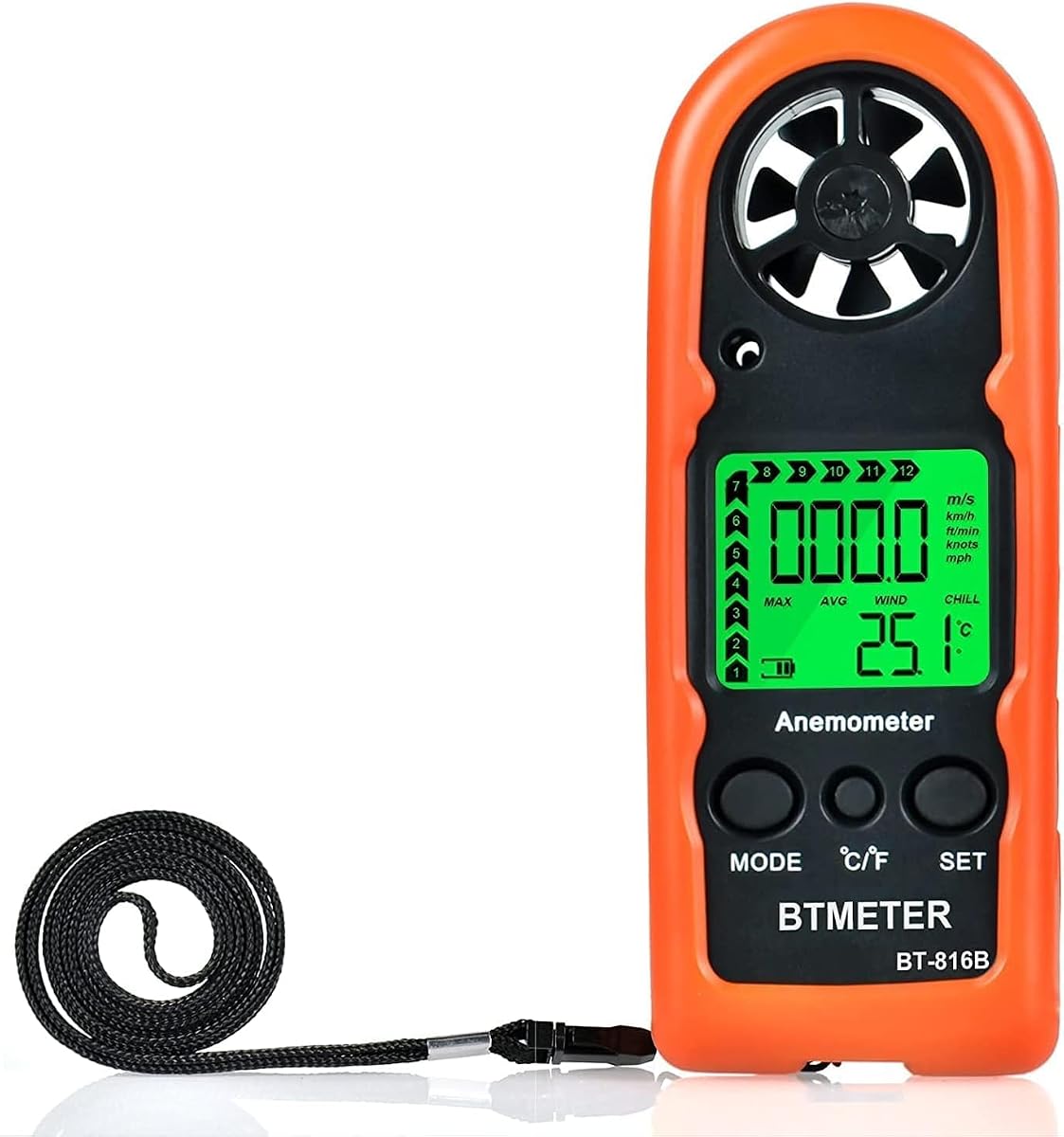
The BTMETER BT-816B is designed for those who prioritize portability. Its compact size makes it easy to carry in a pocket or bag during outdoor activities.
We may earn a commission when you buy through this link, at no additional cost to you.
Users can switch between wind speed and wind chill modes easily. The lightweight build reduces hand fatigue during extended use in sports or hiking.
The small screen can be difficult to read in direct sunlight without careful angles. It may also feel less rugged for rough industrial environments.
Ideal for hikers, pilots, and casual users, this device offers great value. It delivers essential data in a package that fits comfortably in your hand.
Weighing just over 50 grams, this meter slips easily into gear bags or pockets without adding bulk.
The wind chill feature helps you understand actual feel of the weather for better planning during cold outings.
We may earn a commission when you buy through this link, at no additional cost to you.
The Soonkoda 3 in 1 provides essential wind measurement capabilities at an entry level price. It covers the basics well for casual and light professional use.
We may earn a commission when you buy through this link, at no additional cost to you.
Its double line display shows speed and temperature together which is convenient. The auto power off helps save battery life during infrequent use.
The construction is minimal and may not endure heavy daily use. Advanced features like airflow calculation are absent from this model.
Students or hobbyists needing a simple tool will appreciate this option. It proves that basic functionality can be achieved without significant expense.
You get reliable data for common tasks without the cost of advanced professional models.
The dual line display ensures you see all key data at once without cycling through menus.
We may earn a commission when you buy through this link, at no additional cost to you.
The AEM01S stands out with its color coded alarm system that warns of dangerous wind levels. This feature adds a layer of safety for outdoor workers.
We may earn a commission when you buy through this link, at no additional cost to you.
Users get frequent updates every half second which is useful for dynamic environments. The ergonomic design ensures comfort during long measurement sessions.
The alarms might be noisy or annoying if you just need quiet data collection. It is best suited for safety critical environments rather than casual use.
This device is ideal for construction or event safety teams. It combines precision with immediate visual feedback to protect users from sudden gusts.
The color changing backlight alerts you instantly to high wind speeds without needing to read numbers.
With fast sampling rates, you can track rapid changes in wind conditions for better situational awareness.
We may earn a commission when you buy through this link, at no additional cost to you.
The Caldwell Wind Wizard II is built to last with a lifetime warranty and durable construction. It is a trusted choice for hunters and shooters.
We may earn a commission when you buy through this link, at no additional cost to you.
Its resistance to moisture and drop protection ensures it survives tough field conditions. The lanyard prevents accidental drops in critical moments.
While expensive, the warranty justifies the investment for long term use. It lacks some modern unit conversions but excels in reliability.
Ideal for outdoor enthusiasts who need a dependable tool. It offers peace of mind with its strong guarantee and solid build quality.
The lifetime warranty ensures you are covered for the entire life of the product reducing future replacement costs.
Designed with precision sports in mind, it helps you make accurate adjustments for long range shots.
We may earn a commission when you buy through this link, at no additional cost to you.
The Proster Digital Anemometer supports CFM CMM and CMS calculations making it versatile for technical airflow measurements. It is a solid tool for engineers and HVAC specialists.
We may earn a commission when you buy through this link, at no additional cost to you.
The included 9V battery provides stable power for extended periods. Its large screen is easy to read even in dark areas.
The 9V battery type is less common than AAA so replacements can be harder to find. The extra weight might be noticeable during handheld use.
This model is best for those needing specific airflow data. It simplifies complex math and delivers results efficiently for professional use.
Directly measure volume flow rates without needing manual calculations or external apps.
The large screen with backlight ensures you never miss a reading even in dim environments.
We may earn a commission when you buy through this link, at no additional cost to you.
The VEVOR Split Handheld Anemometer allows you to transfer data to your PC for detailed analysis. This feature is rare in handheld devices.
We may earn a commission when you buy through this link, at no additional cost to you.
It offers water resistance and a long cord for hard to reach areas. The wind chill calculation adds value for outdoor comfort assessments.
The cord might feel awkward to use without assistance. Software compatibility may require specific settings on your computer for full functionality.
This is a great choice for research and construction projects. It bridges the gap between manual measurement and digital data tracking.
Save and analyze your wind data on a computer for reports and long term trends.
The USB port and cord make it adaptable for fixed and remote measurements in various setups.
We may earn a commission when you buy through this link, at no additional cost to you.
Selecting the right anemometer involves considering several key factors to ensure it meets your specific needs and usage conditions.
Check the minimum and maximum wind speed ranges the device supports. Accuracy is critical for professionals, so look for models with tight tolerances.
Prioritize units that offer high accuracy within your typical usage range to ensure reliable data.
Ensure the anemometer supports the units you need such as mph, km/h, knots, or m/s. Some models allow easy switching between these.
Choose a device with flexible unit options to avoid conversion errors during field work.
Look for useful extras like temperature tracking, wind chill calculation, or data hold functions. These features add value depending on your use case.
Select models with features that directly support your workflow or hobbies for better utility.
Water resistance and rugged casing are important for outdoor or industrial use. A sturdy build ensures the device survives drops and weather.
Opt for durable materials if you plan to use the device in harsh conditions frequently.
A clear screen with backlighting is essential for reading in low light or bright sun. Large numbers reduce eye strain and mistakes.
Choose a model with a bright display to ensure quick and accurate reading at a glance.
Consider battery type and life. Some models use common batteries like AAA while others use less common types which may impact convenience.
Prioritize long battery life and accessible power sources to keep your device running during long sessions.
Weight and size matter if you need to carry the device on hikes or in pockets. Compact models reduce fatigue and increase usage.
Select a lightweight option if you plan to travel with your device frequently.
A strong warranty indicates confidence in product quality. Look for brands that offer reliable customer service for technical issues.
Choose a model with a solid warranty to protect your investment against defects or damage.
Hold the device steadily at the desired height and direction for accurate readings. Avoid blocking the sensor with your hand or body.
Clean the sensor area with a soft cloth to remove dust and debris. Store it in a protective case when not in use.
Replace batteries regularly and turn off the device after use to save power. Follow the manual for specific maintenance instructions.
Check the specified tolerance in the product details. Professional use often requires a tolerance within 3 percent while general use may accept more.
It depends on your field. Meters per second are standard in science while miles per hour are common in the US for weather and aviation.
Yes, many models work for HVAC and indoor air flow. Ensure the range includes low speeds for accurate indoor measurements.
Most digital models do not require user calibration. If needed, follow the manufacturer guide for factory reset or professional calibration.
Most handheld units use AAA or AA batteries. Always check the specific model requirements before purchasing replacements.
Use caution as high winds can damage the device. Keep it protected from rain if it is not waterproof to ensure longevity.
Our top picks cover a wide range of needs from budget friendly options to professional grade tools. The BTMETER BT-100 offers excellent overall performance for most users.
Prioritize accuracy and durability if you work in demanding environments. For casual use, simpler models provide the essential data you need.
Always check current prices and availability before purchasing. Conditions change and new models may offer even better value over time.