
10 Pack 3 Pins AMS1117
4.1Editor score
Affordable 10 pack value
Simple 3 pin connection
Overheat protection included
Discover the top 5V to 3V voltage regulator options for stable power. This guide compares specs, features, and reliability to help you choose.
Finding the right voltage regulator is crucial for protecting sensitive electronics. A good 5V to 3V converter ensures stable power delivery for microcontrollers and sensors.
We evaluated ten popular models based on input range, output stability, and size. Each option offers unique benefits for hobbyists and professional developers alike.
Our list highlights top performers with clear specs and key features. Prices fluctuate daily so check current listings before making your final purchasing decision.
4.1Editor score

4.6Editor score

5.0Editor score
This side-by-side comparison helps you quickly identify the right regulator for your specific power needs and project requirements.


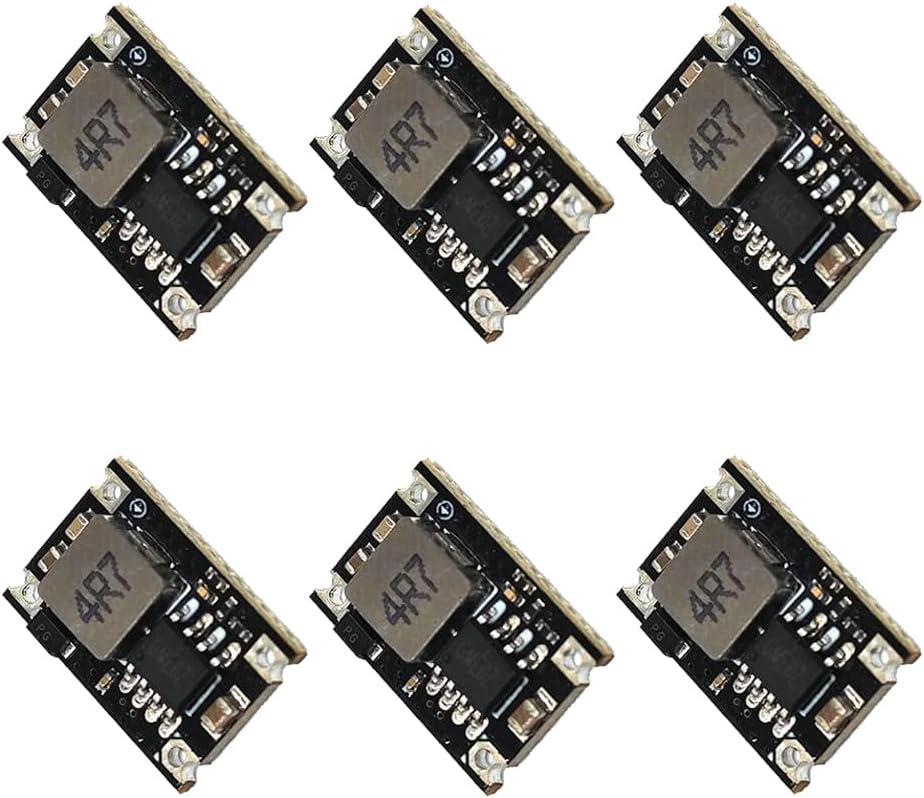
This buck converter module stands out for its wide input range and stable 3.3V output. It earns our Editor's Choice for balancing performance with compact size.
We may earn a commission when you buy through this link, at no additional cost to you.
The module supports inputs from 4.5V to 24V which covers most standard power supplies. Its 1.8A maximum current is sufficient for most microcontroller projects without overheating.
While it performs well you must add protection diodes for inductive loads like motors. This prevents voltage spikes from damaging the regulator chip during sudden load changes.
Ideal for hobbyists needing multiple reliable regulators this pack offers excellent value. Choose this for general purpose embedded projects requiring clean stable power delivery.
Works seamlessly with 5V 9V 12V and 24V supplies for versatile power options.
Tiny 17.5x12x4.5mm dimensions fit easily into tight PCB enclosures.
We may earn a commission when you buy through this link, at no additional cost to you.
A classic choice for low power linear regulation this AMS1117 pack is perfect for tight budgets. It simplifies connections with a straightforward three pin design.
We may earn a commission when you buy through this link, at no additional cost to you.
The regulator accepts inputs up to 12V and delivers a steady 3.3V output. Its overheat shutdown feature adds safety for unattended prototypes or long tests.
Because it is linear it dissipates heat as the voltage difference increases. Ensure adequate airflow or heat sinking if running near the 800mA limit continuously.
Buy this if you need basic reliable regulation for sensors or logic circuits. Its low cost makes it ideal for bulk prototyping and educational kits.
Dual panel pin layout simplifies soldering for beginners and quick prototypes.
Built in shutdown prevents permanent damage during thermal overload events.
We may earn a commission when you buy through this link, at no additional cost to you.
This Mini360 based module delivers premium performance in a tiny package. Users praise its clean output and ability to handle high current demands efficiently.
We may earn a commission when you buy through this link, at no additional cost to you.
With 1.8A max output and less than 30mV ripple it powers sensitive analog circuits well. The 1.5MHz switching frequency keeps efficiency high even under load.
Inductive loads still require external protection like Zener diodes to avoid ripple issues. Proper component selection ensures reliable operation over long project lifespans.
Choose this for high performance embedded systems needing minimal footprint. It justifies its cost with reliability and superior electrical characteristics for serious builds.
Switching architecture minimizes heat loss compared to linear alternatives.
Low ripple ensures stable power for precision sensors and ADCs.
We may earn a commission when you buy through this link, at no additional cost to you.
This converter shines for low current applications needing voltage step up or down. It handles inputs below 3.3V making it perfect for battery powered projects.
We may earn a commission when you buy through this link, at no additional cost to you.
With only 100mA max output it is designed for sensors and small logic circuits. Its buck boost topology ensures stable output even when battery voltage drops.
High efficiency means longer battery life in portable devices. Avoid using it for motors or high current loads as it will overheat quickly.
Buy this for IoT sensors or wearables requiring minimal power. It is the ideal choice when efficiency and battery longevity are top priorities.
Optimized for battery powered devices needing stable voltage during discharge.
Handles both stepping up and down from a single versatile design.
We may earn a commission when you buy through this link, at no additional cost to you.
Similar to the AMS1117 this Dorhea module offers a reliable linear solution for low noise applications. It includes protection features to safeguard your hardware.
We may earn a commission when you buy through this link, at no additional cost to you.
The module supports up to 800mA and delivers a clean 3.3V output. Ideal for logic circuits where switching noise could interfere with sensitive analog signals.
Efficiency is lower than switching regulators so expect some heat at higher currents. Ensure ventilation or avoid high power loads to maintain performance.
Purchase this for low noise audio or signal processing projects. The seven pack offers plenty of units for multiple boards or prototypes.
Linear design minimizes electromagnetic interference for analog circuits.
Built-in protection cuts power if overheating occurs during heavy use.
We may earn a commission when you buy through this link, at no additional cost to you.
This 15-piece pack offers exceptional value for large scale prototyping or production runs. The low dropout feature ensures stable operation even as input voltage falls.
We may earn a commission when you buy through this link, at no additional cost to you.
It includes overcurrent and thermal shutdown protection for robust operation. The wide temperature range suits industrial or automotive environments better than standard regulators.
As with all linear designs expect heat if voltage differences are large. Manage thermal dissipation to avoid triggering protection circuits during sustained use.
Choose this for bulk purchases needing reliable basic regulation. The quantity and protection features make it a smart long-term inventory investment.
Maintains output stability even when input voltage is close to 3.3V.
Operates reliably from -40C to 125C in demanding environments.
We may earn a commission when you buy through this link, at no additional cost to you.
This board handles high input voltages up to 30V making it suitable for higher voltage sources. Reverse polarity protection helps prevent accidental wiring mistakes.
We may earn a commission when you buy through this link, at no additional cost to you.
The 1.8A output supports moderate loads without overheating. Keep ripple low with proper capacitor placement near load devices for stability.
User feedback varies so quality control may differ between batches. Inspect units upon arrival for soldering issues before full integration.
Buy this for applications needing higher input headroom. It provides good power handling for its size in portable or embedded systems.
Reverse polarity mark helps avoid damage from incorrect wiring.
Accepts up to 30V input for compatibility with higher voltage sources.
We may earn a commission when you buy through this link, at no additional cost to you.
Each unit is pre-tested before shipping ensuring reliable performance out of the box. Its compact size suits wearables and drones needing power management.
We may earn a commission when you buy through this link, at no additional cost to you.
Supporting up to 30V input and 1.8A output it covers diverse power needs. Low ripple ensures clean power for sensitive microcontrollers and sensors.
Inductive loads like motors still need external protection components. Add capacitors or diodes to prevent voltage spikes from affecting downstream chips.
Choose this for portable devices with tight space constraints. Its reliability and compact form make it a strong candidate for consumer electronics.
Quality check ensures every module meets performance standards before shipment.
Small size and efficiency fit well into wearable device designs.
We may earn a commission when you buy through this link, at no additional cost to you.
Designed for inputs around 5V this module provides reliable 800mA output. The adjustable start limit offers extra flexibility for prototyping different voltage inputs.
We may earn a commission when you buy through this link, at no additional cost to you.
Using the AMS1117 chip it offers predictable performance and thermal shutdown. Keep within the specified voltage range to avoid damage or erratic operation.
Exceeding voltage limits can damage the module so verify inputs carefully. It works best with stable 5V sources or regulated supplies.
Buy this for projects centered on 5V logic systems. The quantity allows easy testing and prototyping across multiple board versions.
Automatic start limit voltage adjusts behavior for safe startup conditions.
Based on trusted AMS1117 technology for consistent voltage regulation.
We may earn a commission when you buy through this link, at no additional cost to you.
The MP1584EN chip delivers high performance in a tiny footprint ideal for aircraft models. Its efficiency reduces heat and improves system reliability.
We may earn a commission when you buy through this link, at no additional cost to you.
Outputs up to 1.8A with low ripple making it great for motors or sensors. Add Zener diodes and capacitors when using inductive loads to protect circuitry.
Switching noise requires careful PCB layout for analog signals. Follow application notes to maintain signal integrity in mixed signal designs.
Select this for high current needs in tight spaces. Its performance justifies extra design effort for demanding power applications.
MP1584EN ensures efficient switching with minimal power loss.
High current output supports small DC motors and servos well.
We may earn a commission when you buy through this link, at no additional cost to you.
Selecting the right regulator depends on your project's power needs and environmental factors. This guide outlines key specs to evaluate before buying.
Ensure the regulator accepts your source voltage. A wide range like 4.5V to 24V offers flexibility for different power supplies.
Choose input range matching your power source for reliable operation.
Match the regulator's current rating to your load. Exceeding 800mA requires switching regulators for better heat management.
Always verify max current ratings prevent device burnout.
Switching regulators are more efficient and stay cooler than linear ones under load. They save battery life in portable applications.
High efficiency units reduce heat and prolong device life.
Low ripple ensures clean power for sensors and analog circuits. Look for specs under 30mV for sensitive electronics.
Clean output prevents interference with logic circuits.
Compact modules fit better in small enclosures. Check dimensions to ensure compatibility with your PCB layout.
Select size to match enclosure and PCB constraints.
Overheat and overcurrent protection prevent damage during faults. Built-in safety is vital for unattended devices.
Prioritize regulators with thermal and current limits.
Multi-packs offer value for prototyping multiple boards. Ensure consistent quality across all units in the pack.
Buy multi-packs to reduce per-unit cost.
Balance cost with performance needs. High current or low ripple often costs more but prevents future redesigns.
Invest in quality for long-term project stability.
Connect the input to your power source and output to your load carefully. Ensure polarity matches markings on the board.
Add decoupling capacitors near input and output pins to reduce noise. This stabilizes the voltage for sensitive components.
Monitor temperature during initial use to ensure safe operation. Use heatsinks if running near maximum current limits.
Linear regulators provide low noise but are less efficient especially with large voltage drops. Switching regulators are more efficient and stay cooler but may produce more noise.
Yes many models support inputs up to 24V or 30V. Check the specific input range before connecting to ensure compatibility.
Most modules include internal capacitance but external ones improve stability especially for sensitive loads. Adding 0.1uF caps is standard practice.
Linear regulators dissipate heat proportional to voltage drop and current. Ensure airflow or use switching regulators for high current needs.
Motors generate voltage spikes that can damage regulators. Always add flyback diodes and capacitors for inductive loads.
AMS1117 linear options work well for simple logic loads. Buck converters are better for battery powered or high current Arduino applications.
Most modern microcontrollers require 3.3V not 3V. Ensure the output matches your device voltage exactly to avoid damage.
Look for overheat shutdown and overcurrent protection features. These prevent damage during shorts or thermal overload conditions.
Our top picks include the Editor's Choice buck module and budget AMS1117 packs. Each offers unique strengths for different project needs and budgets.
Prioritize efficiency and current capacity for long-term reliability. Choose switching regulators for battery devices and linear for low noise needs.
Prices change so verify current listings before ordering. Check specs match your exact project requirements for best results.