
FLASHFORGE Creator 5 Pro
4.0Editor score
Active heated chamber
Industrial CoreXY
Near-zero waste system
Discover the top 3D printers for small businesses in October 2026. We compare speed, quality, and multi-color features to help you choose the right model.
Selecting the right 3D printer for small business operations requires balancing speed, reliability, and material versatility. Modern machines now support multi-color printing and rapid prototyping, allowing entrepreneurs to scale production without significant overhead costs.
We evaluated ten leading models based on build volume, printing speed, ease of use, and advanced features like automatic leveling. Each product was analyzed for its ability to handle diverse filaments and maintain consistent quality under daily business demands.
Every pick highlights specific strengths suited to different business needs, from rapid prototyping to multi-color manufacturing. Please note that availability and pricing may fluctuate, so verify current details before making your final investment decision.
4.0Editor score

4.5Editor score

4.5Editor score
This side-by-side comparison highlights the key specifications and capabilities of each model to help you identify the best fit for your specific business requirements and production goals.



The Snapmaker U1 stands out as the top choice for businesses needing versatile, high-speed production. With a rating of 4.5, it delivers true multi-material printing via its 4-toolhead system and rapid 5-second tool changes. This efficiency minimizes downtime and material waste, making it ideal for small businesses focused on rapid prototyping and multi-color end-use parts.
We may earn a commission when you buy through this link, at no additional cost to you.
Its core advantage lies in the SnapSwap system, which preloads filaments to enable automatic switching without manual purging. This feature supports up to five times faster multi-color printing compared to traditional systems. The rigid CoreXY motion structure ensures high-speed stability up to 500 mm/s while maintaining dimensional accuracy, crucial for consistent batch production.
While highly capable, the Snapmaker U1 requires a higher upfront investment and familiarity with its proprietary slicing software, Snapmaker Orca. These trade-offs are generally acceptable for businesses prioritizing production speed and flexibility. The automatic calibration and AI monitoring further reduce the need for constant manual supervision, streamlining operations.
Businesses producing functional parts, prototypes, or multi-material consumer products should buy the Snapmaker U1. Its ability to handle rigid, flexible, and water-soluble supports in a single print opens new design possibilities. This machine is a solid long-term investment for small enterprises looking to scale manufacturing efficiency.
Automatic tool changing reduces waste and accelerates workflows by eliminating manual filament swaps during multi-color jobs.
Active vibration compensation and auto calibration ensure consistent first layers and reliable results across large batch jobs.
We may earn a commission when you buy through this link, at no additional cost to you.
The FLASHFORGE Creator 5 Pro is engineered for demanding industrial applications within small businesses. It features four independent toolheads and a near-zero waste system, eliminating flush waste during color changes. Its active heated chamber supports advanced filaments like ABS, PC, and PA, ensuring high-strength parts without warping or defects.
We may earn a commission when you buy through this link, at no additional cost to you.
The machine delivers printing speeds up to 600 mm/s via a rigid CoreXY architecture with precision linear rails. Safety is prioritized with dual HEPA 13 filtration, effectively trapping fumes for a clean workspace. Remote monitoring via HD camera and mobile app allows operators to manage production cycles efficiently from anywhere.
While powerful, the Creator 5 Pro demands significant workspace due to its enclosed frame and ventilation needs. Its higher operational complexity suits businesses ready to invest in robust, high-throughput systems. Users must factor in maintenance costs associated with industrial-grade components.
Small businesses focused on engineering prototypes or functional end-use parts will benefit most from this model. Its ability to process high-temp materials and minimize waste makes it ideal for scaling production. The premium features justify the investment for professional manufacturing environments.
Independent toolheads and FlashSwap technology cut material waste significantly by avoiding traditional purge cycles.
Heated chambers up to 65 degrees Celsius enable reliable printing of challenging engineering filaments like PC and PA.
We may earn a commission when you buy through this link, at no additional cost to you.
The Bambu Lab P1S offers exceptional value for small businesses needing rapid prototyping without advanced costs. It achieves speeds up to 500 mm/s and accelerates quickly, ensuring quick turnaround times for design iterations. Its fully enclosed design enhances print quality for materials like ABS while automatic bed leveling simplifies daily operations.
We may earn a commission when you buy through this link, at no additional cost to you.
This model is designed for ease of use, requiring only 15 minutes to set up for first-time users. The user-friendly interface minimizes training time, making it accessible for staff with varied technical skills. It supports a wide range of filaments including PLA, PETG, and TPU, covering most standard business needs.
However, multi-color printing requires the separate purchase of the AMS module, which adds to the total cost. The build volume is relatively modest compared to industrial machines, limiting large single-piece prints. These limitations are offset by its speed, reliability, and consistent print quality.
For small businesses prioritizing speed and simplicity, the P1S is an excellent starting point. It balances performance with affordability, ideal for startups or small workshops. With optional AMS integration, it can evolve into a multi-color solution as business needs grow.
High acceleration and print speeds reduce production time significantly, enabling faster project completion.
Automatic leveling and rapid setup reduce manual intervention, saving time for creative tasks.
We may earn a commission when you buy through this link, at no additional cost to you.
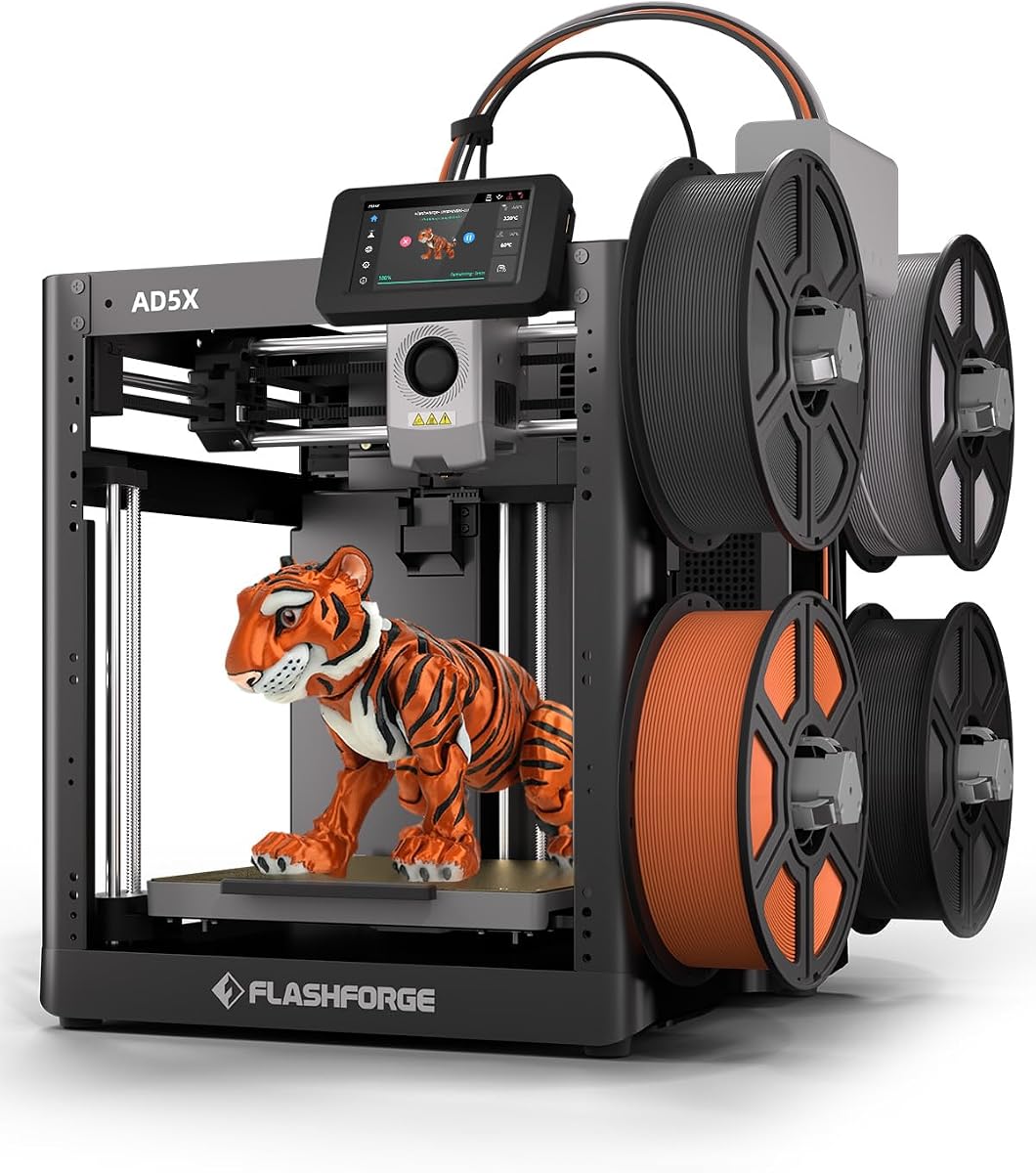
The FLASHFORGE AD5X combines multi-color capabilities with precision engineering suitable for detailed small business projects. It supports up to four colors simultaneously, offering creative freedom for customized products. The 1-click auto leveling ensures consistent first layers, reducing print failures and saving time.
We may earn a commission when you buy through this link, at no additional cost to you.
With a CoreXY structure and speeds up to 600 mm/s, it delivers rapid prototyping results. The 300C direct drive extruder handles high-temperature filaments, while multiple nozzle sizes allow for both detail and speed. Remote monitoring via the Flash Maker app adds flexibility to production management.
Its 220x220x220 mm build volume limits larger parts, making it better suited for small components or multi-piece jobs. Users may find initial calibration settings complex, requiring attention to detail for optimal results. However, once tuned, it provides reliable performance for precise tasks.
This printer is ideal for businesses producing small, detailed, or colorful items like jewelry or miniatures. Its balance of speed, material versatility, and multi-color options makes it a strong contender for niche markets. Consider your required part size before purchasing.
Simultaneous four-color printing enables vibrant custom designs without manual intervention.
Mobile app monitoring allows oversight of prints from anywhere, increasing operational flexibility.
We may earn a commission when you buy through this link, at no additional cost to you.
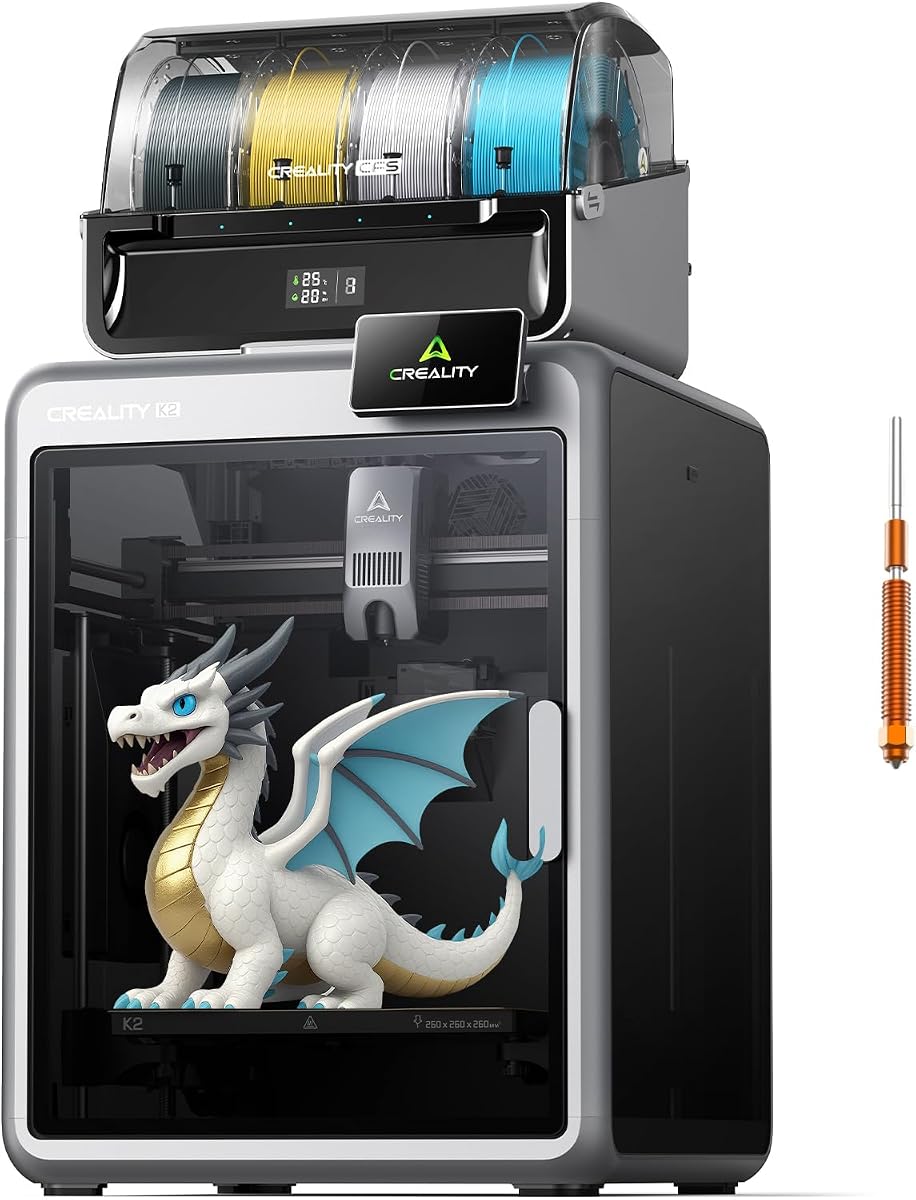
The Creality K2 Combo delivers strong performance with multi-color capabilities through its CFS system. It supports up to 16 colors and reaches speeds of 600 mm/s, ideal for rapid business prototyping. The smart AI camera monitors for print failures, reducing waste and improving success rates.
We may earn a commission when you buy through this link, at no additional cost to you.
This machine operates quietly thanks to step-servo motors and balanced fans, making it suitable for office environments. Pre-assembly reduces initial setup time, allowing quicker integration into workflows. Auto leveling ensures consistent first layers, essential for reliable production runs.
However, full multi-color setups require additional CFS units, increasing overall cost. The system complexity may challenge less technical users. While efficient, it is not as plug-and-play as some competitors, requiring calibration attention for best results.
Businesses needing multi-color output with standard build volumes will appreciate this model. It offers a balanced mix of speed, quality, and material range. Ideal for those prioritizing visual fidelity and quiet operation in shared workspaces.
Step-servo motors reduce noise to office-friendly levels, enhancing work environment comfort.
AI camera detects print issues in real-time, preventing costly failures and material waste.
We may earn a commission when you buy through this link, at no additional cost to you.
The Creality K2 Plus Combo excels with a large build volume of 350x350x350 mm, accommodating bigger parts without slicing. It supports 16 colors and maintains 600 mm/s speeds, offering versatility for complex projects. Dual AI cameras monitor both chamber and toolhead, ensuring high print reliability.
We may earn a commission when you buy through this link, at no additional cost to you.
High-flow nozzles up to 350C enable printing of engineering-grade filaments like ASA and PPA. The aerospace-grade aluminum frame enhances rigidity, reducing resonance for better precision. This combination of size, speed, and material range suits diverse business applications.
Its large footprint and cost make it best for well-equipped production spaces. Calibration and maintenance can be demanding, requiring experienced users. While expensive, its capability offsets the need for multiple machines.
Ideal for businesses needing large parts and advanced materials, this printer delivers scalability. It balances industrial features with manageable usability. Consider your space and budget before committing to this high-performance option.
Expanded build volume handles big models or batch production efficiently without splitting parts.
Two cameras track print progress and flow rates, reducing failure risks and improving output.
We may earn a commission when you buy through this link, at no additional cost to you.
The Adventurer 5M offers impressive speed and convenience with a 3-second detachable nozzle system. This feature reduces maintenance downtime, essential for busy small businesses. It reaches 600 mm/s and features auto leveling for consistent results. The dual-sided PEI platform simplifies part removal.
We may earn a commission when you buy through this link, at no additional cost to you.
Its all-metal CoreXY structure supports reliable high-speed printing. Flash Studio mobile app monitoring enables remote oversight, enhancing operational flexibility. The 280C extruder handles common engineering materials well, providing decent versatility for daily tasks.
The build volume is limited to 220mm, restricting larger projects. While efficient, it lacks full enclosure, affecting performance with some filaments. These trade-offs suit users prioritizing speed and ease over industrial robustness.
Best for fast prototyping and small batch jobs, this printer balances cost and performance. Ideal for those valuing quick maintenance and remote management. It fits well into compact workshops or labs.
Detachable nozzles change in seconds, minimizing downtime during production cycles.
App alerts keep users informed of print status, enabling proactive issue management.
We may earn a commission when you buy through this link, at no additional cost to you.
The Bambu Lab A1 delivers exceptional ease of use, perfect for small businesses entering 3D printing. Full-auto calibration eliminates manual tuning, ensuring reliable prints from day one. It achieves high speed and precision with minimal noise, thanks to active noise canceling technology.
We may earn a commission when you buy through this link, at no additional cost to you.
The touchscreen interface simplifies operation, reducing staff training needs. Multi-color printing is possible with the optional AMS Lite module. Its quiet operation makes it suitable for open offices or shared spaces where noise matters.
The A1 is less robust for heavy industrial use and has a smaller build volume. Without AMS, multi-color capabilities are absent. These constraints make it best for low-volume production or educational setups.
Ideal for startups needing plug-and-play reliability, this printer offers excellent value. It balances performance with accessibility. Verify requirements for multi-color or large parts before purchase.
Automatic calibration saves setup time, allowing immediate printing with consistent quality.
Noise-canceling technology ensures peaceful operation, ideal for shared offices.
We may earn a commission when you buy through this link, at no additional cost to you.
This Creality K2 Combo offers solid multi-color performance through its CFS system, allowing up to 16 colors. Smart filament relay handles switching automatically, while the airtight design keeps materials dry and protected. The hardened steel nozzle supports engineering filaments up to 300C.
We may earn a commission when you buy through this link, at no additional cost to you.
Silent mode ensures quiet operation, beneficial for office settings. Local storage and Wi-Fi connectivity streamline file management. Air purification filters VOCs, enhancing workspace safety. Direct drive extrusion provides consistent feed for better print quality.
While capable, the CFS units add cost and complexity. Full automation requires multiple units, impacting budget. Users should weigh the benefits against the investment. Setup and calibration take time.
Suitable for businesses needing reliable color output without high-end costs. It balances features and affordability well. Consider your print frequency before committing to this model.
Automatic RFID reading and relay simplify filament changes and reduce manual labor.
Built-in air purification reduces odors and VOCs, improving air quality in enclosed areas.
We may earn a commission when you buy through this link, at no additional cost to you.
The Bambu Lab P1S Combo includes the AMS module for seamless multi-color printing from day one. It supports up to 16 colors, delivering vibrant designs without extra purchases. Speeds up to 500 mm/s and auto leveling ensure efficiency and reliability for business workflows.
We may earn a commission when you buy through this link, at no additional cost to you.
Its fully enclosed design improves print performance with advanced filaments like ABS and ASA. The user-friendly setup minimizes assembly time, making it accessible for non-experts. High acceleration reduces cycle times, increasing overall productivity.
The added cost of AMS increases total investment, and maintenance can be complex. However, the convenience justifies the expense for multi-color producers. It balances performance with ease of use well.
Ideal for businesses requiring multi-color output without hassle, this kit offers complete functionality. It suits those prioritizing speed and simplicity in production. Verify budget and maintenance capacity before purchase.
Included AMS enables immediate multi-color printing, saving time on setup.
High-speed performance accelerates production, improving throughput for small teams.
We may earn a commission when you buy through this link, at no additional cost to you.
Selecting the right 3D printer involves evaluating multiple factors to ensure it meets your business goals. This guide outlines key considerations for balancing cost, speed, and material versatility.
Speed impacts production capacity and turnaround time for client orders. Models offering 600 mm/s reduce cycle times significantly compared to slower machines. High acceleration ensures rapid starts and stops without compromising detail.
Prioritize printers with fast speeds and acceleration to maximize daily output.
Build size determines part dimensions and batch potential. Larger volumes reduce splitting needs but require more space. Common sizes include 220mm and 350mm cubes depending on needs.
Choose a build volume matching your average product dimensions for efficiency.
Businesses needing custom branding or complex parts benefit from multi-color systems. Automatic tool changers or AMS modules enable smooth transitions. Ensure filament compatibility with materials like PLA, ABS, or engineering-grade options.
Verify multi-color and material capabilities before finalizing your purchase decision.
Quick setup and auto calibration reduce downtime and training needs. Fully automated leveling ensures consistent first layers without manual adjustments. User-friendly interfaces streamline workflow management for staff.
Select models with auto features to minimize operational friction and errors.
Reliable machines reduce failures and maintenance costs over time. Look for features like enclosed bodies for stable temperature control. High-quality components ensure consistent performance under heavy workloads.
Invest in robust printers with proven track records for long-term reliability.
Quiet operation suits office environments where sound levels matter. HEPA filtration and air purifiers protect users from fumes and VOCs. Safety systems like thermal protection prevent overheating issues.
Prioritize safety and quiet features to maintain a healthy workspace.
Wi-Fi and mobile apps enable oversight without physical presence. AI cameras detect failures early, preventing wasted materials. Remote access supports efficient management of production schedules.
Choose printers with strong connectivity tools for flexible operational control.
Beyond purchase price, consider filament, maintenance, and accessory costs. Multi-color systems require additional modules that affect budget. Evaluate long-term expenses alongside initial investment for value.
Assess total ownership costs to ensure sustainable business operations.
Start by calibrating the bed and nozzle offsets using auto-leveling features. Proper setup ensures first-layer adhesion and consistent print quality. Follow manufacturer guidelines for initial configuration to avoid failures.
Regularly clean nozzles and check filament quality to prevent clogs. Use enclosed chambers for materials like ABS to maintain stable temperatures. Monitor print progress via apps or cameras to catch issues early.
Schedule periodic maintenance like lubricating rails and updating firmware. Store filament in dry environments to avoid moisture damage. Keeping your printer in top condition extends its lifespan and reduces downtime.
The Bambu Lab P1S offers excellent performance with a fully enclosed design and fast speeds. It balances affordability with advanced features like auto leveling. Adding an optional AMS enables multi-color printing if needed for your products.
Yes, many models like the Snapmaker U1 and Bambu P1S Combo support multi-color printing. They use automatic tool changers or filament systems to handle transitions smoothly. This reduces manual work and enhances design flexibility for custom orders.
Speed directly affects your ability to meet deadlines and scale production. Faster printers reduce cycle times, enabling more output per day. Prioritize machines with high speed and acceleration for efficient workflows.
Many models support filaments like ABS, ASA, and PC for durable parts. Look for heated chambers and high nozzle temperatures for reliable results. This versatility allows production of strong, functional components.
Yes, models with auto leveling and guided setup simplify initial use. Features like touchscreens and pre-assembled components reduce learning curves. Even non-technical users can start printing quickly.
Maintain stable temperatures and calibrate settings regularly for uniformity. Use auto calibration and vibration compensation tools to minimize errors. Monitoring tools help track each print to catch deviations early.
Enclosed chambers and air filtration systems protect against fumes and heat. Thermal sensors prevent overheating, while quiet motors reduce noise exposure. These features ensure a safer and more comfortable workspace.
Use centralized software or apps to monitor and control devices remotely. Regular maintenance schedules help keep machines running smoothly. Grouping similar models simplifies filament and spare part management.
The Snapmaker U1, FLASHFORGE Creator 5 Pro, and Bambu Lab P1S stand out for their speed, multi-color capabilities, and reliability. Each serves different business needs, from industrial-grade output to agile prototyping. Selecting the right model depends on your production volume and material requirements.
Focus on speed, build volume, and automation features when making your decision. These factors directly impact efficiency and scalability in daily workflows. Don't overlook ease of use, which affects staff adoption and training time.
Always verify current pricing and availability before purchasing. Technology evolves quickly, and new models may offer improved features. Regularly revisit your needs as your business grows to stay competitive in the market.