
Bambu Lab A1
4.7Editor score
Full-auto calibration
High-speed precision
Quiet operation
Creating detailed miniatures for tabletop roleplaying games requires precise tools. A dedicated 3D printer allows hobbyists to produce high-quality figures that enhance the gaming experience. Selecting the right machine involves balancing resolution, speed, and ease of use.
We evaluated ten top-rated models focusing on their ability to handle intricate designs typical of dungeon and dragon figures. Our comparison considers print quality, material compatibility, and the learning curve for beginners versus advanced users.
Each pick highlights specific strengths like resin accuracy or FDM versatility. Prices and availability change frequently so verify current details before purchasing. Use this guide to find the perfect printer for your miniature collection.
4.7Editor score

4.4Editor score

4.5Editor score
As an Amazon Associate we earn from qualifying purchases.
The following table provides a side-by-side comparison of the ten selected printers. It highlights key specifications and features to help you quickly identify the model that best fits your specific needs for printing detailed miniatures and gaming assets.






The phrozen Sonic Mini 8K S stands out as a top choice for creating highly detailed miniature figures. Its 22 micron XY resolution ensures that even the finest textures on your Dnd characters come through clearly.
We may earn a commission when you buy through this link, at no additional cost to you.
This printer uses an 8K monochrome LCD which provides excellent contrast and speed for resin printing. The compact size makes it easy to fit on a desk while still offering enough space for multiple miniatures in one build.
While resin printing requires more care than FDM methods, the results are worth it for figure quality. Users should expect to spend time on washing and curing but the investment yields professional looking models.
If you prioritize visual fidelity and have space for a resin printer, this model is the ideal pick. It balances ease of use with the precision needed for gaming accessories perfectly.
The 22 micron resolution allows for intricate sculpting details that are essential for realistic tabletop figures.
Support for open source slicers like Lychee and Chitubox gives users flexibility to customize their printing workflow easily.
We may earn a commission when you buy through this link, at no additional cost to you.
The Bambu Lab A1 offers a remarkable entry point into 3D printing with its user-friendly design. It provides high-speed precision which is vital for printing multiple miniatures efficiently without compromising on quality.
We may earn a commission when you buy through this link, at no additional cost to you.
Its full-auto calibration feature removes the hassle of manual setup making it ideal for beginners who want to start printing immediately. The quiet operation ensures it can run in the background without disturbing others.
While it does not support multi-color printing out of the box you can add the AMS lite to achieve vibrant models. The small build area is sufficient for standard tabletop figures and heroes.
For those seeking an affordable yet reliable machine for Dnd accessories the A1 is a strong contender. It delivers on performance and ease of use which are key for hobbyists.
The 10,000 mm/s² acceleration ensures quick print times so you can produce game pieces faster.
The 1-Clip quick swap nozzle makes changing nozzles and maintenance tasks incredibly simple and quick.
We may earn a commission when you buy through this link, at no additional cost to you.
The Snapmaker U1 represents the pinnacle of FDM technology for those who need advanced capabilities. Its 4-toolhead system allows for true multi-material printing which can be used for complex supports or dual color features.
We may earn a commission when you buy through this link, at no additional cost to you.
With a 5-second tool changer this printer drastically reduces the time spent on filament swaps. This efficiency is crucial for large batches of miniatures where color changes or material switches are required.
Although the price is higher than entry models the reduction in waste and increase in productivity justifies the cost. It is robust enough to handle engineering materials as well as standard PLA.
If you need the best possible flexibility and performance for creating detailed game assets the Snapmaker U1 is unmatched. It is a professional tool adapted for the hobbyist market effectively.
Combine rigid and flexible materials in a single print for intricate parts that require different properties.
Reduce material waste by up to five times compared to traditional purging methods during color changes.
We may earn a commission when you buy through this link, at no additional cost to you.
The Bambu Lab P2S Combo brings professional grade speed and automation to your desk. With a printing speed of up to 600 mm/s you can turn around multiple miniatures in very little time.
We may earn a commission when you buy through this link, at no additional cost to you.
The AMS 2 Pro includes built-in filament drying which ensures that your prints are free from moisture issues. This is particularly useful for engineering materials that might warp if not properly dried.
The adaptive airflow system balances cooling and heat retention automatically. This helps in getting crisp overhangs on detailed figures without manual tweaking of fan speeds.
While it is a premium option the convenience and speed make it ideal for serious collectors. The included drying feature saves extra steps and keeps your workflow smooth.
Active flow rate compensation ensures that high speeds do not sacrifice the accuracy of your miniature details.
Set up your printer and start printing within 15 minutes thanks to the fast assembly and calibration tools.
We may earn a commission when you buy through this link, at no additional cost to you.
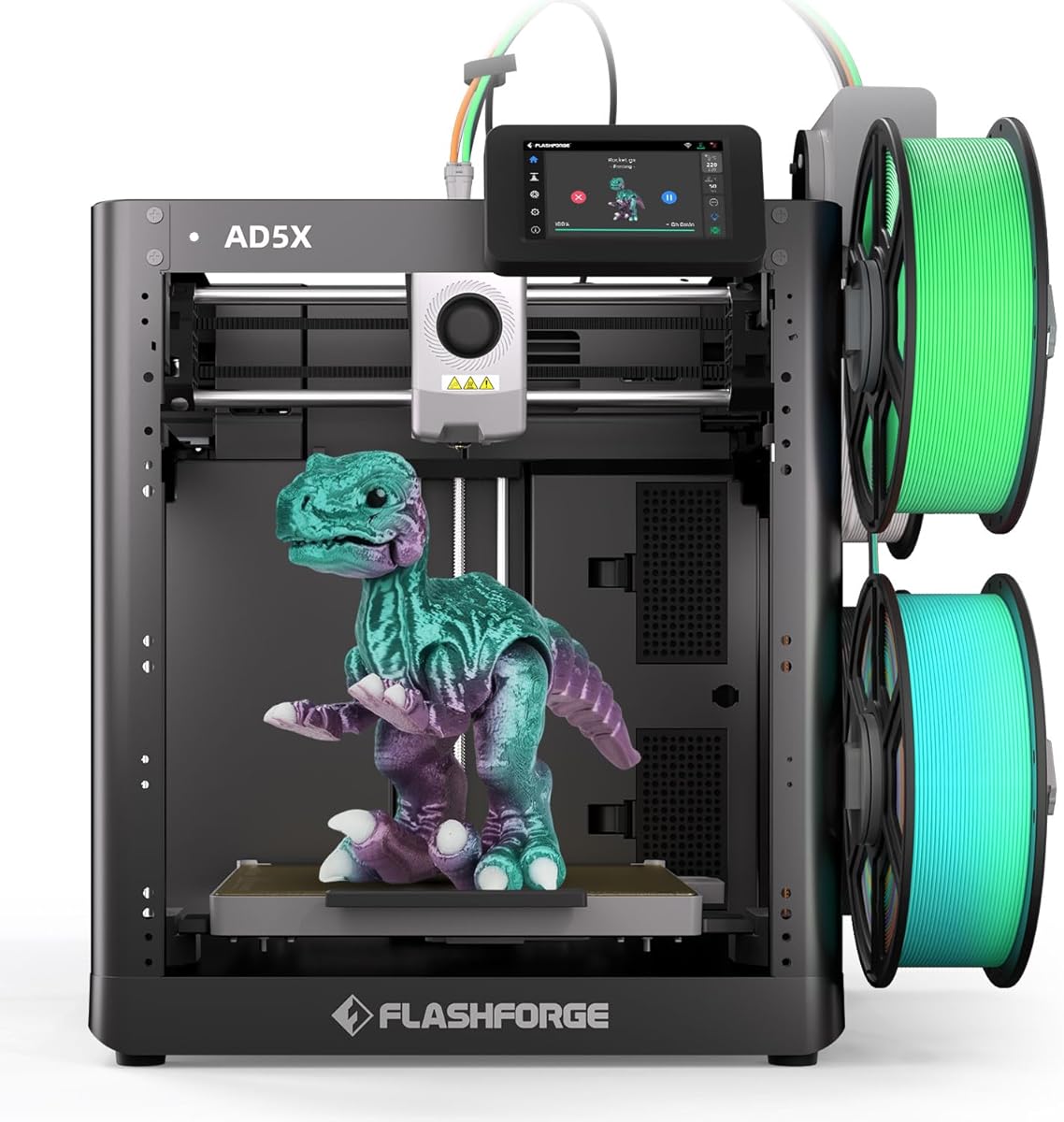
The FLASHFORGE AD5X brings multi-color printing to the mainstream with an accessible price. The Intelligent Filament System allows for seamless management of four colors which is great for painting-free miniatures.
We may earn a commission when you buy through this link, at no additional cost to you.
It boasts a high-speed capability of 600mm/s which helps in producing larger batches of figures. The CoreXY structure ensures stability during these fast movements reducing vibrations that could affect quality.
While it may require some tuning for best results the versatility supports flexible materials like TPU. This means you can create durable props or flexible parts for your game pieces.
If you want color variety without a high investment this is a solid option. It offers a balance of features that fits many hobbyist budgets well.
The IFS detects and refills filament automatically reducing interruptions during long print jobs.
An all-metal CoreXY frame provides the rigidity needed for accurate prints even at high speeds.
We may earn a commission when you buy through this link, at no additional cost to you.
The Bambu Lab P1S features a fully enclosed design which is beneficial for printing a wider range of materials. This stability helps in achieving better quality for detailed miniatures by maintaining consistent temperatures.
We may earn a commission when you buy through this link, at no additional cost to you.
It offers speeds up to 500mm/s ensuring that production remains fast and efficient. The auto bed leveling simplifies the start process so you can focus on designing your next figure.
Connecting an AMS unit allows for vibrant multi-color prints which can be used for unique game pieces. The enclosed chamber also reduces noise making it a good choice for home offices.
This printer strikes a balance between speed and quality that appeals to many users. It handles various filaments well so you can choose the right one for your project.
The enclosed body supports engineering filaments like ABS and ASA which are durable for gaming props.
With high acceleration you can finish prints quickly and focus on more creative aspects of your hobby.
We may earn a commission when you buy through this link, at no additional cost to you.
The FLASHFORGE Adventurer 5M Pro focuses on convenience with its quick-swap nozzle system. This allows you to change nozzle sizes in seconds which is handy for different detail levels on miniatures.
We may earn a commission when you buy through this link, at no additional cost to you.
It includes a dual filtration system to keep the environment clean while printing. The quiet operation makes it suitable for shared spaces where noise might be a concern.
The high temp extruder supports engineering materials so you can print durable parts. With a built-in camera you can monitor prints remotely without needing to be next to the machine.
If you value convenience and ease of maintenance this printer is a good choice. It simplifies the technical aspects of 3D printing so you can enjoy the results.
No tools are needed to swap nozzles making repairs and upgrades incredibly simple and fast.
Use the smart camera and mobile app to check on your prints from anywhere in the house.
We may earn a commission when you buy through this link, at no additional cost to you.
The FLASHFORGE AD5X Multi-Material version brings color and speed to your workflow. It supports up to four colors simultaneously which adds a dynamic look to your miniatures without painting.
We may earn a commission when you buy through this link, at no additional cost to you.
Full auto leveling ensures that every print starts with a perfect first layer. This consistency is crucial for detailed models where even a small error can ruin the outcome.
Vibration compensation algorithms reduce ghosting on the surface of prints. This means your figures look smoother and more polished which is ideal for display purposes.
Despite being a bit complex it offers great value for those wanting color without a high price. It is a productivity booster for any Dnd enthusiast looking to create more.
Multiple point sensors measure the bed to ensure consistent distance and perfect adhesion every time.
Supports PLA TPU and PETG giving you options for different textures and rigidity in your figures.
We may earn a commission when you buy through this link, at no additional cost to you.
The Bambu Lab A1 Mini Combo is designed for those with limited space. It still offers high-speed precision which makes it suitable for small and medium sized miniatures.
We may earn a commission when you buy through this link, at no additional cost to you.
Multi-color printing is included with the AMS lite so you can create vibrant figures right away. The setup is quick taking just 20 minutes to get started printing.
Its compact design means it can fit on a shelf without taking up much room. The quiet motor ensures that it does not disturb your gaming sessions or work.
For small scale projects this mini version is perfect. It retains the best features of the larger model in a package that fits anywhere.
The compact build allows you to place it in a corner or on a desk without cluttering your workspace.
With the AMS included you can print with multiple colors from the moment you take it out of the box.
We may earn a commission when you buy through this link, at no additional cost to you.
The Anycubic Kobra X comes with native 4-color support which is rare at this price. It reduces travel paths to save time and material making it efficient for regular production.
We may earn a commission when you buy through this link, at no additional cost to you.
The hardened steel nozzle ensures durability and precision. The LeviQ 3.0 system guarantees a flat bed for reliable first layers every time you print.
Smart AI monitoring helps prevent failed prints by detecting issues like spaghetti. This saves you from wasting time and filament on prints that go wrong unnoticed.
If you want a straightforward way to get multi-color prints this is a strong option. It combines modern features with a user friendly approach for gamers.
Built-in color capability reduces the need for complex add-ons and simplifies the printing workflow.
Reducing filament and machine travel paths cuts down on print times allowing for more models.
We may earn a commission when you buy through this link, at no additional cost to you.
Selecting the right 3D printer for Dungeons and Dragons miniatures involves understanding your specific needs and constraints. This section outlines the key factors to consider before making a purchase.
For detailed miniatures resolution is critical. Resin printers typically offer finer detail like 22 microns which captures facial features better. FDM printers have improved but may show layer lines on smooth surfaces.
Choose a printer with high resolution if you plan to display miniatures without much painting. Higher resolution ensures that your models look professional and ready for tabletop use.
Consider the size of the miniatures you want to print. Larger build volumes allow you to print more figures at once or larger monsters and props. Smaller units save space but limit batch production.
If you frequently print small heroes a compact printer is sufficient. For group sessions or props ensure the build plate can accommodate your largest intended prints.
Printing multiple miniatures can take time. Look for models with high acceleration and speed to reduce wait times. Fast printers help you produce armies quickly without compromising quality.
Efficiency is key if you plan to sell or gift figures. Prioritize machines that can maintain speed while ensuring smooth surfaces and accurate dimensions.
Beginners benefit from automatic calibration and easy setup. Manual bed leveling can be frustrating and leads to failed prints. Auto leveling sensors save time and ensure consistent results.
Choose a printer with intuitive software if you are new to the hobby. This will reduce friction and allow you to focus on creating characters.
Different filaments and resins offer different properties. PLA is easy to print but may warp. TPU is flexible for props. Resin provides detail but requires curing and washing.
Ensure your chosen printer supports the materials you prefer. If you want durability consider models that handle engineering materials like PETG or ABS.
Some printers allow for multi-color printing which can save painting time. Look for AMS or integrated systems that handle multiple spools efficiently. This feature is great for distinct armor or skin tones.
Be aware that multi-color printing adds complexity. If you do not need it a single color model may be more reliable and cost-effective.
Good slicing software and remote control are essential for a smooth workflow. Apps that allow you to monitor prints from your phone add convenience. Open source support gives you freedom to choose slicers.
Check compatibility with popular slicers like Cura or PrusaSlicer. Remote monitoring helps you catch errors early and saves filament on failed prints.
Balance the initial cost with long term maintenance. Some printers have cheap parts while others require specialized replacements. Consider the total cost of ownership including resin or filament.
Set a realistic budget that includes necessary accessories like screens or tools. Investing in a reliable machine saves money on failed prints and repairs.
Start by learning your slicer software. Set layer height to around 0.1mm or lower for best detail. Use supports for overhangs to ensure structural integrity of complex figures.
Regularly clean the build plate with isopropyl alcohol to ensure adhesion. For resin printers always wear gloves and a mask when handling uncured resin to stay safe.
Keep the printer in a dust free area. Store filament in a dry box to prevent moisture absorption which can ruin print quality. Lubricate moving parts occasionally to maintain smooth operation.
Resin printers are generally better for miniatures due to higher resolution and smoother surfaces. FDM is easier and safer but may show layer lines. Choose resin for detail and FDM for durability and speed.
With a good resin printer you can print features as small as 0.1mm. This is ideal for intricate armor patterns and facial expressions. Ensure your slicer supports fine details to avoid errors.
You can paint them for a classic look but multi-color printing can reduce the need. Painting adds depth and character so most hobbyists still paint. Raw prints are good for quick prototypes.
A standard hero figure takes about 30 minutes to 2 hours depending on size. Multiple figures on a bed can take longer. Fast printers and optimization reduce this time significantly.
PLA is the most common due to ease of use and good detail. For durability consider PLA+ or PETG. Use a 0.2mm nozzle on FDM printers for finer details and smoother surfaces.
Some printers can print interlocking parts if you orient them correctly. Supports are usually needed for complex joints. Check your model design to ensure parts are not fused together during printing.
It saves painting time for simple colors but adds complexity. Use it for distinct parts like capes or armor. For realistic faces you might still need paint for subtle shading.
Check bed adhesion and filament flow. Ensure supports are sufficient for overhangs. Clean the nozzle and recalibrate the bed if prints fail repeatedly. Consistency is key to fixing issues.
We found the phrozen Sonic Mini 8K S leads in detail while the Bambu Lab A1 offers the best budget value. The Snapmaker U1 stands out for premium multi-material features.
Prioritize resolution and ease of use when selecting a model. If you plan to print often consider speed and maintenance. Choose a printer that fits your workspace and skill level.
Prices and availability vary so check the latest details before buying. Use this guide to compare options and find the perfect tool for your tabletop adventures.