
ACR RESQLINK AIS Personal Locator Beacon
4.0Editor score
Global Satellite Emergency Signaling
Lightweight Personal Design
Five Year Battery Life
This comprehensive guide compares the top ten AIS transponders available in October 2026, evaluating Class A and B models, personal beacons, and marine
Automatic Identification System transponders are vital for modern maritime safety and navigation. These devices broadcast your vessel identity position to nearby ships and stations, significantly reducing collision risks in busy waterways.
We analyzed ten distinct AIS products ranging from full Class A transponders to personal locator beacons and buoy trackers. Our evaluation focused on transmission range, integration capabilities, battery life, and overall reliability for various marine environments.
Each selection highlights specific strengths like display quality, waterproof ratings, or emergency signaling features. Please note that market availability and pricing fluctuate frequently, so verify current details before making your final purchasing decision today.
4.0Editor score

4.5Editor score
4.8Editor score
The following table provides a side-by-side technical comparison of all ten selected products. Review each specification carefully to determine which model aligns best with your specific vessel type and operational requirements.




The Icom MA-510TR stands out as a top contender for serious mariners needing reliable identification capabilities. Its bright 4.3 inch display ensures clear visibility even under direct sunlight conditions at sea.
We may earn a commission when you buy through this link, at no additional cost to you.
This unit excels in safety features with a robust collision alarm and anchor watch function. The integrated GPS navigation simplifies setup by removing the need for external sensors in many installations.
While it lacks a built-in transmitter for DSC calling, the USB connectivity offers flexible data sharing with other onboard systems. The multilingual interface makes it accessible for international crews operating in diverse regions.
For captains prioritizing clear situational awareness and user-friendly configuration, this transponder delivers exceptional value. We recommend pairing it with a compatible VHF radio to unlock full DSC functionality.
The built-in collision alarm alerts crews to nearby vessels that pose a potential risk, allowing for timely evasive maneuvers.
USB connectivity allows for easy firmware updates and data transfer, keeping your system current with the latest marine protocols.
We may earn a commission when you buy through this link, at no additional cost to you.
The EM-TRAK B921 serves as a dependable Class B transceiver for smaller vessels seeking essential identification features. Its design focuses on core functionality without unnecessary complexity that might overwhelm casual boaters.
We may earn a commission when you buy through this link, at no additional cost to you.
This model supports both 12 and 24 volt power systems, making it versatile for various boat types from small fishing skiffs to larger yachts. The compact housing fits easily into tight electrical lockers or console spaces.
Although it does not offer the extensive target storage of Class A units, it effectively broadcasts your position to nearby traffic. This suffices for recreational use where regulatory compliance is the primary goal.
Choose this transceiver if you need a straightforward solution that integrates smoothly into existing marine electronics. It provides reliable operation for vessels where advanced navigation tools are not strictly required.
Support for both 12 and 24 volt systems ensures compatibility with a wide range of existing marine electrical setups without adapters.
The standard form factor allows for easy mounting in typical marine environments, reducing the need for custom fabrication or brackets.
We may earn a commission when you buy through this link, at no additional cost to you.
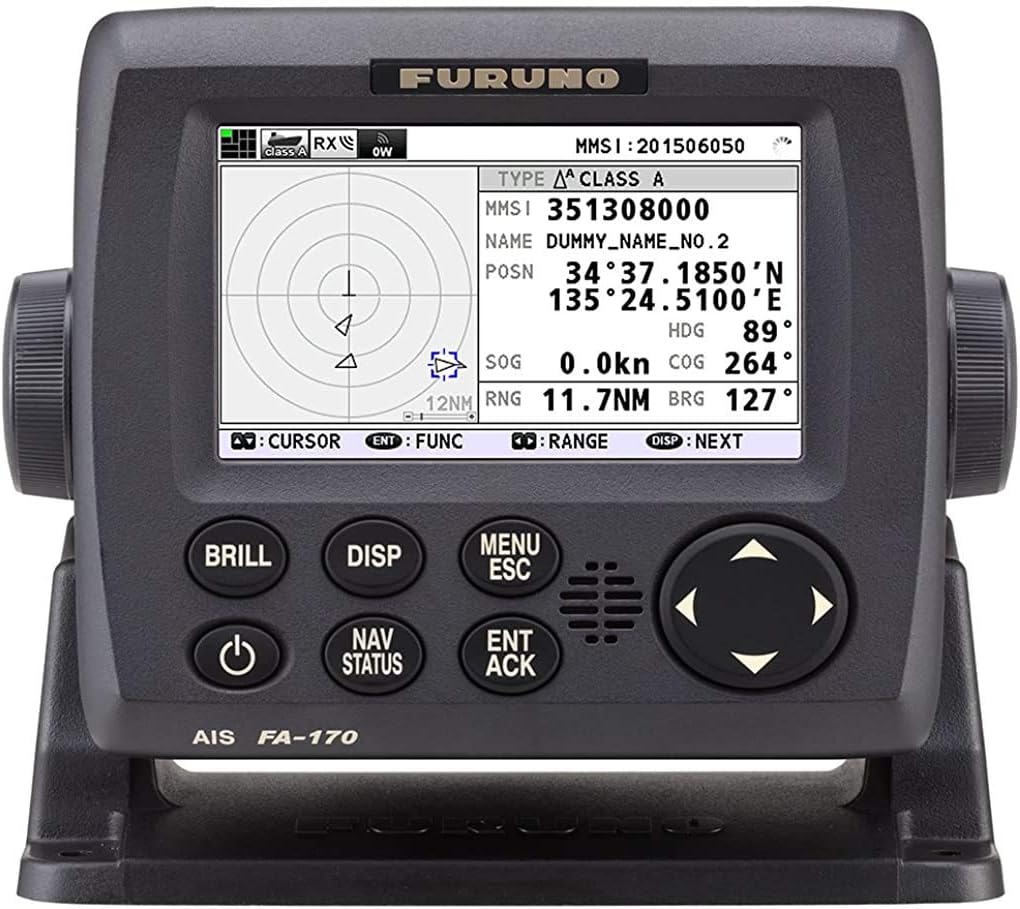
The Furuno FA170 represents the pinnacle of Class A transponder technology for commercial and large recreational vessels. It offers extensive data handling capabilities that ensure maximum safety in congested shipping lanes.
We may earn a commission when you buy through this link, at no additional cost to you.
With storage for over 2000 AIS targets, this unit tracks vessel movements comprehensively. The dangerous target list feature automatically highlights approaching ships that require immediate attention, enhancing proactive navigation decisions.
Its robust connectivity includes multiple input and output ports along with a dedicated LAN connection. This flexibility allows seamless integration with complex navigation networks and automated systems found on larger ships.
For captains managing vessels in high traffic zones, the investment in this premium unit pays off through superior reliability and safety features. It is an essential tool for professional maritime operations.
The dangerous target list automatically flags ships on collision courses, giving crews critical time to assess and react to potential hazards.
Multiple ports enable connection to diverse navigation systems, ensuring all critical data flows smoothly between instruments for a unified bridge experience.
We may earn a commission when you buy through this link, at no additional cost to you.
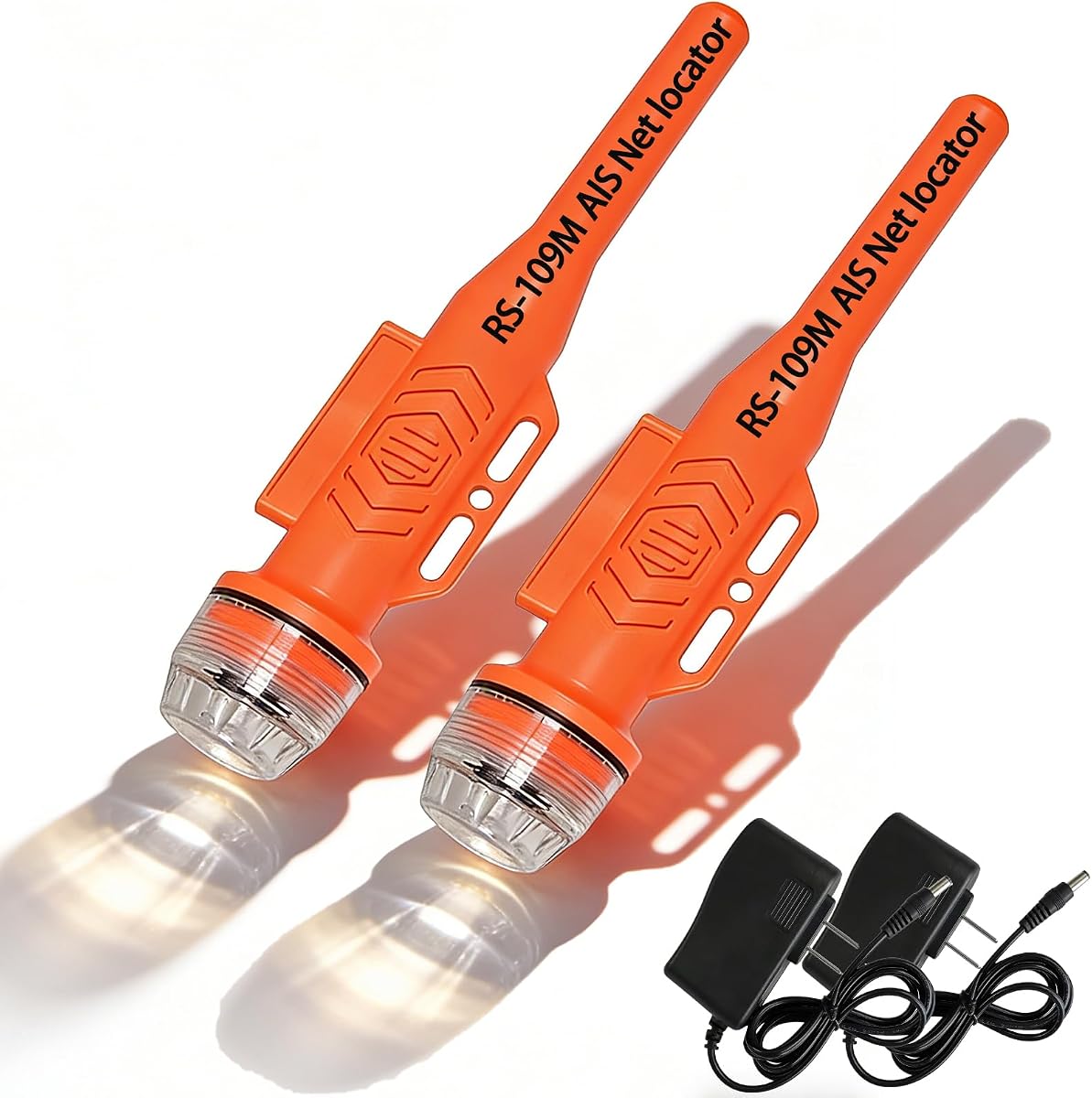
This RS-109M device is tailored specifically for tracking fishing nets and buoys in open waters. Its primary function is to transmit position data so you can recover gear quickly if it drifts.
We may earn a commission when you buy through this link, at no additional cost to you.
The IPX7 waterproof design ensures it survives complete submersion, making it ideal for harsh marine conditions. Users receive real-time battery levels directly on their onboard receiver, eliminating guesswork about device status.
With a signal range of up to 10 nautical miles, it provides ample coverage for coastal fishing operations. The high-sensitivity GPS module delivers precise location updates for reliable navigation during retrieval efforts.
Fishermen looking for dedicated gear tracking solutions will find this unit invaluable. It combines rugged durability with modern connectivity to protect valuable equipment from loss at sea.
By tracking buoys and nets accurately, this device helps prevent costly gear loss and reduces time spent searching for drifted equipment.
Instant awareness of remaining power allows you to plan maintenance cycles proactively, ensuring your gear is always ready for deployment.
We may earn a commission when you buy through this link, at no additional cost to you.
The Raymarine T70424 bundle offers a comprehensive safety solution combining VHF radio and AIS capabilities in one package. This setup is ideal for vessel owners seeking a complete communication and tracking system at once.
We may earn a commission when you buy through this link, at no additional cost to you.
Included with the Ray90 VHF fixed mount unit, this bundle ensures you have both voice and data communication channels. The fixed mount accessory allows for secure placement on your console or bulkhead for easy access.
Raymarine is known for durable marine electronics, and this bundle reflects that reputation. Having matched components simplifies installation and reduces compatibility issues that often arise with mixed brands.
For boat owners outfitting a new vessel or upgrading an older one, this kit provides a reliable foundation. It covers essential communication needs while adding the critical layer of situational awareness.
Combining VHF and AIS in one bundle ensures all safety systems speak the same language, reducing clutter on your navigation console.
The included fixed mount accessory ensures the radio stays secure during rough seas, preventing accidental drops or disconnections while underway.
We may earn a commission when you buy through this link, at no additional cost to you.
The ACR RESQLINK is a personal locator beacon designed to alert search and rescue teams if a crew member falls overboard. It sends distress signals via VHF AIS and global satellite networks for comprehensive coverage.
We may earn a commission when you buy through this link, at no additional cost to you.
Its Return Link Service confirms when rescue services receive your distress signal, providing peace of mind during emergencies. NFC technology allows you to easily check battery life and test status via a smartphone app.
Despite its small size, the unit delivers robust performance with a five-year battery life and twenty-four hours of operational time. It integrates easily with inflatable PFDs using a multifunction clip system for quick deployment.
Every vessel should carry at least one of these devices for personal safety. It is an affordable and reliable layer of protection that ensures help knows where to look if someone goes missing.
The Return Link Service confirms rescue teams have received your signal, reducing uncertainty during critical moments when time is essential.
NFC technology allows you to check battery health and perform self-tests easily using a mobile phone, ensuring readiness before every trip.
We may earn a commission when you buy through this link, at no additional cost to you.
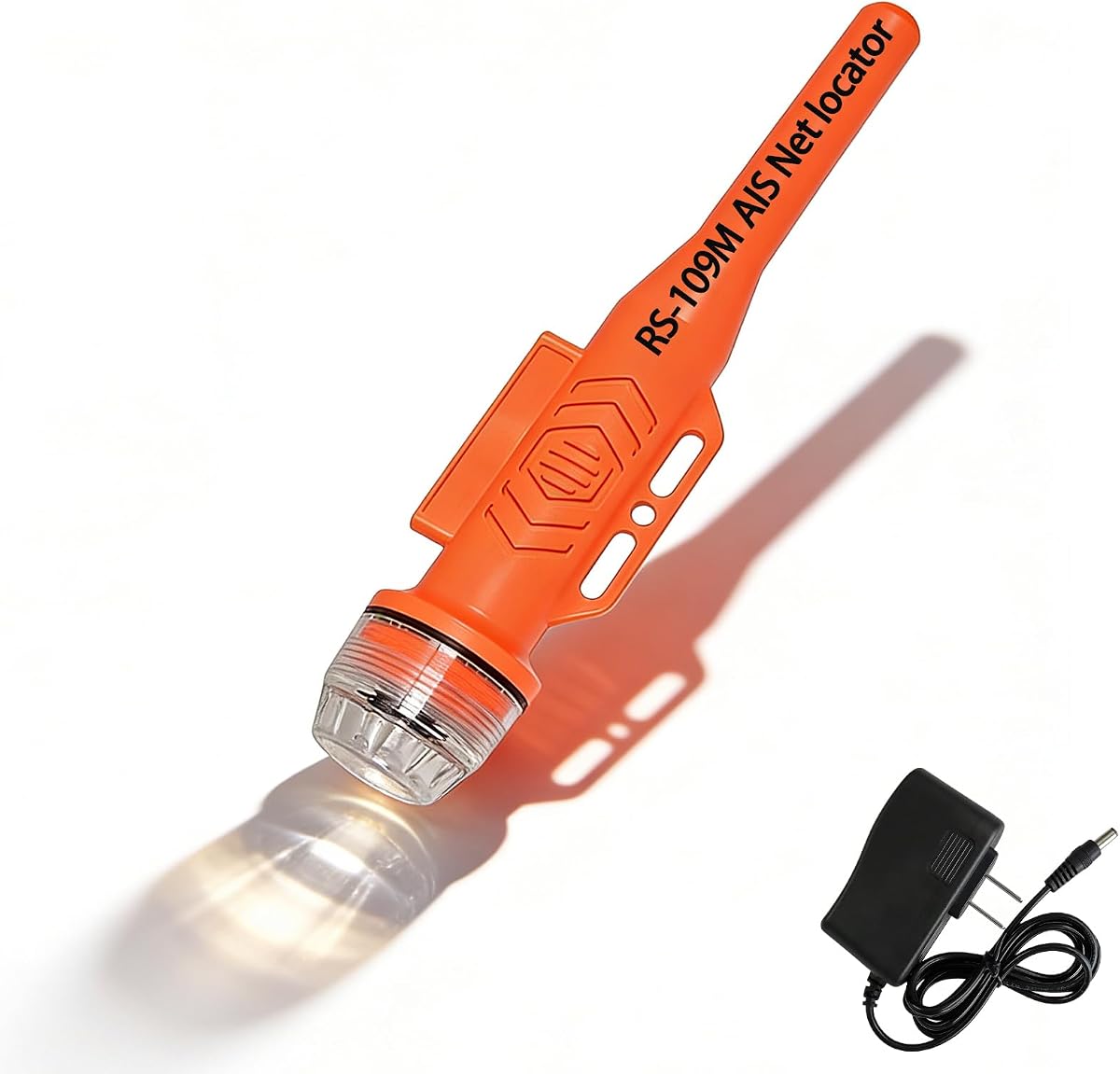
This single unit of the RS-109M provides the same rugged tracking capabilities as the two-pack version. It is designed to keep tabs on buoys and net markers in open water environments.
We may earn a commission when you buy through this link, at no additional cost to you.
The IPX7 waterproof design ensures it remains functional even when fully submerged during storms. You get real-time battery sync data directly to your receiver, allowing you to monitor device health remotely.
With a range of up to ten nautical miles, this tracker covers a wide area for coastal fishing. The high-sensitivity GPS ensures accurate location updates so you can retrieve your gear without delays.
Fishing vessels that rely on multiple buoys will appreciate the reliability of this tracker. It offers a simple solution to protect valuable fishing assets from drifting away undetected.
Built to withstand harsh conditions, this tracker ensures you can rely on it for critical gear monitoring during all weather conditions.
Precise GPS updates help you locate lost gear quickly, saving time and fuel that would otherwise be spent searching aimlessly.
We may earn a commission when you buy through this link, at no additional cost to you.
The Icom M94D handheld VHF radio stands out with its built-in AIS receiver, providing visibility of nearby vessels directly on its screen. This feature transforms a standard handheld into a robust safety tool.
We may earn a commission when you buy through this link, at no additional cost to you.
With 6 watts of RF power, it delivers strong transmission range for a portable device. The loud 1500 mW speaker ensures calls remain intelligible even in noisy engine rooms or busy marinas.
Safety features include a Float'n Flash function that alerts others if the radio falls overboard. You can store up to 50 favorite fishing spots, making navigation easy without needing a chartplotter.
Crew members who need reliable communication while working on deck will find this radio invaluable. It balances portability with advanced safety features like MOB distress signals and GPS waypoints.
The AIS receiver keeps you aware of approaching traffic even when you are away from the helm, enhancing personal safety while working.
Storing 50 waypoints directly on the radio allows for quick access to popular destinations without relying on larger onboard navigation systems.
We may earn a commission when you buy through this link, at no additional cost to you.
The Icom M510 EVO is a modern fixed-mount VHF transceiver that integrates seamlessly with NMEA 2000 networks. It is designed for mariners who want advanced digital capabilities in their communication setup.
We may earn a commission when you buy through this link, at no additional cost to you.
With support for AIS and Digital Selective Calling, this unit enhances how you interact with other vessels and coast guard authorities. The design prioritizes easy access to essential features for efficient operation.
Its compatibility with standard marine protocols ensures it works well with existing navigation displays and instruments. This makes upgrades straightforward without requiring extensive rewiring or system changes.
For vessel owners looking to modernize their communication systems, this unit offers the right blend of legacy support and new technology. It is a reliable choice for fixed installation on smaller to medium boats.
NMEA 2000 support ensures smooth data sharing with your chartplotter and radar, creating a cohesive and efficient navigation network.
Digital Selective Calling allows for faster and more accurate distress alerts, reducing the time needed to establish contact in emergencies.
We may earn a commission when you buy through this link, at no additional cost to you.
The FLIR RAYMARINE M AIS700 is a Class B transceiver designed to work seamlessly with Raymarine multifunction displays. It provides full transmit and receive capabilities to enhance situational awareness for boaters.
We may earn a commission when you buy through this link, at no additional cost to you.
A key feature is the built-in antenna splitter, which simplifies installation by allowing one antenna for both VHF and AIS. This reduces clutter on your rigging and simplifies the wiring process significantly.
With NMEA 2000 and SO TDMA networking, this unit ensures fast performance and reliable data transmission over long ranges. It integrates smoothly with SeaTalkng systems for comprehensive onboard connectivity.
Owners of Raymarine navigation displays will find this the most logical upgrade for their system. It delivers essential AIS functionality while maintaining a clean and organized installation.
The built-in antenna splitter eliminates the need for external splitters, saving space and reducing potential points of failure on your antenna mast.
SO TDMA technology ensures faster data updates and better range compared to older standards, keeping your traffic view current and accurate.
We may earn a commission when you buy through this link, at no additional cost to you.
Selecting the right transponder depends on your vessel type, budget, and specific navigation needs. This guide breaks down the critical factors to consider before purchasing.
Class A transponders are required for larger commercial vessels and offer faster transmission rates with higher priority. Class B units are designed for smaller recreational boats and provide sufficient coverage for most leisure activities.
Choose Class A if you operate large vessels in heavy traffic. For most private boats, Class B offers the best balance of cost and functionality.
Many modern transponders include built-in GPS receivers, eliminating the need for an external NMEA source. This simplifies installation and reduces cabling requirements significantly.
Ensure the unit has high-sensitivity GPS if you want plug-and-play functionality without additional sensors.
Consider whether you need a standalone display or a 'dumb' terminal that relies on your existing chartplotter. Integrated displays offer easier setup for those without advanced navigation systems.
If you already have a multifunction display, a terminal unit is often more cost-effective than buying a new screen.
Look for NMEA 2000 compatibility if you want your AIS data to integrate with modern digital navigation networks. Older NMEA 0183 ports are still common but offer slower data transfer rates.
USB connectivity is a valuable feature for firmware updates and connecting to a computer for advanced configuration.
Check the voltage requirements to ensure the transponder matches your boat's electrical system. Most units operate on 12 or 24 volts but verify the specific amperage draw to size your fuse correctly.
For battery-sensitive operations, ensure the unit has a low-power standby mode to conserve energy while docked.
Marine electronics face harsh conditions including salt spray and vibration. Look for units with high IP ratings and robust housing materials to ensure longevity in these environments.
A sealed unit is essential for outdoor installations where exposure to the elements is unavoidable.
Essential safety features include collision alarms, anchor watches, and the ability to transmit distress signals. These tools help prevent accidents and alert others if you are in trouble.
Prioritize models that offer real-time alerts rather than just data logging capabilities.
Proper antenna installation is critical for AIS performance. Ensure you have a clear line of sight to other ships and consider a dedicated VHF antenna splitter if you share an antenna with a radio.
The height of your antenna directly impacts range so mount it as high as safely possible on your vessel.
Proper installation is the first step to ensuring reliable operation. Mount the antenna as high as possible to maximize signal range and minimize interference from metal structures or sails.
Regularly test your system to confirm it is broadcasting correctly. Most units have a self-test feature; check the display or receiver to ensure you are seeing your own identity clearly.
Keep your firmware updated and the exterior clean from salt and debris. Use a soft cloth with fresh water to clean the housing and check all connections for corrosion every few months.
Most recreational boats do not require a Class A transponder under international regulations. Class B units are generally sufficient and more cost-effective for pleasure crafts unless you operate in high-density commercial shipping lanes where regulations may vary.
Yes, you can use a single VHF antenna for both radio and AIS by installing a splitter. This reduces the number of antennas on your vessel. Ensure the splitter is designed specifically for AIS frequencies to avoid signal loss.
Typical AIS range is about 10 nautical miles under line-of-sight conditions. The signal strength can vary based on antenna height and terrain features. For longer range communication, consider a Class A unit which broadcasts with higher power.
GPS provides your position but does not communicate it to others. AIS transmits that GPS data to nearby vessels so they can see your identity, speed, and course. This shared data prevents collisions by enhancing visibility in crowded areas.
Personal locator beacons like the ACR RESQLINK are designed for individual safety rather than vessel identification. They broadcast distress signals on specific frequencies to alert search and rescue teams. They complement but do not replace a vessel AIS system.
Battery life depends on the device type and transmission frequency. Dedicated buoys can last weeks on a single charge or battery, while personal beacons often have multi-year standby lives. Always check the specific manufacturer specs for your unit.
We recommend the Icom MA-510TR as our top pick for its clear display and strong safety features. For personal safety, the ACR RESQLINK beacon offers unmatched portability and peace of mind.
Prioritize units with integrated GPS and clear interfaces to ensure easy operation during stressful situations. Ensure your choice fits within your boat's existing electrical and communication infrastructure.
Remember to verify current availability and warranty terms before purchasing. Technology evolves quickly so check for the latest firmware support when you are ready to buy.