
HiLetgo W5500 SPI to LAN Ethernet Network Module
4.3Editor score
3.3V external power supply
TTL level SPI interface
TCP IP STM32 Interface
This guide compares the top Arduino Lan Ethernet Module options for reliable connectivity, speed, and ease of integration with your embedded projects and IoT
Selecting the right Arduino Lan Ethernet Module is crucial for projects needing stable wired internet access. These modules bridge microcontrollers to local networks and the wider internet without relying on wireless signals that can be unstable.
We evaluated ten highly rated modules based on chip reliability, interface speed, power requirements, and community support. Each option offers distinct advantages for different skill levels and project scales ranging from simple sensors to complex web servers.
Our list highlights top performers across budget and performance categories to help you find the ideal fit. Note that availability and pricing fluctuate regularly so verify current details before purchasing your preferred component.
4.3Editor score

4.2Editor score

4.3Editor score
This side-by-side comparison highlights key specifications for all ten modules to help you quickly identify the right fit for your voltage, interface, and project needs.

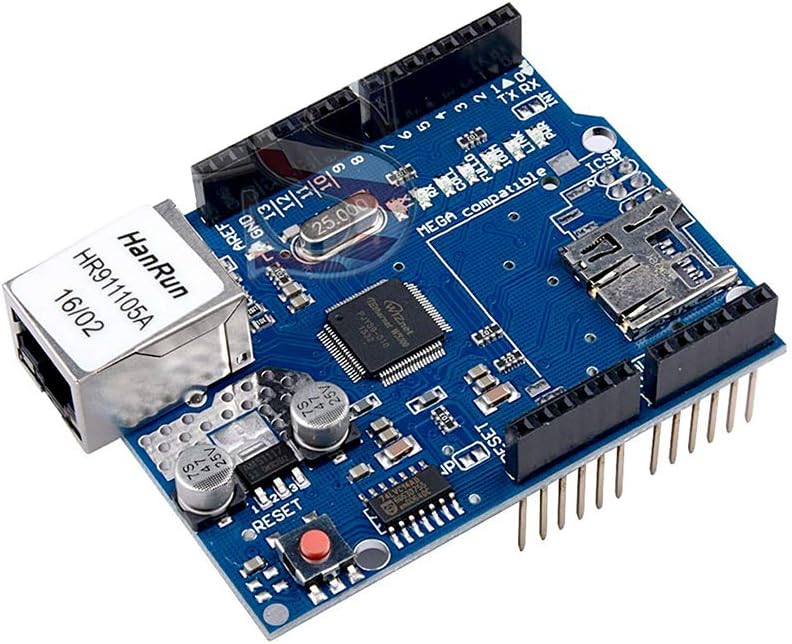


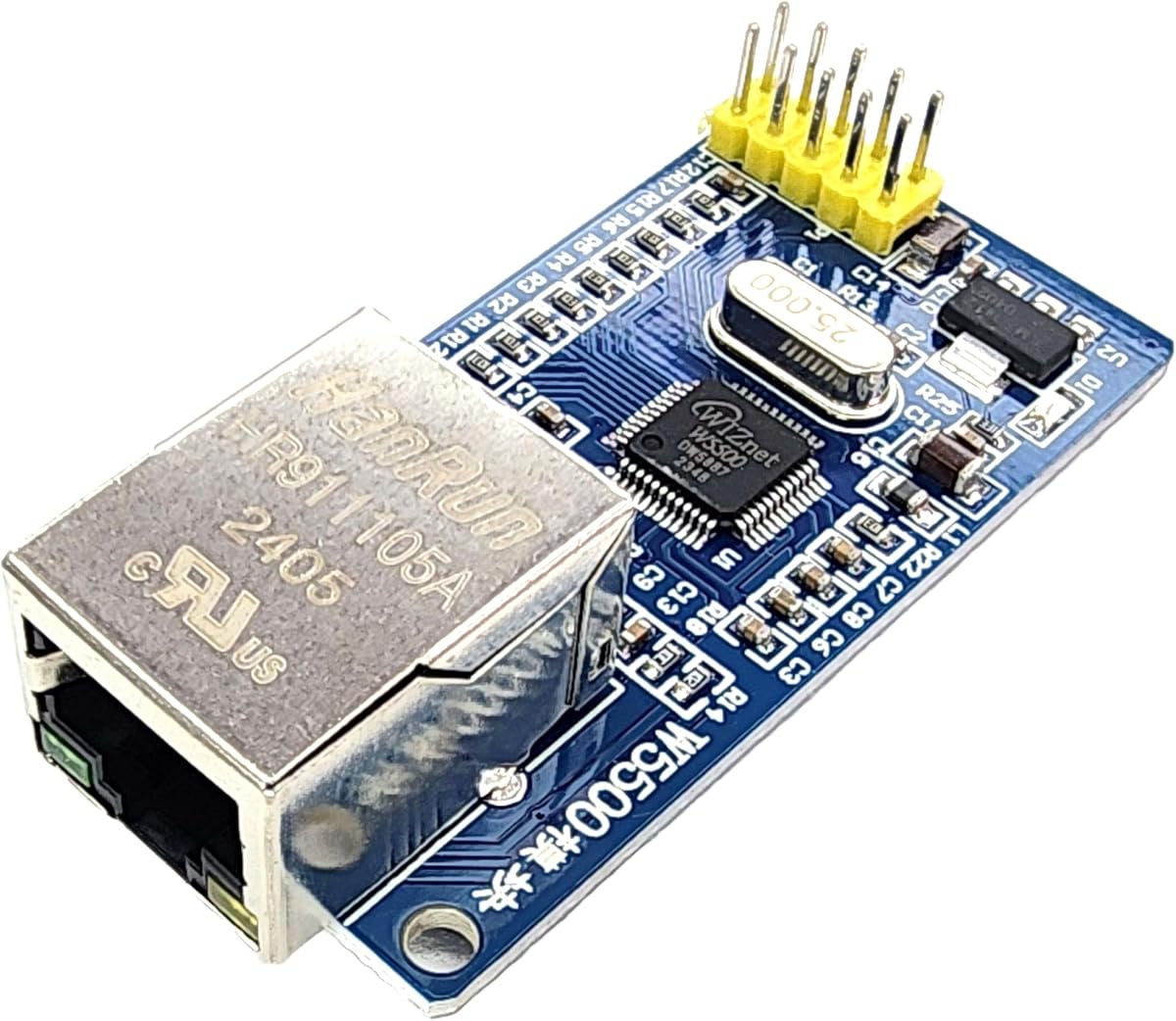
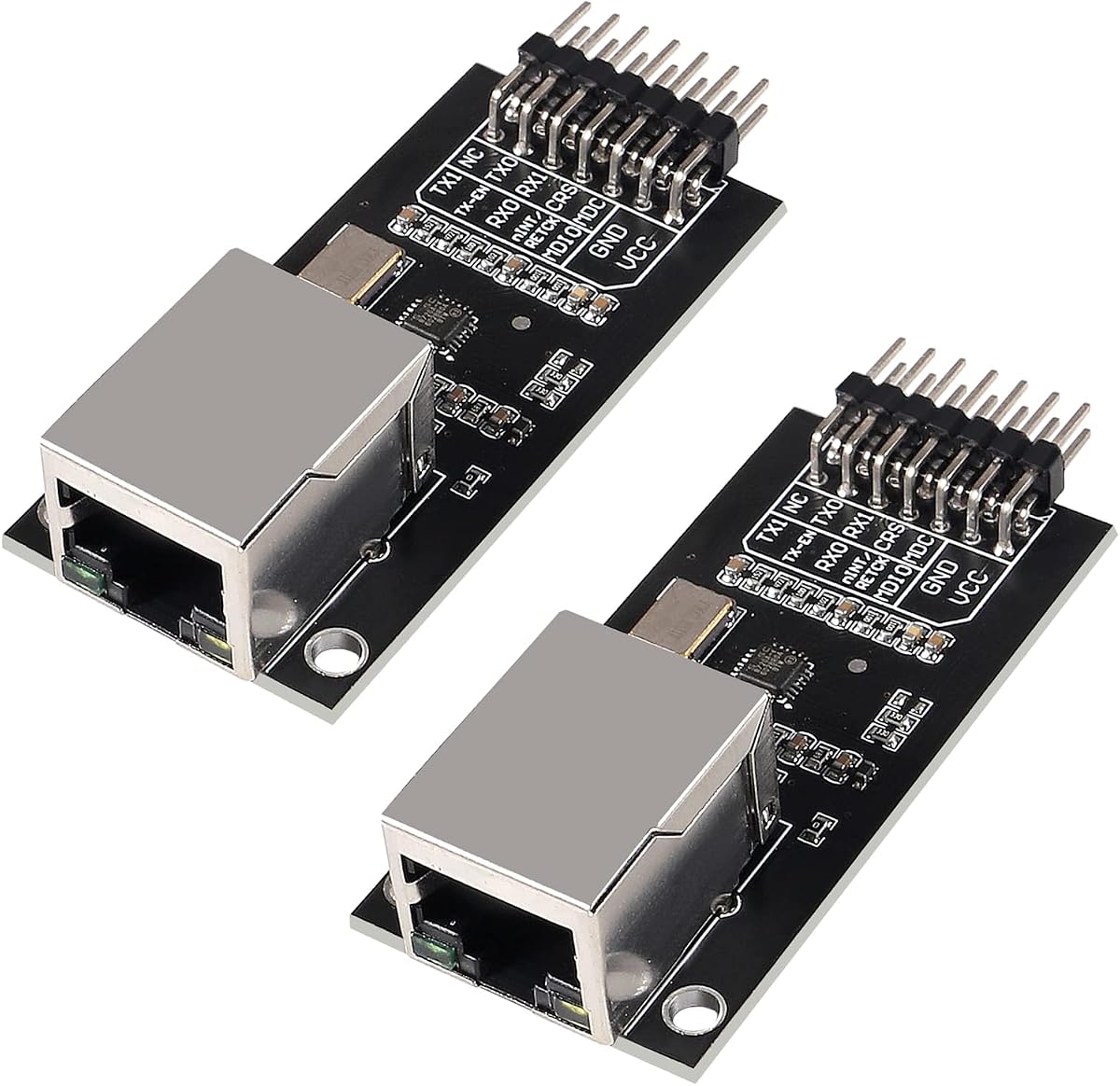

This module stands out as the top pick due to its robust W5500 chipset which provides reliable hardware TCP/IP handling. It achieves high ratings for its speed and efficiency making it ideal for demanding IoT projects needing multiple connections.
We may earn a commission when you buy through this link, at no additional cost to you.
The ability to support eight independent sockets simultaneously allows complex applications like web servers with multiple clients. Its internal 32k byte memory buffers ensure smooth data flow without overloading your microcontroller memory.
While performance is excellent users must ensure proper voltage level matching since the core runs at 3.3V. Some users find the small form factor requires precise soldering if not using a pre-soldered board.
If you need reliable fast Ethernet for Arduino or STM32 projects this module offers the best balance of features and cost. It is highly recommended for developers building smart devices that need stable network access.
The W5500 chip supports SPI speeds up to 80MHz ensuring rapid data transfer rates essential for real-time applications.
Its ability to wake on LAN via UDP helps save power in battery-operated or energy-conscious smart home setups.
We may earn a commission when you buy through this link, at no additional cost to you.
Priced attractively this module delivers the same core W5500 performance as higher-priced options making it perfect for hobbyists on a budget. Users report consistent connectivity and good compatibility with common microcontrollers like Arduino and STM32.
We may earn a commission when you buy through this link, at no additional cost to you.
Its TTL level SPI interface simplifies integration with development boards that already support standard logic levels. The module requires a stable external power supply of 3.3V which ensures consistent operation under load.
The main trade-off is the need for careful power management to avoid voltage drops that can disrupt network sessions. Beginners might find the setup slightly more complex than shield alternatives due to wiring requirements.
For those seeking the most cost-effective way to add Ethernet to their projects this module is an excellent choice. It provides robust networking features without the premium price tag of branded alternatives.
Standard SPI communication allows quick connection to pins available on most microcontroller boards without extra adapters.
Built with proven W5500 technology this module ensures stable TCP/IP connections for daily use.
We may earn a commission when you buy through this link, at no additional cost to you.
This five-pack offers exceptional value for users planning to deploy multiple nodes across different locations. Each module maintains consistent quality with strong ratings confirming reliable performance across the entire batch.
We may earn a commission when you buy through this link, at no additional cost to you.
The small PCB footprint makes it easy to integrate into tight enclosures or custom printed circuit boards. Ensuring continuous and stable 3.3V power is critical for optimal operation with these units.
Managing five units at once requires attention to power supply capacity but simplifies bulk ordering and logistics. Users appreciate having spares on hand for prototyping and field maintenance.
Ideal for businesses or educators needing multiple Ethernet connections this pack balances quality and cost effectively. It is a smart choice for scaling up projects requiring widespread network coverage.
Buying in a five-pack reduces per-unit costs and ensures you have replacements ready for long-term projects.
The 23 by 25 mm size allows installation in space-constrained industrial or consumer devices.
We may earn a commission when you buy through this link, at no additional cost to you.
This module boasts impressive hardware specifications including support for eight simultaneous connections and dual voltage operation. However user feedback indicates significant inconsistency in reliability leading to lower overall satisfaction scores.
We may earn a commission when you buy through this link, at no additional cost to you.
The industrial-grade PHY promises robust performance but practical results vary widely between individual units. Some users report flawless operation while others face connectivity issues out of the box.
Given the risks associated with quality control this option may not be ideal for critical deployments where downtime is unacceptable. Careful testing is recommended upon arrival to verify functionality.
For those who test units rigorously the feature set offers great potential for advanced networking tasks. Proceed with caution and verify each unit before integrating into your final design.
With eight sockets you can handle multiple data streams without overloading the microcontroller.
Compatible with both 3.3V and 5V systems to simplify integration with various boards.
We may earn a commission when you buy through this link, at no additional cost to you.
Designed specifically for Arduino UNO boards this shield simplifies hardware setup by stacking directly onto pins. It includes an SD card slot which adds local storage options for logging or serving static files.
We may earn a commission when you buy through this link, at no additional cost to you.
While reliable for basic networking it uses the older W5100 chip which offers lower processing efficiency compared to newer W5500 modules. This may limit performance in high-throughput applications.
The integrated design reduces wiring complexity making it accessible for beginners new to networked projects. However the older chipset means it lacks some modern features found in SPI modules.
For legacy projects or simple web servers this shield remains a solid choice for ease of use. It balances functional connectivity with added storage features at a competitive price point.
No soldering is needed as the shield stacks directly on top of compatible Arduino boards.
Store HTML files or data logs locally without needing extra components.
We may earn a commission when you buy through this link, at no additional cost to you.
This module uses the ENC28J60 chip which is popular for its low power usage making it suitable for battery operated applications. It offers a cost-effective entry point for adding Ethernet to AVR or STM32 microcontrollers.
We may earn a commission when you buy through this link, at no additional cost to you.
Without hardware TCP/IP offloading the microcontroller must handle more network processing which can slow down tasks. However for simple sensors sending periodic data this load is usually manageable.
The 25MHz crystal ensures stable clocking which is essential for reliable SPI communication. Users report decent performance for basic web server tasks or remote monitoring systems.
If your project prioritizes low power or low cost over high speed this module fits well. It is an excellent choice for simple IoT devices that send data infrequently.
Lower power draw extends battery life in remote sensors compared to more powerful modules.
Perfect for budget-friendly prototypes or educational projects needing basic connectivity.
We may earn a commission when you buy through this link, at no additional cost to you.
Rated highly for reliability this five-pack ensures you have multiple working units for distributed sensor networks. Users appreciate the consistent quality and performance across all units in the set.
We may earn a commission when you buy through this link, at no additional cost to you.
The IEEE 802.3 compliance guarantees standard Ethernet compatibility which simplifies testing and configuration. Each module comes with a built-in isolation transformer protecting your microcontroller from electrical noise.
Because it relies on software TCP/IP libraries you must select a microcontroller with enough processing power to manage network stacks. This is generally not an issue for modern 32-bit boards.
This pack is ideal for students or makers running multi-node projects with tight budgets. It provides robust connectivity for simple tasks while keeping costs exceptionally low.
High customer ratings confirm that most units arrive functional and perform reliably.
The HR911105A transformer protects your circuit from external electrical interference.
We may earn a commission when you buy through this link, at no additional cost to you.
This module earned a perfect score from users due to its seamless integration with ESP32 and ESP8266 boards. It simplifies adding wired connections to WiFi-enabled microcontrollers for more stable connectivity.
We may earn a commission when you buy through this link, at no additional cost to you.
The full-size RJ45 port ensures standard cables fit easily which reduces installation friction for beginners. Tutorials and sample code are widely available online to speed up development cycles.
Because it supports both 5V and 3.3V logic levels it works with a wide range of microcontrollers without voltage dividers. This flexibility makes it a versatile choice for mixed-board projects.
For anyone looking to add Ethernet to an ESP8266 or ESP32 without complex setup this module is unmatched. It combines ease of use with robust hardware performance for reliable results.
Designed to pair easily with popular ESP series for enhanced reliability.
Uses standard RJ45 connectors making cable connections quick and secure.
We may earn a commission when you buy through this link, at no additional cost to you.
This board uses the LAN8720 physical layer transceiver which delivers high performance for industrial grade networking. It is designed for applications requiring flexible power management and low energy consumption.
We may earn a commission when you buy through this link, at no additional cost to you.
Auto-MDIX support means you can use crossover or straight-through cables without manual configuration. This simplifies wiring and reduces potential errors during initial network setup.
However setting up the driver stack can be more complex than using modules with built-in TCP/IP hardware. Users need a capable microcontroller to manage the software stack efficiently.
Choose this module for professional or industrial projects needing robust PHY features and low power operation. It is excellent for embedded systems where energy efficiency is a priority.
Auto-MDIX automatically detects and configures cable types simplifying network wiring.
Ultra low power design helps extend battery life in remote embedded systems.
We may earn a commission when you buy through this link, at no additional cost to you.
With strong ratings this module offers reliable performance for users working with AVR or older microcontrollers. It includes a 25MHz crystal oscillator which ensures stable SPI timing for consistent communication.
We may earn a commission when you buy through this link, at no additional cost to you.
The DIP28 chip package provides robust physical construction which helps prevent connection issues in vibrating environments. Users appreciate the compatibility across a wide range of processors like AVR STM32 and PIC.
While not as fast as W5500 modules it delivers solid connectivity for lightweight IoT tasks and data logging. The HR911105A isolation protects your circuit from electrical spikes during connection.
This is an ideal choice for developers needing dependable Ethernet on a budget. It offers good build quality and performance for entry-level networking needs.
25MHz oscillator ensures precise data transfer timing to avoid communication errors.
DIP28 chip packaging offers durability and reliability in various operating environments.
We may earn a commission when you buy through this link, at no additional cost to you.
Selecting the right module depends on your specific voltage requirements, processing needs, and project scale. Consider these factors to ensure stable and efficient network connectivity.
Modern modules like the W5500 offer hardware TCP/IP offloading which frees your microcontroller to handle other tasks. Older chips like ENC28J60 rely on software stacks which can impact speed and efficiency.
For high performance applications always prioritize W5500 or LAN8720 based solutions to ensure smooth operation.
Modules operate at 3.3V or 5V logic levels so ensure your board matches the module requirements. Using mismatched voltages can damage components or cause unstable connections.
Check datasheets carefully and use level shifters if mixing 5V controllers with 3.3V modules.
SPI modules offer faster data transfer than parallel alternatives making them ideal for real-time projects. Look for modules supporting higher SPI frequencies like 80MHz for best results.
Faster interfaces reduce latency and improve overall responsiveness in networked devices.
Ethernet modules can draw significant current especially during transmission so ensure your power supply is robust. A supply of at least 200mA is typically recommended to avoid brownouts.
Use dedicated regulators or high-current USB supplies to maintain stability during operation.
Modules supporting multiple sockets allow handling several connections at once without extra hardware. This is vital for web servers or multi-client applications.
W5500 modules support up to eight sockets which is sufficient for most embedded server needs.
Compact modules are easier to integrate into small enclosures or custom PCBs. Ensure the footprint matches your design constraints to simplify assembly.
Smaller sizes like 23 by 25 mm are ideal for space-constrained IoT devices.
Modules with built-in isolation transformers protect your microcontroller from electrical noise and surges. This is critical for industrial environments with high interference.
Look for HR911105A isolation or similar features for enhanced safety and reliability.
Multi-packs offer cost savings for bulk projects and provide spares for prototyping. Consider buying sets if you plan to deploy multiple devices across locations.
Buying in bulk also ensures you have backups if a single unit fails during testing.
Begin by connecting the SPI pins MISO MOSI and SCK to your microcontroller while ensuring voltage levels match. Use a stable power supply to prevent connection drops during data transmission.
Install the appropriate library such as W5500 or Ethernet for your board and configure IP settings in code. Test connection stability by running ping tests and data throughput benchmarks.
Protect modules from moisture and dust using enclosure cases especially if deployed outdoors. Regularly check cable connections to avoid loose wires that can interrupt network access.
Yes because W5500 modules typically run at 3.3V logic. You should use a logic level shifter to safely connect 5V Arduino boards without damaging the module.
ENC28J60 modules consume the least power making them ideal for battery operated sensors. W5500 modules are more efficient but still draw more current than ENC28J60 options.
No these are wired Ethernet modules that require a physical network cable. For WiFi you would need an ESP8266 or ESP32 based solution instead.
The W5500 supports up to eight simultaneous sockets allowing multiple clients to connect to a server at once without extra hardware.
Yes SPI modules generally offer higher data rates than older shield designs like W5100 due to more efficient communication protocols and modern chipsets.
At least 200mA is recommended to ensure stable operation during data transmission. Using a regulated 3.3V supply prevents brownouts and connection drops.
We recommend the HiLetgo W5500 modules for top performance and reliability in most projects. For budget builds the ENC28J60 options provide excellent entry-level connectivity.
Prioritize modules that match your voltage needs and offer hardware TCP/IP offloading if possible. This ensures your microcontroller runs efficiently without network overhead.
Always verify current pricing and availability before purchasing since deals change frequently. Selecting the right module sets the foundation for a stable and responsive IoT project.