
ESP32-S3-Nano Microcontroller
5.0Editor score
16MB Flash memory
Arduino and MicroPython support
HID emulation support
This guide compares the top Arduino Nano ESP32 boards and alternatives for IoT projects, focusing on performance, connectivity, and ease of use.
The Arduino Nano ESP32 represents a significant leap in embedded development, combining powerful processing with robust wireless connectivity. These boards are ideal for makers building IoT devices, wearables, and smart home systems. Their compact size and rich feature set make them accessible for beginners yet powerful enough for advanced engineers.
We evaluated ten leading boards based on processor performance, connectivity options, memory capacity, and ecosystem support. Each product was assessed for its suitability in various project types, from simple sensors to complex edge AI applications. Our goal is to help you find the right board for your specific development needs.
Every pick highlights unique strengths like MicroPython support, USB-C integration, or specialized interfaces. Note that prices and availability change frequently so check current listings before purchasing. Use this guide to navigate the options and select a board that aligns with your technical requirements and budget constraints.
5.0Editor score

4.6Editor score

4.8Editor score
This table provides a side-by-side comparison of all ten boards to help you quickly identify key specifications and capabilities relevant to your project requirements.


The Arduino Nano ESP32 is a powerful microcontroller board designed for modern IoT and embedded projects. It features the ESP32-S3 chip which delivers high performance with dual-core processing capabilities and robust wireless options.
We may earn a commission when you buy through this link, at no additional cost to you.
This board stands out due to its comprehensive wireless connectivity including Wi-Fi and Bluetooth 5.0. The USB-C port ensures reliable power delivery and programming while HID support allows it to act as input devices for computers.
While highly capable the board lacks some GPIO pins compared to larger boards which may limit complex hardware interfacing. The price is also higher than generic ESP32 alternatives but justifies the official Arduino ecosystem support.
Ideal for developers seeking reliable performance and official tool support this board is perfect for educational projects and professional IoT prototypes. Its MicroPython compatibility makes it accessible to those preferring Python over C++.
The ESP32-S3 chip supports machine learning tasks at the edge making this board suitable for voice recognition and real-time data processing.
With USB-C and HID support this board bridges the gap between embedded systems and computer peripherals enabling versatile project possibilities.
We may earn a commission when you buy through this link, at no additional cost to you.
This ESP32-S3-Nano board offers exceptional value for developers needing high performance on a budget. It features the ESP32-S3R8 chip which provides ample memory and processing power for complex applications.
We may earn a commission when you buy through this link, at no additional cost to you.
The board supports both Arduino and MicroPython programming making it versatile for different skill levels. Integration with Arduino IoT Cloud allows remote monitoring and control which is ideal for IoT prototypes.
While it lacks official Arduino branding it functions seamlessly within the ecosystem. The documentation is less comprehensive than official boards which might challenge beginners compared to supported models.
Best suited for hobbyists and professionals prioritizing memory and connectivity features this board delivers high performance at a low cost. It is a strong choice for data-heavy IoT applications.
With 16MB Flash and 8MB PSRAM this board can handle large datasets and complex applications without frequent memory management issues.
Arduino IoT Cloud compatibility simplifies remote management enabling users to control devices via apps without custom backend coding.
We may earn a commission when you buy through this link, at no additional cost to you.
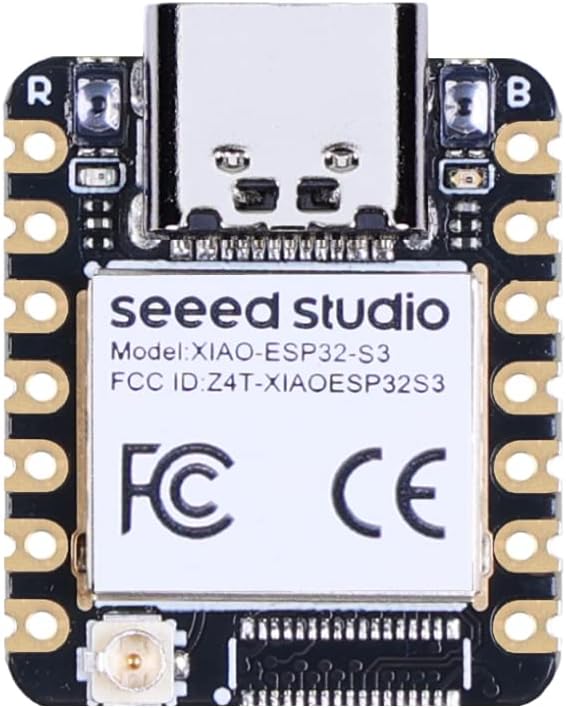
The Seeed Studio XIAO ESP32S3 is designed for space-constrained projects like wearables and small sensors. Its thumb-sized footprint makes it ideal for portable devices without sacrificing performance.
We may earn a commission when you buy through this link, at no additional cost to you.
Power efficiency is a standout feature with support for deep sleep modes consuming minimal energy. Battery charge management allows direct connection to lithium batteries making it perfect for untethered projects.
While the compact design limits visible pins it offers rich interfaces through SMD pads. Soldering may require precision but the small size enables creative integration into tight spaces.
This board is best for wearable tech and battery-powered IoT sensors. Its combination of power management and wireless connectivity makes it a top choice for portable applications.
Deep sleep modes draw as low as 14uA enabling battery-powered devices to run for extended periods without frequent recharging.
The small size allows embedding into jewelry or custom enclosures where larger boards would be impractical or visible.
We may earn a commission when you buy through this link, at no additional cost to you.
The ESP32-P4-NANO is a specialized board designed for applications requiring image and voice processing. It features the ESP32-P4 chip with RISC-V processors and dedicated interfaces for cameras and displays.
We may earn a commission when you buy through this link, at no additional cost to you.
Interfaces like MIPI-CSI and DSI allow direct connection to cameras and screens enabling visual projects without external bridges. Security features like Secure Boot ensure safe firmware execution for industrial use.
Programming this board requires familiarity with RISC-V and specific drivers which may be challenging for beginners. The cost is higher than standard ESP32 boards but justified by its specialized hardware.
Ideal for robotics and industrial IoT projects this board excels where visual data processing is needed. It is a premium option for developers needing advanced interface capabilities.
MIPI-CSI and DSI support enables direct connection to high-speed cameras and displays for real-time visual applications.
Secure Boot and hardware access protection mechanisms ensure that only authorized code runs making it safe for commercial deployments.
We may earn a commission when you buy through this link, at no additional cost to you.
This pack of three ESP32-S3 Mini boards offers excellent value for teams or projects needing multiple units. Each board is based on the ESP32-S3FH4R2 module which runs at 240MHz for high performance.
We may earn a commission when you buy through this link, at no additional cost to you.
The castellated module design allows direct soldering to custom carrier boards which simplifies integration into final products. Onboard antenna simplifies wireless connectivity without external components.
While useful for prototyping the lack of headers requires soldering skills for use with breadboards. Documentation is basic so prior experience with ESP32 boards is recommended.
Best for production prototyping or team projects this pack reduces unit cost significantly. It is a practical choice for developers needing multiple boards for testing.
The castellated edges allow direct mounting onto custom PCBs reducing assembly steps for mass production.
Running at 240MHz the processor handles complex tasks efficiently ensuring smooth operation for demanding IoT applications.
We may earn a commission when you buy through this link, at no additional cost to you.
The ELEGOO ESP-32 Super Starter Kit is designed for beginners entering the world of IoT and electronics. It includes an ESP-32 board and over 35 modules like sensors displays and motors.
We may earn a commission when you buy through this link, at no additional cost to you.
Step-by-step tutorials guide users through projects with code and circuit diagrams ensuring a smooth learning experience. Compatibility with Arduino IDE simplifies programming for those already familiar with the platform.
While comprehensive the included chip is older compared to ESP32-S3 models limiting modern wireless features. The large volume of components can be overwhelming for those wanting only a basic board.
Ideal for students and hobbyists this kit provides all needed parts for learning. It is the best starting point for complete beginners exploring electronics.
The kit includes sensors displays and motors allowing users to build diverse projects without purchasing extra components separately.
Over 30 projects with instructions provide a clear progression from basics to advanced IoT applications.
We may earn a commission when you buy through this link, at no additional cost to you.
The Arduino Nano 33 IoT focuses on secure connectivity for IoT projects. It features a Secure Element chip that provides hardware-level encryption ensuring safe cloud communication.
We may earn a commission when you buy through this link, at no additional cost to you.
Pre-soldered headers make it easy to connect to breadboards without additional soldering. Built-in sensors like temperature and humidity allow immediate testing without extra components.
While it lacks the raw power of newer boards its security features are unmatched in the Arduino lineup. This makes it ideal for sensitive data projects where encryption is critical.
Best for secure home automation or enterprise prototypes this board prioritizes safety. It is a reliable choice when security is more important than processing speed.
The ATECC608A Secure Element ensures that data transmitted to the cloud is encrypted securely without software overhead.
Built-in temperature and humidity sensors allow immediate IoT prototyping without needing to connect external hardware.
We may earn a commission when you buy through this link, at no additional cost to you.
This ESP-WROOM-32 board remains a reliable choice for standard IoT tasks. It features dual-mode WiFi and Bluetooth connectivity along with low power modes for battery applications.
We may earn a commission when you buy through this link, at no additional cost to you.
Compatibility with Arduino IDE and widespread community support make it easy to find libraries and code examples. The 3-pack ensures you have spares for testing or multiple prototypes.
Older chips lack modern features like BLE 5.0 and USB-C making it less future-proof. Micro-USB ports are also less durable than modern alternatives.
Best for projects where legacy support is needed this board is cost-effective. It is a solid option for basic IoT applications that do not require the latest tech.
Years of use mean countless tutorials and libraries exist making troubleshooting and development easier for any user.
Support for AP STA and AP+STA modes allows flexible network configuration for diverse project setups.
We may earn a commission when you buy through this link, at no additional cost to you.
These boards offer the convenience of USB-C on a classic ESP32 platform. The 3-pack provides excellent value for prototyping multiple devices or sharing with a team.
We may earn a commission when you buy through this link, at no additional cost to you.
Over-the-Air update support allows firmware changes via WiFi saving connection time during development. Flexible power modes help optimize energy usage for battery applications.
While the chip is older the USB-C port modernizes connectivity. The lack of BLE 5.0 limits some advanced wireless features compared to newer models.
Best for budget-conscious developers needing modern ports this set is ideal. It bridges the gap between legacy performance and modern usability.
USB-C connection simplifies charging and programming making it easier to use with modern cables and chargers.
OTA functionality allows updating code remotely which saves time during iterative development cycles.
We may earn a commission when you buy through this link, at no additional cost to you.
The Arduino UNO R4 WiFi is a powerful advanced board with unique features like a built-in LED Matrix and CAN bus support. It combines a Renesas RA4M1 microcontroller with an ESP32-S3 chip.
We may earn a commission when you buy through this link, at no additional cost to you.
Features like 12-bit DAC and OP-AMP enable precise analog output suitable for audio and industrial projects. Qwiic connectors simplify I2C sensor integration without complex wiring.
While larger than Nano boards it offers superior capabilities for complex systems. The cost is higher but provides versatility for advanced prototypes and educational demos.
Best for projects needing displays or industrial protocols this board stands out. It is a top pick for those requiring high precision and unique hardware features.
The 12×8 LED Matrix allows displaying status or messages directly on the board without external screens.
CAN bus integration enables connection to automotive and industrial networks making it useful for robust systems.
We may earn a commission when you buy through this link, at no additional cost to you.
Choosing the right board requires balancing performance connectivity and budget for your project needs. Consider these factors before making your decision to ensure long-term success.
The processor speed and architecture determine how fast your board can handle data tasks. Modern boards like those with ESP32-S3 or RISC-V offer better performance for machine learning and complex calculations.
Look for dual-core processors if your project involves multitasking or heavy processing loads.
Wireless capabilities vary significantly between boards. Some support Bluetooth 5.0 and Wi-Fi 6 which are essential for stable long-range IoT connections and low latency communication.
Ensure the board supports the specific wireless standards required by your target devices or cloud platform.
Memory determines how much code and data your board can store. Boards with higher Flash and SRAM are better for projects requiring large libraries or data logging.
For complex applications prioritize models with PSRAM support to handle large datasets efficiently.
Battery-powered projects require low-power sleep modes and efficient power management. Some boards offer dedicated battery charging support to simplify wearable or portable device builds.
Check for deep sleep current ratings to estimate battery life accurately for your application.
Specialized interfaces like CAN, I2C, or MIPI allow integration with specific sensors and displays. These features are critical for industrial or visual projects requiring direct hardware communication.
Choose a board with the right physical ports to avoid needing external breakout boards.
Official Arduino boards offer stable IDE support and extensive libraries which speed up development. Third-party boards may offer more hardware flexibility but less official documentation.
Select based on your familiarity with tools like MicroPython or C++ for Arduino.
Compact boards like XIAO are ideal for wearables and tight enclosures where space is limited. Larger boards offer easier access to pins and headers for breadboarding.
Consider your enclosure constraints when deciding between standard Nano formats and thumb-sized options.
Secure Element chips provide hardware-level encryption which is vital for projects handling sensitive user data. Security features ensure safe communication with cloud services.
Prioritize boards with built-in secure elements if data privacy is a requirement.
To begin connect your board to a computer using the appropriate USB cable. Install the latest drivers and configure your IDE to recognize the device for firmware uploads.
Use the provided pinout diagrams to connect components safely. Always check voltage levels to prevent damage to input or output pins during prototyping.
Keep the board in a dry environment to avoid corrosion and regularly inspect connections for loose contacts. Proper maintenance ensures longevity for all your development projects.
Yes most Arduino Nano ESP32 boards are fully compatible with the Arduino IDE. You may need to install additional board manager URLs to ensure proper support.
Many modern boards including the Nano ESP32 support MicroPython. This allows you to write code in Python for easier rapid prototyping without C++.
Yes the USB-C port supports power delivery and faster charging. It simplifies setup by using a universal cable for both programming and power.
ESP32-S3 offers more processing power support for AI tasks and improved connectivity. It also supports BLE 5.0 and has enhanced security compared to older variants.
You can update firmware via USB or Over-the-Air if the board supports it. Use the Arduino IDE to upload sketches or use the OTA feature for remote updates.
Yes boards like the Arduino Nano ESP32 are designed with beginner-friendly IDEs and documentation. Kits with tutorials are also available to help learn step by step.
Most support 2.4GHz Wi-Fi and Bluetooth 5.0 or BLE. Some newer models support Wi-Fi 6 for faster and more stable connections in complex environments.
The Arduino Nano ESP32 and its alternatives offer powerful tools for building advanced IoT and embedded projects. Each board brings unique strengths like processing speed wireless range or specialized interfaces.
Prioritize features like connectivity and power efficiency based on your specific project goals. Beginners may prefer kits with tutorials while professionals should focus on specialized hardware like CAN or image interfaces.
Always verify current prices and availability before purchasing as market conditions change frequently. With the right board your ideas can transition into reliable real-world applications efficiently.