
FLASHFORGE Adventurer 5M
3.9Editor score
One-Click Automatic Printing
600mm/s High Speed
Quick Nozzle Changes
This guide compares the top 10 3D printers for beginners in October 2026, evaluating speed, ease of use, and print quality to help you choose.
Choosing the right 3D printer for beginners can be overwhelming given the variety of options available today. You need a machine that balances ease of use with reliable performance to ensure your first prints succeed without frustration.
We evaluated ten leading models based on setup time, calibration features, print speed, and community support. Our analysis focuses on machines that minimize manual adjustments while delivering consistent results for hobbyists and students.
Each pick highlights key strengths like auto-leveling, enclosed design, or multi-color capabilities. Note that availability and specific bundle contents may change, so verify current details before making your final selection decision.
3.9Editor score

4.7Editor score

4.2Editor score
This side-by-side comparison highlights the core specifications and unique selling points of each printer to help you quickly identify the model that fits your specific needs and skill level.




The Bambu Lab A1 stands out as a top choice for beginners due to its exceptional automation and speed. It holds a strong 4.7 rating among users who appreciate its reliability and ease of setup. This printer removes the guesswork from calibration, ensuring every print starts correctly without manual intervention.
We may earn a commission when you buy through this link, at no additional cost to you.
Its standout quality is the Full-Auto Calibration system which handles Z-offset, bed leveling, and flow rate automatically. Active Flow Rate Compensation ensures consistent smooth prints by adjusting extrusion based on real-time readings. The 1-Clip quick swap nozzle simplifies maintenance, while the active motor noise canceling keeps the environment quiet during operation.
While the A1 is impressive, note that full multi-color printing requires the optional AMS lite accessory which is sold separately. The open design also means it is less ideal for filaments that benefit from an enclosed chamber like ABS. However, for most beginners focused on PLA or PETG, these trade-offs are acceptable given the performance.
Buy this printer if you want a hassle-free experience with high-speed capabilities right out of the box. It is perfect for students or hobbyists who want to focus on creativity rather than troubleshooting mechanical issues. The user-friendly interface and robust ecosystem make it a lasting investment as your skills grow.
The printer automatically manages all calibration steps, saving you time and preventing failed prints due to bed adhesion issues.
Active motor noise canceling technology reduces sound levels, allowing you to print in shared spaces without disturbing others.
We may earn a commission when you buy through this link, at no additional cost to you.
The FLASHFORGE Adventurer 5M offers incredible speed and value for those seeking a budget-friendly entry into 3D printing. With a rating of 3.9, it appeals to users who prioritize fast turnaround times over advanced ecosystem features. Its design focuses on efficiency and ease of operation for rapid prototyping.
We may earn a commission when you buy through this link, at no additional cost to you.
Key strengths include its CoreXY structure enabling travel speeds up to 600mm/s and acceleration of 20000mm/s². The direct extruder supports high temperatures up to 280°C and allows for 3-second nozzle changes. Automatic bed leveling ensures consistent first layers while the dual-sided PEI platform simplifies model removal.
Trade-offs include a slightly lower user rating compared to competitors, suggesting some variability in early experiences or support responsiveness. The interface and app are functional but may lack the polish of more established brands. For beginners on a tight budget, the performance per dollar remains compelling despite these minor shortcomings.
This printer is ideal for those needing fast prints for projects or prototyping without breaking the bank. It suits hobbyists who want to experiment with speed and material variety while keeping setup simple. The mobile app integration adds convenience for monitoring progress remotely during long print jobs.
High-speed mechanics significantly reduce production cycles, making it ideal for testing multiple design iterations quickly.
Optional nozzle sizes from 0.25mm to 0.8mm allow you to adapt the printer for various detail levels and material needs.
We may earn a commission when you buy through this link, at no additional cost to you.
The Bambu Lab P1S Combo delivers a premium experience with multi-color printing and an enclosed design suitable for advanced filaments. With a 4.2 rating, it balances performance with usability, making high-end features accessible to dedicated beginners. The combination of printer and AMS unit offers immediate creative possibilities.
We may earn a commission when you buy through this link, at no additional cost to you.
Its fully enclosed body improves print performance for materials like ABS and ASA by maintaining stable temperatures. Speed reaches 500mm/s with 20000mm/s² acceleration, ensuring quick production times. Automatic bed leveling simplifies setup, while the included AMS unit enables printing with up to 16 colors and multiple materials.
The main trade-off is the higher initial investment compared to single-extruder options. The AMS unit adds complexity in terms of maintenance and space requirements. However, the ability to switch materials and colors seamlessly justifies the cost for users serious about expanding their creative scope beyond basic monochrome prints.
Choose this if you want to explore multi-material projects or need an enclosed environment for engineering filaments. It is suitable for makers ready to invest in a robust system that grows with their skills. The ecosystem support and reliable performance make it a top-tier choice for home fabrication.
Connect the AMS unit to unlock vibrant multi-color prints, bringing complex designs to life without manual filament swaps.
The enclosed design maintains consistent internal temperatures, reducing warping and enabling use of a wider filament range.
We may earn a commission when you buy through this link, at no additional cost to you.
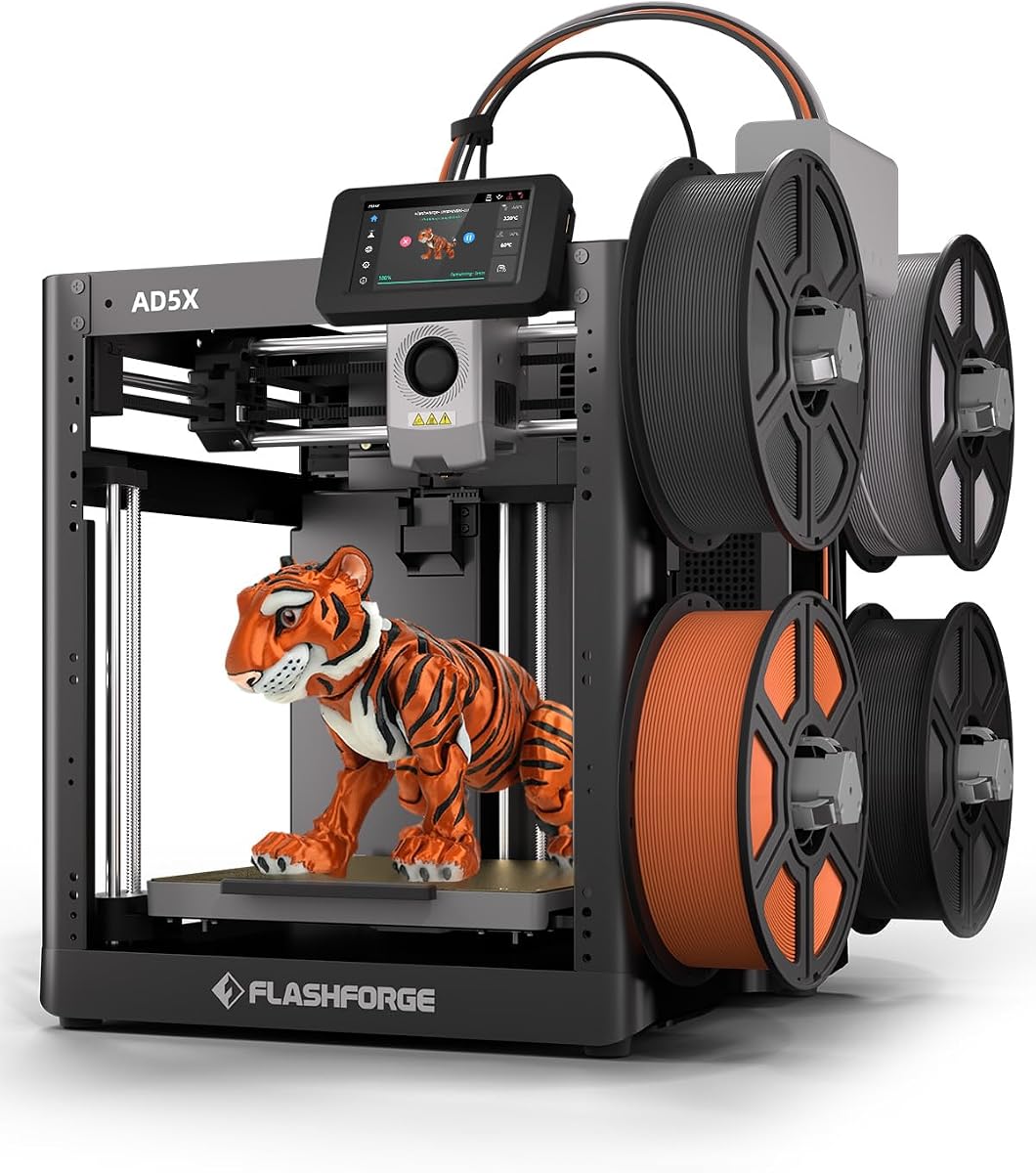
The FLASHFORGE AD5X is engineered for efficiency and precision with a CoreXY design supporting speeds up to 600mm/s. It holds a 3.9 rating among users who value its speed and direct drive capabilities. The printer supports up to 4 colors simultaneously, offering creative flexibility for detailed projects.
We may earn a commission when you buy through this link, at no additional cost to you.
Its direct drive extruder reaches 300°C, enabling printing with a variety of materials. Vibration compensation and dual-channel cooling fans ensure consistent quality at high speeds. The resume printing function handles unexpected power loss, protecting your work. Remote monitoring via the Flash Maker app keeps you informed of print status.
While capable, the printer has a lower rating than some competitors, potentially reflecting user experience variability or software learning curves. The multi-color feature requires careful setup for optimal results. For those prioritizing speed and material flexibility, it remains a strong contender in the mid-range market.
This printer suits makers needing rapid prototyping with multi-color options. It is best for users comfortable with initial setup tweaks to maximize performance. The build volume and nozzle options provide adaptability for diverse project requirements without requiring multiple machines.
Support for up to 4 colors simultaneously allows for intricate designs without requiring separate print files or manual swaps.
CoreXY structure combined with vibration compensation maintains accuracy even at peak travel speeds of 600mm per second.
We may earn a commission when you buy through this link, at no additional cost to you.
The Creality Ender 3 V3 SE impresses with a 4.9 rating, reflecting high user satisfaction with its value proposition. It arrives as a bundle with multiple filament packs, making it ready for immediate use. The printer upgrades previous Ender models with better speed and auto-leveling features.
We may earn a commission when you buy through this link, at no additional cost to you.
Its Sprite direct extruder provides smooth feeding for various filaments like PLA and PETG. CR Touch auto leveling and strain sensor for Z-offset eliminate manual calibration hassles. Dual Z-axis lead screws reduce wobbling while linear shafts on the Y-axis ensure stability. Speed reaches 250mm/s, saving significant time over older models.
The main limitation is the lack of an enclosed chamber, which limits material choice to safer filaments. Speed is moderate compared to premium CoreXY systems. However, the included filament bundle and high reliability make it an unbeatable entry point for those prioritizing ease of use and community support.
Select this printer if you want a trusted brand with excellent community resources and immediate usability. It is perfect for beginners who want to start printing right away without sourcing extra materials. The balance of price performance and features offers strong long-term value.
Includes four packs of high-quality PLA filament in different colors, letting you start projects without additional purchases.
Dual Z-axis screws and linear shafts reduce vibrations, resulting in smoother surface finishes and accurate dimensions.
We may earn a commission when you buy through this link, at no additional cost to you.
The AOSEED AI 3D Printer is designed specifically for children with safety and creativity at its core. It features a 4.5 rating among families who appreciate its educational value and user-friendly interface. The printer supports single-color printing but offers access to over 8000 reviewed models for immediate inspiration.
We may earn a commission when you buy through this link, at no additional cost to you.
AI Doodle allows kids to create custom models using voice or text prompts without design skills. The enclosed design ensures safety with pinch-resistant features and quiet operation. One-tap printing simplifies the process, while real-time monitoring via camera lets parents track progress remotely. Wi-Fi connectivity enhances the interactive experience.
Limitations include single-color printing only, though multi-color projects can be achieved by assembling separate parts. Precision is adequate for toys and crafts but may not suit technical prototyping. For home environments focused on fun and learning, these constraints are acceptable trade-offs for enhanced safety and engagement.
This printer is an excellent gift for curious kids wanting to explore STEM concepts. It suits families wanting a low-maintenance device that minimizes setup friction. The included starter kit with multiple filament rolls ensures months of creative play without needing immediate refills.
Generative AI features turn simple drawings or words into 3D models, sparking creativity without technical barriers.
Enclosed body and pinch-resistant design protect little fingers, making it safe for shared living spaces.
We may earn a commission when you buy through this link, at no additional cost to you.
This Mini 3D Printer for Kids and Beginners arrives fully assembled and ready to use immediately. With a 4.4 rating, it is praised for its simplicity and convenience for first-time users. It includes essential accessories like filament and an SD card with pre-sliced files for instant printing.
We may earn a commission when you buy through this link, at no additional cost to you.
It features high precision at 0.01mm and speeds of 250mm/s to minimize wait times. Automatic nozzle cleaning and one-button auto leveling reduce maintenance efforts. The PEI heated bed aids in easy model removal. Warranty support includes a 30-day return policy and lifetime technical assistance.
The build volume is small, limiting it to miniatures or educational projects rather than functional parts. It lacks advanced connectivity options found in larger models. However, for its intended audience, the compact size and plug-and-play functionality are significant advantages that outweigh the limitations.
Choose this printer for classrooms, small desks, or quick creative sessions. It is ideal for those who need a reliable device with minimal setup overhead. The included holder design allows for practical spool management even with smaller machines.
Everything needed to print right away is included, removing the need to buy extra accessories separately.
Automatic cleaning and leveling systems keep the printer running smoothly without constant user intervention.
We may earn a commission when you buy through this link, at no additional cost to you.
The FLASHFORGE AD5M combines speed and durability with an all-metal CoreXY structure for reliable performance. It holds a 4.3 rating for its balance of features suitable for both beginners and experts. One-click auto calibration ensures consistent first layers without manual adjustments.
We may earn a commission when you buy through this link, at no additional cost to you.
Nozzle changes take as little as three seconds, simplifying maintenance for various print needs. Resume functionality saves work during power outages by storing the last layer. The flexible PEI plate aids in model removal. Orca-flashforge slicer integration enables efficient batch file transmission and network monitoring.
While powerful, the standard 220mm build volume may limit large projects. The mobile app offers remote control but requires setup time. For users prioritizing mechanical robustness and quick swaps, the AD5M remains a strong option in the mid-range category.
This printer is recommended for those needing fast, reliable printing with minimal downtime. It suits makers who value mechanical simplicity alongside high performance. The combination of auto-leveling and quick-swap features reduces frustration during frequent print changes.
Patent quick-release nozzle allows swaps in seconds, making it easy to switch sizes for detail or speed.
Resume function saves ongoing layer data, ensuring you do not lose progress if electricity is interrupted.
We may earn a commission when you buy through this link, at no additional cost to you.
The Bambu Lab P1S is a ready-to-use FDM printer with an enclosed body ideal for advanced filaments. It boasts a 4.5 rating among users who value performance and reliability. Setup takes only 15 minutes, and auto bed leveling simplifies operation for all skill levels.
We may earn a commission when you buy through this link, at no additional cost to you.
Its speed reaches 500mm/s with 20000mm/s² acceleration, ensuring quick turnaround for projects. Supported filaments include PLA, PETG, TPU, ABS, and ASA, offering broad versatility. The enclosed design maintains consistent temperature, reducing warping risks. It pairs well with the AMS for multi-color needs.
While excellent, it requires a separate AMS purchase for full multi-color capability. The price point is higher than basic models. However, the build quality and speed justify the cost for those needing a professional-grade machine at home. It is robust and easy to maintain.
Choose this if you need an enclosed printer for engineering materials. It suits makers ready to invest in speed and reliability without compromising on usability. The ecosystem compatibility ensures future expansion is straightforward as your printing needs grow.
Fully enclosed body improves print performance for advanced filaments by maintaining a consistent internal environment.
Lightning-fast speeds let you focus on creating rather than waiting, boosting overall productivity.
We may earn a commission when you buy through this link, at no additional cost to you.
The Bambu Lab A1 mini brings essential features to a compact size perfect for beginners. It holds a 4.4 rating for its balance of portability and performance. The bundle includes an LED Lamp Kit for creative light projects, adding immediate utility beyond standard printing.
We may earn a commission when you buy through this link, at no additional cost to you.
Automatic calibration simplifies setup while automatic ensures a smooth experience. You gain access to MakerWorld models and Bambu Handy app for management. Quiet operation fits naturally into home or studio environments. It supports everyday creativity with seamless printing.
The smaller build volume limits large-scale projects compared to full-sized models. Multi-color requires separate AMS acquisition. However, for those needing a space-saving solution with premium features, the A1 mini offers excellent value. It integrates perfectly into existing workflows.
This printer is best for students or small workspaces needing high quality. It suits beginners wanting to start with a reliable machine without clutter. The included creative kit encourages experimentation with lighting and functional designs right out of the box.
Included lamp kit lets you turn prints into functional decorative lights for DIY projects and room decor.
Small footprint allows easy placement in limited spaces without sacrificing printing capability or quality.
We may earn a commission when you buy through this link, at no additional cost to you.
Selecting the right 3D printer requires understanding key factors that influence performance ease of use and long-term satisfaction.
Automatic leveling systems adjust the print bed without manual screw turning ensuring consistent first layers. Beginners benefit from this feature as it removes one of the most frustrating setup steps and reduces failed prints due to bed adhesion issues.
Look for one-click or full-auto calibration systems to simplify the initial setup and maintenance process.
Build volume determines the maximum size of objects you can print in a single session. While larger volumes offer flexibility, they often come with higher costs and more complex mechanics. For beginners focusing on small to medium projects, a 220mm cube is often sufficient.
Choose a size that matches your typical project needs to balance performance and physical footprint.
Higher speeds and acceleration allow you to complete prints faster without sacrificing quality. Newer technologies enable travel speeds of 500mm/s or more significantly reducing wait times. This efficiency is vital for hobbyists testing multiple iterations or creating parts quickly.
Prioritize models with robust mechanical structures that maintain precision at higher speeds.
Supported filaments range from easy PLA to engineering-grade ABS and ASA. Beginners should look for machines that handle common plastics effortlessly while offering future expandability. Check extruder temperature limits and enclosure features to ensure material versatility.
Select a printer that supports the materials you plan to use without requiring excessive modifications.
A user-friendly touchscreen and mobile app streamline operation and monitoring. Real-time camera access and alerts keep you informed of print progress remotely. Simplified controls help reduce the learning curve and keep focus on design rather than tweaking settings.
Ensure the interface is intuitive and supports remote management capabilities.
Quiet operation is essential for home or shared environments where noise can be distracting. Advanced motor controllers and design choices reduce sound during printing. This factor improves the overall experience especially if the printer operates during work or study hours.
Look for models with noise canceling technology or quiet motor specifications.
A strong community provides tutorials and troubleshooting help that accelerate your learning. Manufacturer support should be responsive with clear documentation and spare part availability. Reliable support reduces downtime and frustration when issues arise.
Prioritize brands with active forums and accessible technical assistance channels.
Future upgrades like multi-color systems or larger beds add value as skills grow. Check if the platform allows accessory additions such as AMS units or additional toolheads. This flexibility ensures your investment remains relevant as your projects become more complex.
Consider how the printer can evolve with your changing needs over time.
Start by calibrating the printer using its auto-leveling tools and ensuring the bed is clean. Load filament properly and adjust settings based on your material to achieve optimal adhesion.
Perform regular maintenance such as nozzle checks and cleaning to prevent clogs. Use recommended filament types and keep the machine in a dry environment to avoid material degradation.
Monitor prints periodically and utilize pause features if adjustments are needed. Store leftover filament in sealed bags to maintain quality and extend the printer's lifespan.
The Bambu Lab A1 is often considered the easiest due to its fully automatic calibration and intuitive interface. It minimizes manual steps and offers reliable performance right out of the box.
An enclosed printer is helpful if you plan to print materials like ABS or ASA which require stable temperatures. For beginners starting with PLA or PETG, an open design is usually sufficient.
Most desktop printers require a footprint similar to a laptop plus extra clearance for ventilation. Measure your available area and consider compact models if space is limited.
Yes, many modern printers support multi-color printing using add-on systems like the AMS. These allow you to switch colors automatically during a print without manual intervention.
PLA is the safest and easiest to use for beginners because it prints at lower temperatures and is biodegradable. It is available in many colors and produces minimal odor.
Newer printers can be set up in about 15 minutes with auto-leveling features. Older or more complex models may take longer to calibrate and troubleshoot initially.
The top picks like the Bambu Lab A1 and FLASHFORGE Adventurer 5M offer excellent entry points with automation and speed. They reduce common barriers for beginners such as calibration and maintenance complexity.
Prioritize features that match your project goals whether that is speed, material versatility, or compact size. Investing in a reliable system early saves time and frustration as you learn the craft.
Always check current availability and bundle contents before buying to ensure you get the best value. Technology evolves quickly so selecting a platform with room to grow ensures your printer stays useful for years.